
Aeonium cuneatum
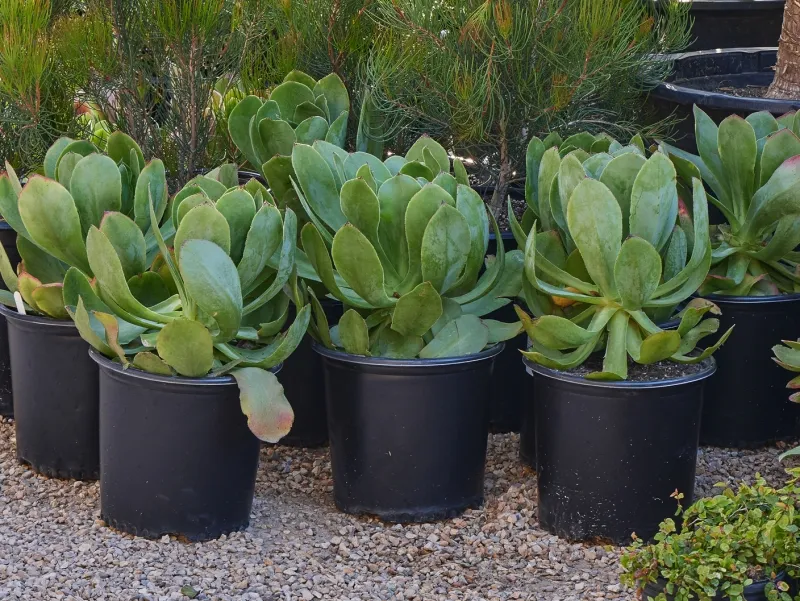
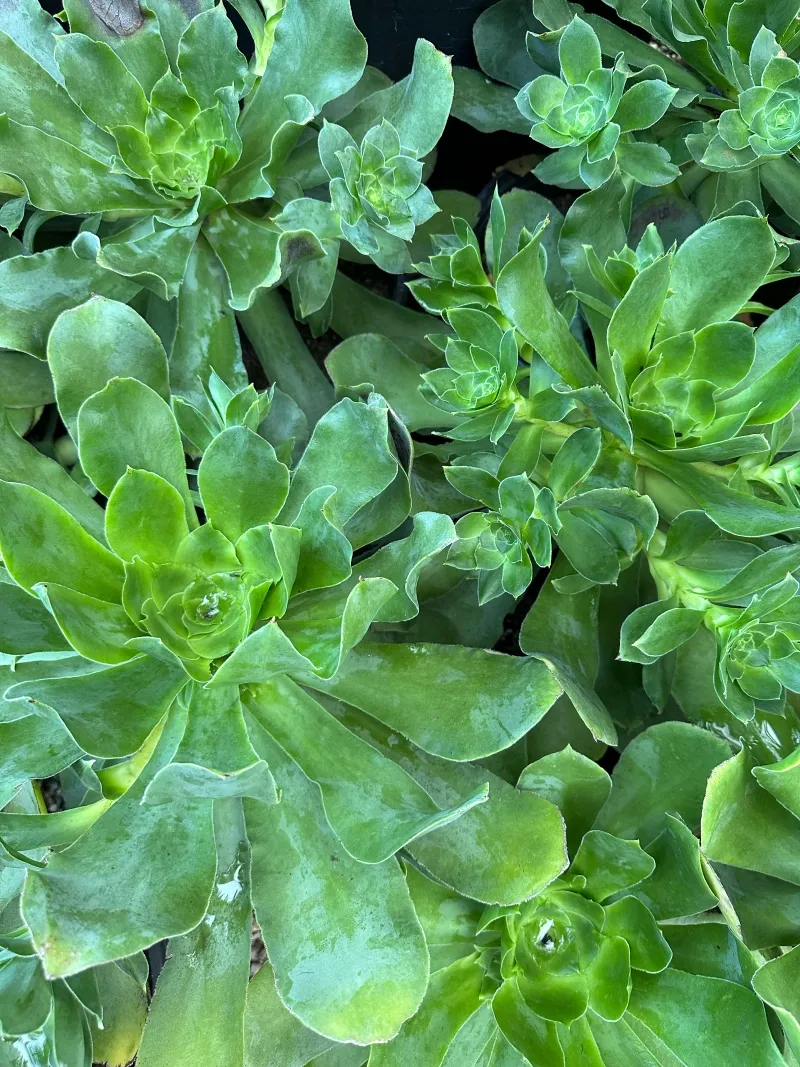
This low growing aeonium has icy blue leaves that are lightly serrated. Rediscovered in Bolinas, CA, this winter-growing succulent thrives in coastal California in well-drained soil, containers.
 Altura Altura | 2–3 pies |
|---|---|
 Ancho Ancho | 2–3 pies |
 Tolera Tolera | Costa, Veranos frescos, Sequía, Neblina, Macetas, Descuido, Sal, Viento |
 Riego Riego | Bajo |
One of the few aeoniums that will maintain lush growth if given irrigation in the summer, but can tolerate summer-dry conditions on the foggy coast. | |
 Resiste hasta Resiste hasta | 29 °F |
 Exposición Exposición | Sol parcial – Pleno sol |
 Características Características | Cubresuelos, Roseta, Suculenta, Produce hijuelos |
 Interior / exterior Interior / exterior | Exterior |
 Drenaje Drenaje | En el suelo: mezcla para cactus, En maceta: mezcla para cactus, Tolera suelo arenoso |
 Fertilización Fertilización | Uso general, Necesita poco |
 Origen Origen | Islas Canarias |
 Nativa de California Nativa de California | No |
 Zonas Sunset Zonas Sunset | 16, 17, 20–24 |
Notas de cultivo
This versatile and easy-to-grow species originates on Tenerife, the largest of Spain's Canary Islands. In habitat, it grows in forest clearings in the island's moist northeast corner.
It can spread steadily to become a large-scale groundcover but is easy to keep in check.
Waxy leaves tolerate sun well; shade is ok, too.
Propagate by cutting side rosettes, allowing cut to dry for a couple of days, and then setting in barely-moist, well-drained soil. Refrain from watering until roots have reached at least one inch long.
Interés especial
Uniquely among aeoniums, new rosettes form on side runners, allowing this species to spread as a large-scale groundcover. No aeonium receives more rain in habitat that this species, a fact that accounts for its ability to stay full and lush when given summer water.
Esta información refleja las observaciones de Grubb and Nadler y de nuestra comunidad de amantes de las plantas. Siempre tomamos en cuenta las aportaciones de otros horticultores y agradecemos los comentarios de quienes tengan más información sobre el cultivo de esta planta.
© 2020–2026 Grubb and Nadler. Todos los derechos reservados.