
Agave potatorum ‘Variegata’
butterfly agave
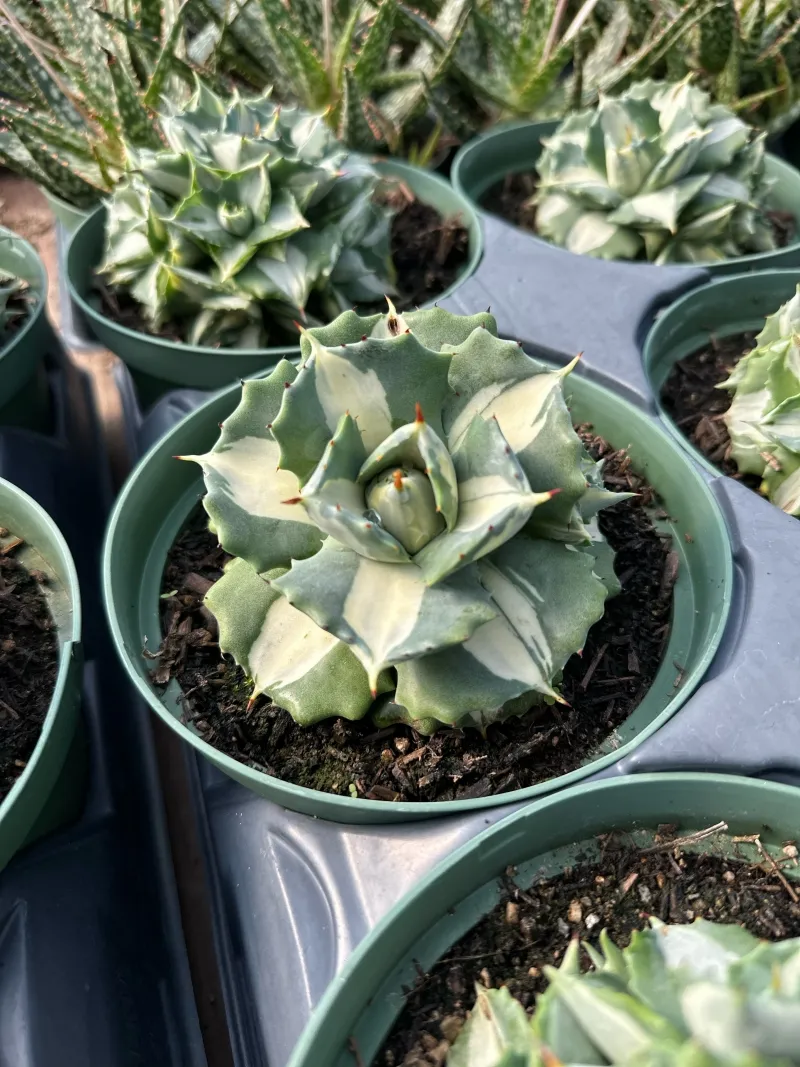
Red teeth contrast against cream margins on blue-grey leaves that flare toward the tip. Mesmerizing geometry with time.
 Altura Altura | 8–18 pulg. |
|---|---|
 Ancho Ancho | 12–20 pulg. |
 Tolera Tolera | Sequía, Calor, Macetas, Azoteas, Descuido, Viento |
 Riego Riego | Bajo |
Agave plants are extremely drought tolerant, and many including this one need no supplemental irrigation in coastal California. They will, however, look better and grow faster if they are given additional water, especially during summer. | |
 Resiste hasta Resiste hasta | 26 °F |
 Exposición Exposición | Sol parcial – Pleno sol |
 Características Características | Con espinas, Monocárpica, Escultural, Solitaria |
 Interior / exterior Interior / exterior | Exterior |
 Fertilización Fertilización | Uso general a media concentración, Necesita poco |
 Origen Origen | Centro de México |
 Nativa de California Nativa de California | No |
 Zonas Sunset Zonas Sunset | 13, 15–24, H2 |
Notas de cultivo
Most agave, including this one, are monocarpic, meaning that a head will grow larger and larger over time, building up energy, then send off a spectacular flower, after which they decline and die.
Take care when pruning or removing agaves, as many have a toxic sap that causes inflammation and rashing. Removing spent agave heads can also be tricky as they are often ringed with other armed agaves. If you like the look of agaves, but are threatened by the terminal spikes, they can be removed. It's easiest to cut these off when they are coming out of the rosette as you'll be able to prune the thorns off many layers of leaves at one time.
You can 'pineapple' your agave by removing the lowest leaves. This is best started while it is out of the nursery can, but before planting, when you can access leaves from the bottom. This gives the plant a short trunk, textured similar to many palms, and allows you to get under the plant for weeding.
Agaves are a great choice to grow in a pot and this is one of the best, being naturally on the smaller side.
Interés especial
Agave are excellent 'home defense' tools when planted along a fence line or beneath windows.
Esta información refleja las observaciones de Grubb and Nadler y de nuestra comunidad de amantes de las plantas. Siempre tomamos en cuenta las aportaciones de otros horticultores y agradecemos los comentarios de quienes tengan más información sobre el cultivo de esta planta.
© 2020–2026 Grubb and Nadler. Todos los derechos reservados.