
Arthropodium cirratum
renga lily
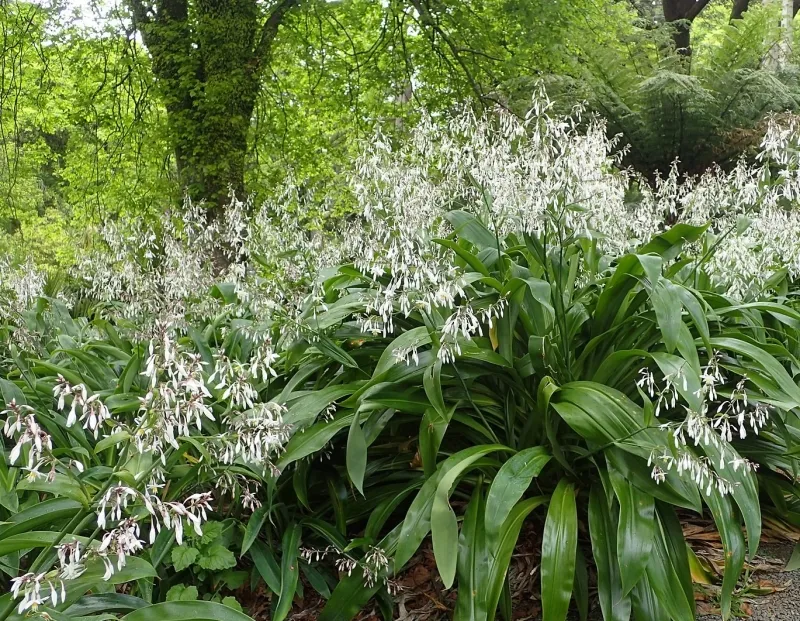
Clumps of soft, arching strappy leaves add a lush backdrop to the garden. Summer brings the bonus of two foot tall flower spikes with many sparkling star white blossoms. Coastal champion.
 Sinónimos Sinónimos | Arthropodium cirrhatum |
|---|---|
 Altura Altura | 1–3 pies |
 Ancho Ancho | 1–2 pies |
 Tolera Tolera | Costa, Veranos frescos, Neblina, Sal, Viento |
 Riego Riego | Bajo – Moderado |
This plant is drought tolerant when grown in the shade near the coast, needing a deep watering every 1 to 2 weeks during dry months. If grown inland, away from fog drip, this plant needs more regular waterings, once or twice a week. | |
 Resiste hasta Resiste hasta | 15 °F |
 Exposición Exposición | Sol parcial – Pleno sol |
 Características Características | Forma matas, Con flores, Follaje vistoso, Tropical |
 Interior / exterior Interior / exterior | Exterior |
 Drenaje Drenaje | En el suelo: mezcla para plantar, En maceta: tierra para macetas, Tolera suelo pesado, Tolera suelo arenoso |
 Fertilización Fertilización | Uso general |
 Origen Origen | Nueva Zelanda |
 Nativa de California Nativa de California | No |
 Zonas Sunset Zonas Sunset | 5, 6, 14–17, 20–24, H1, H2 |
Notas de cultivo
Appreciates at least some sun along the coast in areas with marine influence, but flips as you move inland, wanting more shade to protect it from scorching. If grown in coastal shade this plant becomes significantly more drought tolerant.
Doesn't do well when you push into inland areas with prevailing dry desert air and very low humidity.
While this plant is quite hardy, the foliage will die back with a hard frost, recovering from rhizomes quickly when spring warmth returns. It can also be pruned back hard in late winter to keep it tidy.
Unfortunately snails and slugs love this plant. Mulch with corse bark and try to keep it on the drier side to prevent this unsightly damage.
In colder zones adding a thick layer of mulch will help this plant overwinter.
Interés especial
This plant may have been farmed by the Maori of New Zealand as it is often found near old homesteads and the rhizomes are edible.
Enlaces
Esta información refleja las observaciones de Grubb and Nadler y de nuestra comunidad de amantes de las plantas. Siempre tomamos en cuenta las aportaciones de otros horticultores y agradecemos los comentarios de quienes tengan más información sobre el cultivo de esta planta.
© 2020–2026 Grubb and Nadler. Todos los derechos reservados.