
Brahea moorei
Moore's rock palm
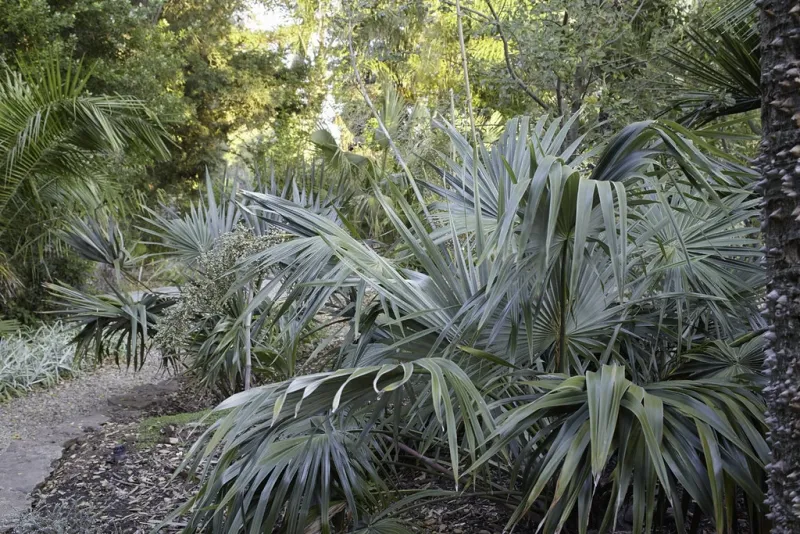
Ground-dwelling foliage palm with elegant arching wands of flowers and fruit. Shiny green leaf is frosted white on top, chalky white underneath at maturity. Hardy, rare. Nice in pots.
 Altura Altura | 2–3 pies |
|---|---|
 Ancho Ancho | 3–5 pies |
 Tolera Tolera | Frío, Sequía, Calor, Macetas |
 Riego Riego | Bajo – Moderado |
Not all palms love water! This one is actually drought-tolerant and can live quite happily on little or no water once it's established, though it'll grow more slowly and may not look as lush. To keep your palm looking its best, be sure to water it consistently and deeply while it's getting established, then after a few years give it a good deep soaking every couple of weeks. It will also be happy to have more water, provided the soil drainage is excellent. The wetter (and colder) the winter, the better drainage it needs. | |
 Resiste hasta Resiste hasta | 10 °F |
 Exposición Exposición | Sombra total – Pleno sol |
 Características Características | Con flores, Follaje vistoso, Fruto ornamental, Palma, Jardín de rocas, Escultural, Arbusto, Solitaria, Tropical |
 Interior / exterior Interior / exterior | Exterior |
 Drenaje Drenaje | En el suelo: mezcla para cactus, En maceta: mezcla para cactus, Tolera suelo arenoso |
 Fertilización Fertilización | Fertilizante para palmas |
 Origen Origen | Noreste de México |
 Nativa de California Nativa de California | No |
 Zonas Sunset Zonas Sunset | 6–24, H1, H2 |
Notas de cultivo
Originating high in the Sierra Madre Oriental of northeast Mexico (up to 6500 feet above sea level), where it grows on well-drained limestone in oak forest, this foliage palm thrives in shade or sun. Sun-grown plants will produce bigger, showier flowerstalks, while shade-grown plants will have broader, more elegant leaves. Where soil is acidic, it may also respond to treatment with dolomite to raise soil pH. Quite slow-growing when young.
Interés especial
This is a "trunkless" palm: The stem remains at ground level, progressing laterally by millimeters per year.
John Fairey and his Peckerwood Garden in Hempstead, Texas, first championed this choice rare palm.
Más información
Useful in lieu of thirsty gunnera or as an alternative to phormiums.
Enlaces
Esta información refleja las observaciones de Grubb and Nadler y de nuestra comunidad de amantes de las plantas. Siempre tomamos en cuenta las aportaciones de otros horticultores y agradecemos los comentarios de quienes tengan más información sobre el cultivo de esta planta.
© 2020–2026 Grubb and Nadler. Todos los derechos reservados.