
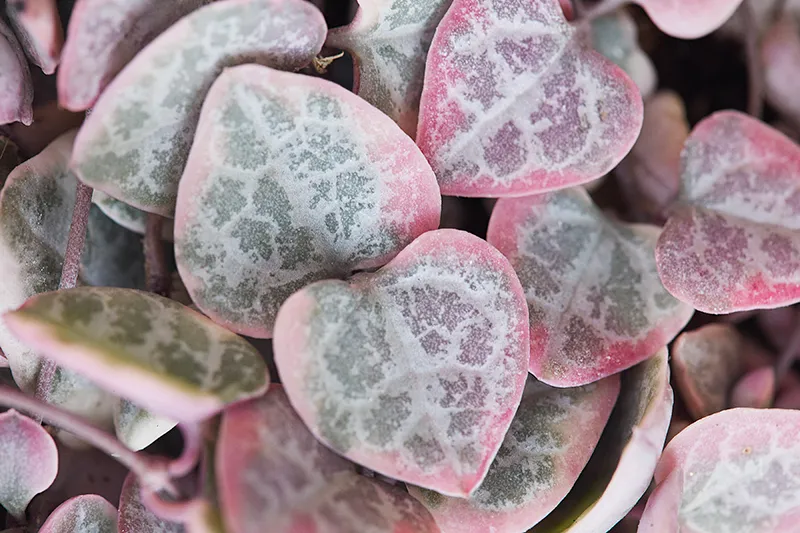
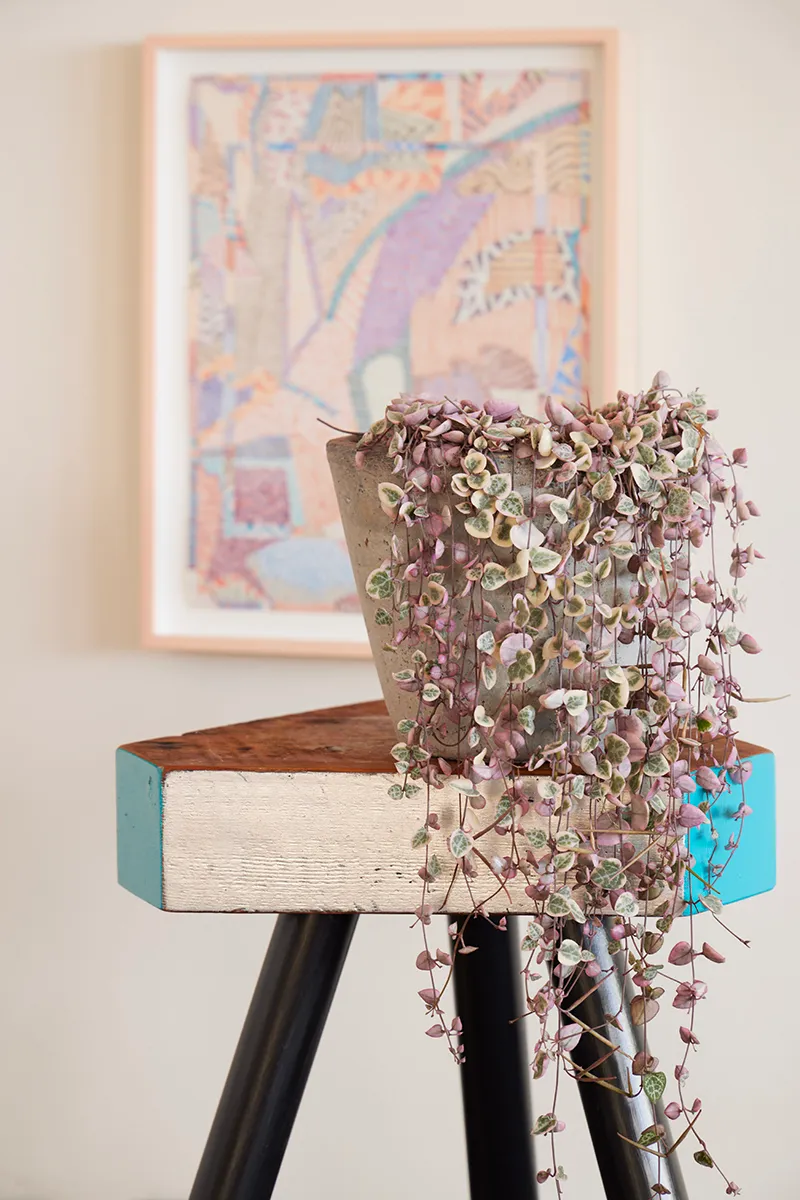
Ceropegia woodii ‘Variegata’
Succulent trailing vine great in hanging baskets, perched containers indoors or in mildest zones. Keep dry in winter.
 Altura Altura | 1–4 pulg. |
|---|---|
 Ancho Ancho | 1–3 pies |
 Tolera Tolera | Sequía, Calor, Macetas |
 Riego Riego | Bajo – Moderado |
Ceropegia are from the deserts of the world and as such like to go totally dry between waterings, making them very low-maintenance. If you see your succulent leaves begin to shrivel, your plant is likely totally dry and should be watered. To get good healthy growth your plant doesn't want to sit around totally dried out during it's growing season. Once it is almost dry water it. This ceropegia comes from an area with summer rainfall and is actively growing during that time, when it is forgiving of overwatering errors. During winter dormancy it should be kept extra dry and will be intolerant of overwatering. Remember that if kept in a small pot your plant will want more frequent watering. | |
 Resiste hasta Resiste hasta | 32 °F |
 Exposición Exposición | Sol parcial |
 Características Características | Con flores, Suculenta, Trepadora - rastrera |
 Interior / exterior Interior / exterior | Interior o exterior |
 Drenaje Drenaje | En el suelo: mezcla para cactus, En maceta: mezcla para cactus |
 Origen Origen | Noreste de África |
 Zonas Sunset Zonas Sunset | 13, 17, 23, 24 |
Notas de cultivo
If greatly underwaterd or overwatered you'll see that the stems die at the base. No need to toss the plant though! You'll find the trailing stems are easily rooted in a fast draining mix, infact they may already have roots where they touch the ground.
This plant will also grow small round tubers on the stems, which are esily rooted by cutting the plant on the root side of the tuber and planting it in a fast draining mix, while attached to the stem still.
Interés especial
Ceropegia make unusual 'bird cage' flowers. While they are small on this species they are still worth looking out for.
Esta información refleja las observaciones de Grubb and Nadler y de nuestra comunidad de amantes de las plantas. Siempre tomamos en cuenta las aportaciones de otros horticultores y agradecemos los comentarios de quienes tengan más información sobre el cultivo de esta planta.
© 2020–2026 Grubb and Nadler. Todos los derechos reservados.