
Clivia miniata ‘Hybrid’
bush lily
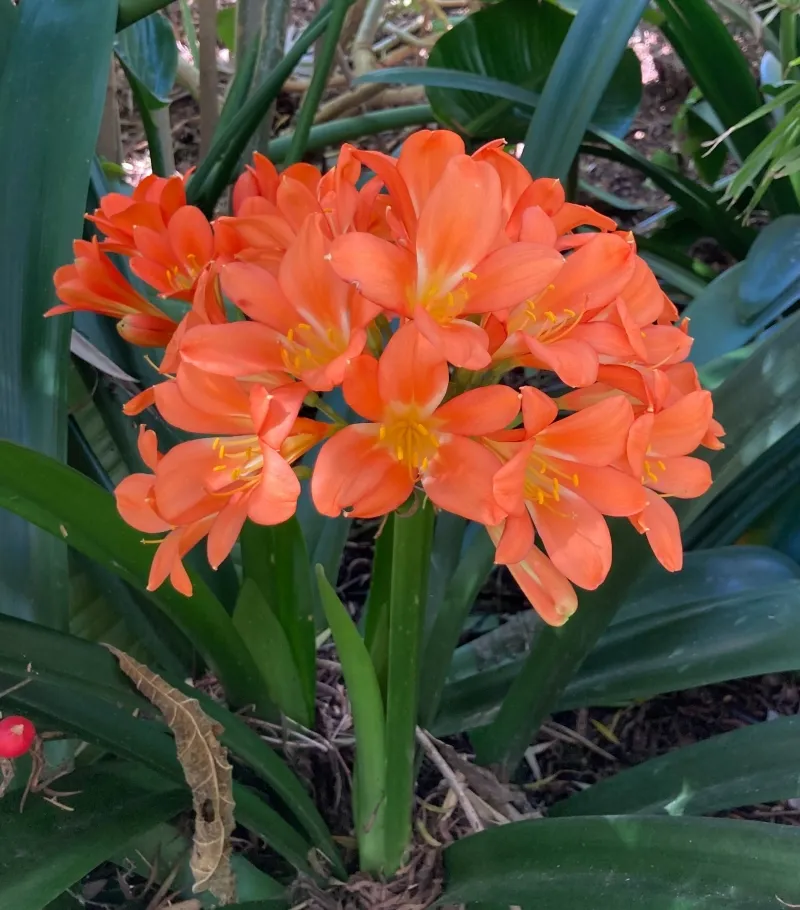
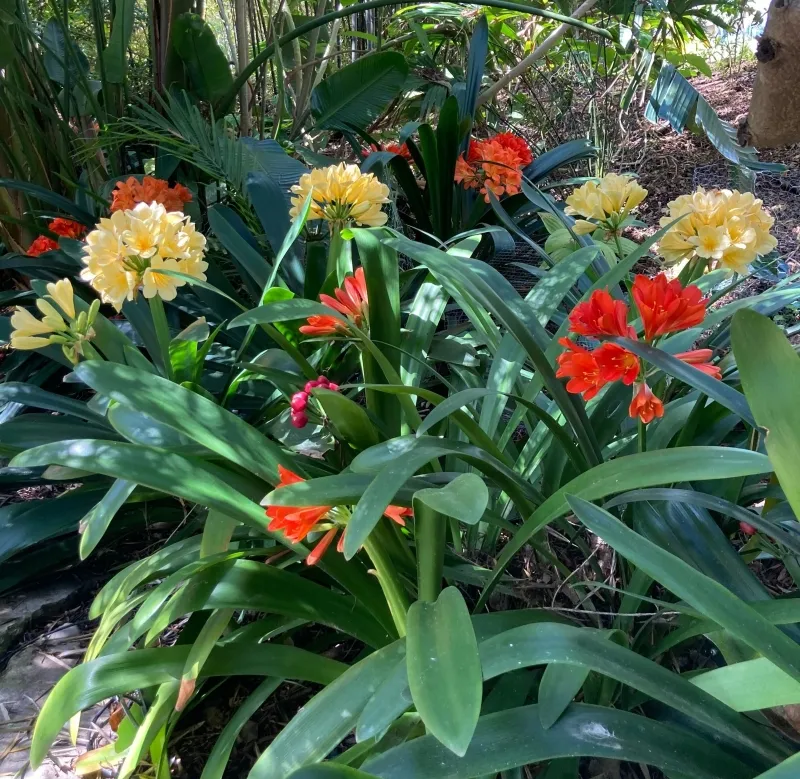
Bulb has strappy clumps of dark green leaves. Warm orange umbels of flowers in late winter and spring brighten shady spots. Good in pots. Choice shade plant.
 Altura Altura | 1–2 pies |
|---|---|
 Ancho Ancho | 1–2 pies |
 Tolera Tolera | Costa, Veranos frescos, Sequía, Neblina, Espacios angostos, Macetas, Descuido |
 Riego Riego | Bajo – Moderado |
Tolerates drought in foggy coastal areas and is one of the few plants that makes a good companion to native oaks. | |
 Resiste hasta Resiste hasta | 28 °F |
 Exposición Exposición | Sombra profunda – Sombra total |
 Características Características | Bulbo, Forma matas, Con flores, Tropical |
 Interior / exterior Interior / exterior | Interior o exterior |
 Drenaje Drenaje | En el suelo: mezcla para cactus, En maceta: mezcla para cactus, Tolera suelo arenoso |
 Fertilización Fertilización | Uso general, Necesita poco |
 Origen Origen | Sudáfrica |
 Nativa de California Nativa de California | No |
 Zonas Sunset Zonas Sunset | 12–17, 19–24, H1, H2 |
Notas de cultivo
Looks great mass planted in boarders, plant plants eighteen to twenty four inches apart.
Once flowers are finished blooming prune them off before your plant pushes energy into seed production.
Plants are easily divided, but this should be done in the spring and fall when the plant is not in bloom. Dividing during winter can lead to rot.
Container plants bloom best when they are root bound.
Occasionally slugs and snails will damage the emerging flowers, so it's important to keep an eye out for them during the budding season.
Interés especial
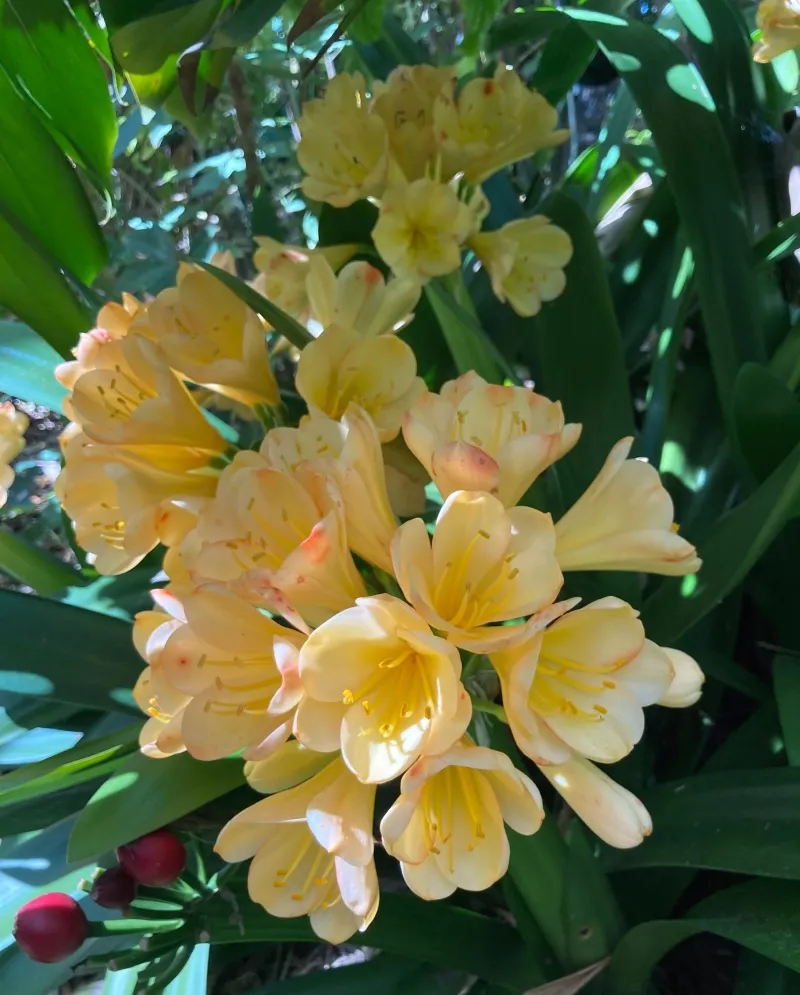
This selection of clivia are taken from assorted seeds in our head growers personal garden. As such, the colors will vary, ranging from yellows through oranges.
In areas outside the listed sunset zones this plant can be grown indoors during the winter (when it should be watered like a succulent in bright but indirect light) and then brought out in the spring and summer.
Más información
This plant was grown for an outdoor environment, so we do not recommend moving it inside. In general we do not recommend moving plants raised for an outdoor environment indoors.
This plant would make a good houseplant if it had been grown in a controlled greenhouse with houseplant soil. This greenhousing ensures that plants who come home with you are well acclimated to indoor life, and also that they do not have any pests. It is common for outdoor plants to have other passengers as well, such as earthworms or centipides that do not necessarily hurt the plant, but are not welcome indoors.
If you consider yourself an expert gardener, you can of course attempt to transition this plant indoors. In that case you will want to strip all the soil from the rootball, wash the roots clean and then spray the entire plant (leaves, undersides of the leaves, all the cracks and roots) with a mix of one tablespoon of rubbing alcohol in a cup of water. Repot the plant in the appropriate sterile soil/pot and take extra care as it transitions to the indoors, especially looking for pests and treating at the first sign of problems. Always consider the risk that any bugs could also affect other houseplants you have nearby.
Esta información refleja las observaciones de Grubb and Nadler y de nuestra comunidad de amantes de las plantas. Siempre tomamos en cuenta las aportaciones de otros horticultores y agradecemos los comentarios de quienes tengan más información sobre el cultivo de esta planta.
© 2020–2026 Grubb and Nadler. Todos los derechos reservados.