
Crassula falcata
propeller plant
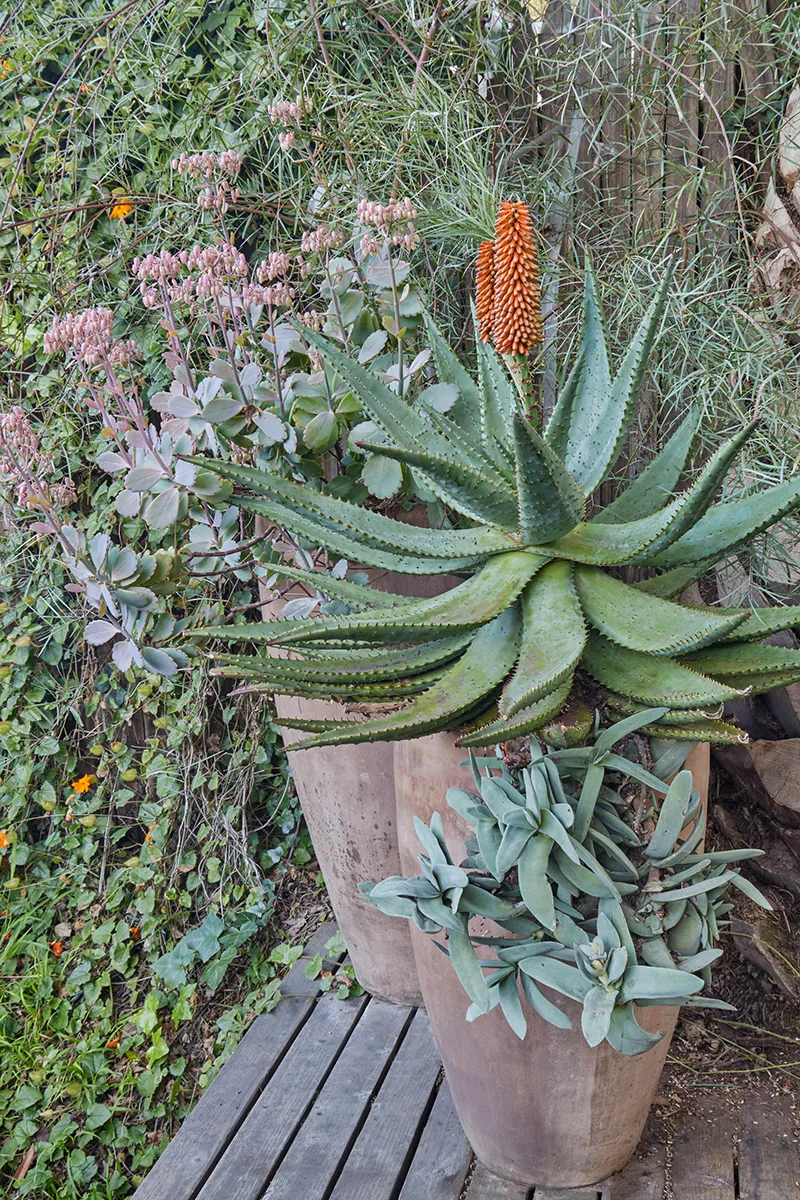
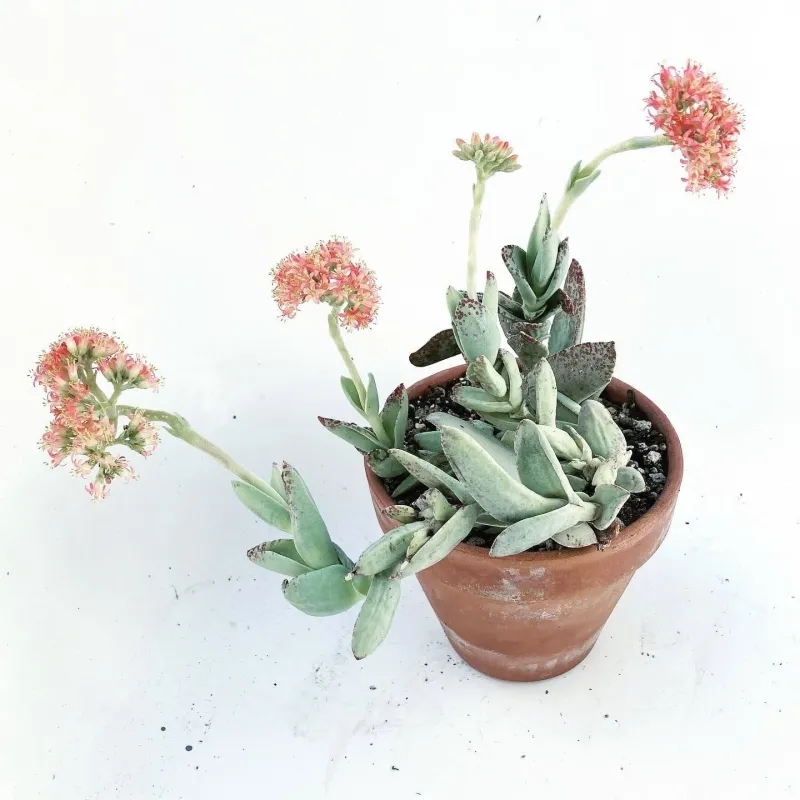
Propeller plant arches, bursts into scarlet bloom in August. Attractive form, showy, lemon-scented flowers. Nice by the sea.
 Altura Altura | 1–4 pies |
|---|---|
 Ancho Ancho | 1–3 pies |
 Tolera Tolera | Costa, Frío, Sequía, Neblina, Calor, Macetas, Azoteas, Descuido, Sal, Viento |
 Riego Riego | Bajo |
These crassulas are quite drought tolerant, but will usually need some supplemental irrigation during summer, at least every two weeks to a month once established. Keep an eye on the leaves, as they are little water tanks that the succulent uses to store water for drier times. If the leaves begin to wrinkle, your plant is ready for water. If the lower leaves begin to shrivel up and shed, this is also a sign that your plant is ready for a drink. | |
 Resiste hasta Resiste hasta | 20 °F |
 Exposición Exposición | Sol parcial – Pleno sol |
 Características Características | Con flores, Jardín de rocas, Escultural, Arbusto, Suculenta |
 Interior / exterior Interior / exterior | Exterior |
 Drenaje Drenaje | En el suelo: mezcla para cactus, En maceta: mezcla para cactus, Tolera suelo arenoso |
 Origen Origen | Suroeste de Sudáfrica |
 Nativa de California Nativa de California | No |
 Zonas Sunset Zonas Sunset | 9, 13–24 |
Notas de cultivo
This plant has a wandering floppy form that cascades from pots and walls, or wanders up through support. With age plant develops woody stems below succulent leaves, but can be cut back to any point and will regrow from where the stems are cut. Tops are easily rooted in a fast draining mix.
Low growing bushy crassulas need meticulous weeding in the garden; otherwise the weeds get tangled and intermingled with the succulents, and they are difficult to remove.
These smaller crassulas are an excellent choice for pots, where they can be appreciated up close, but they don't want to be in a lot of hot sun in a small pot without regular water.
Tolerates very hot sunny areas, even in pots.
Interés especial
Small crassulas are some of the best succulents for indoors, and their unique shapes make them wonderful focal points in a bright room or one with a little direct sun.
There is also a green form of C. falcata.
Esta información refleja las observaciones de Grubb and Nadler y de nuestra comunidad de amantes de las plantas. Siempre tomamos en cuenta las aportaciones de otros horticultores y agradecemos los comentarios de quienes tengan más información sobre el cultivo de esta planta.
© 2020–2026 Grubb and Nadler. Todos los derechos reservados.