
Cyphostemma cirrhosum
Succulent vine w fat base, peeling bark, great in a pot. Top growth goes dormant in winter or drought. Avoid cold and wet soil. Water more in summer when growing. Leaves redden with sun.
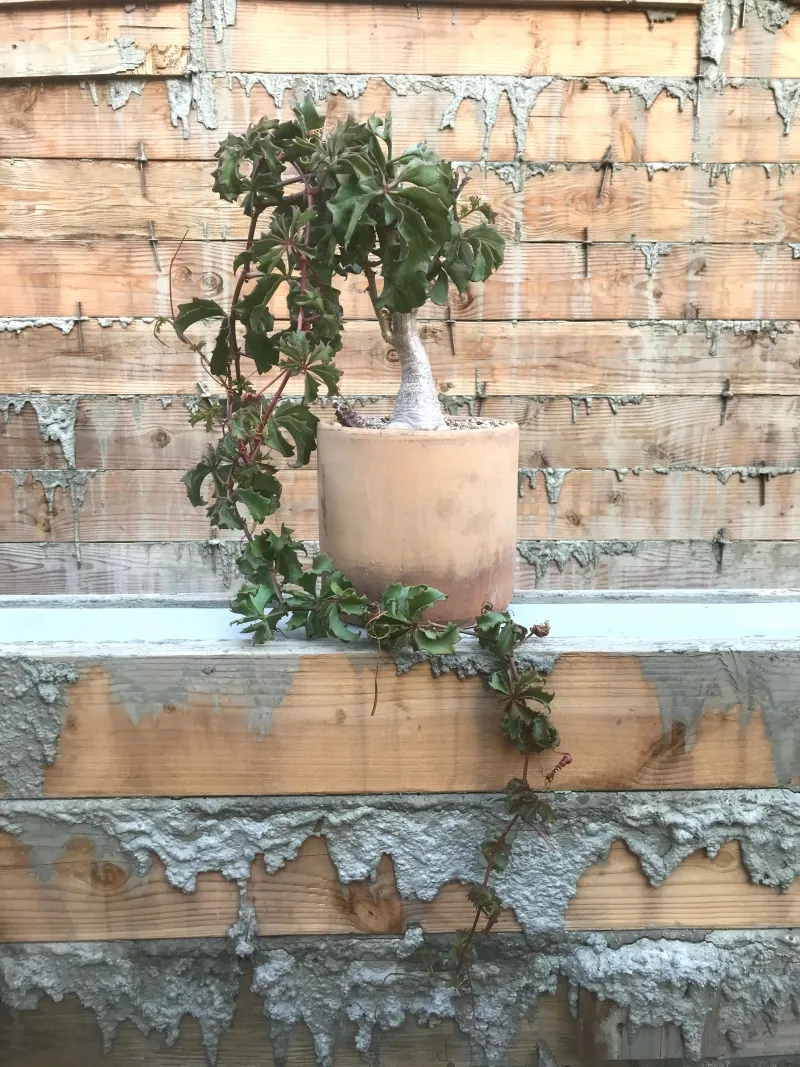
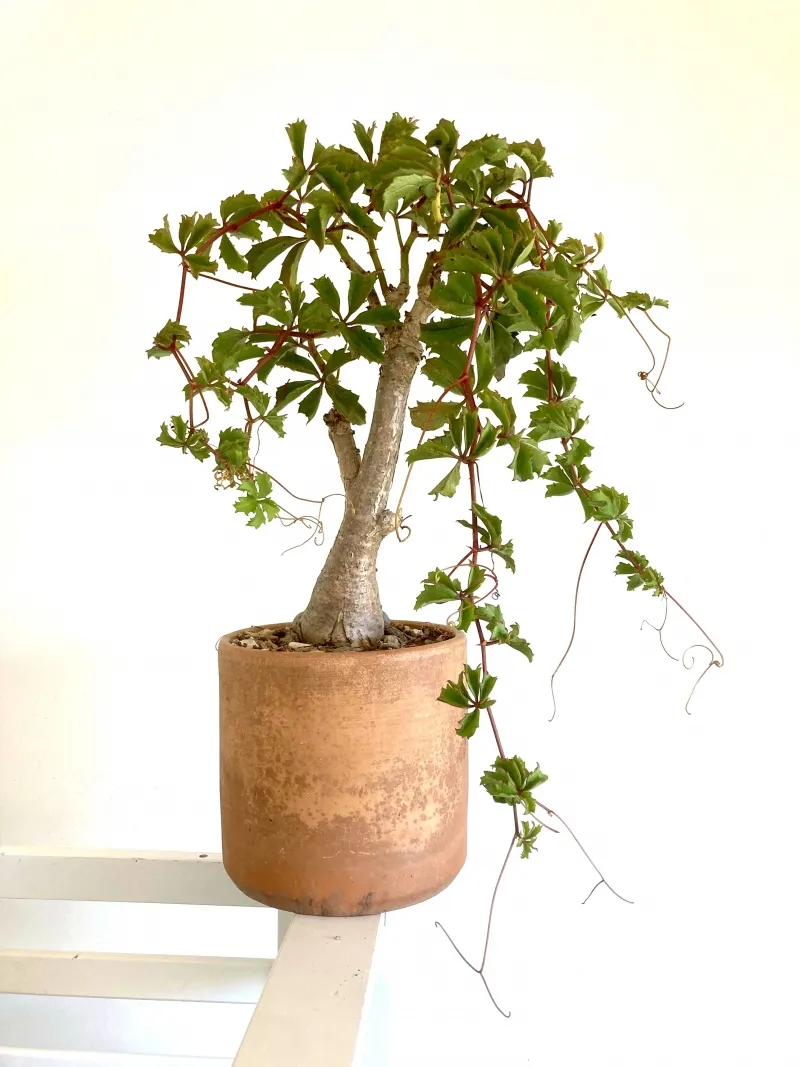
 Altura Altura | 1–5 pies |
|---|---|
 Ancho Ancho | 1–5 pies |
 Tolera Tolera | Sequía, Venados, Calor, Macetas, Azoteas |
 Riego Riego | Bajo |
This Cyphostemma is much more tolerant of overwatering (both during summer and winter) than others, and is considered one of the easiest in the genus to grow - especially pushing into Central and Northern California where extended winter rains melt many in the genus. This caudiciform is from arid areas of Africa and as such likes to go totally bone dry between waterings, making it very low-maintenance. To get good healthy growth your plant does not want to sit around totally dried out during its growing season. Once it is dry, water it. This plant comes from an area with summer rainfall and is actively growing during that time, when it is forgiving of overwatering errors. During winter dormancy it should be kept extra dry and will be intolerant of overwatering. Remember that if kept in a small pot your plant will want more frequent watering. | |
 Resiste hasta Resiste hasta | 28 °F |
 Exposición Exposición | Sombra parcial – Pleno sol |
 Características Características | Caudiciforme, Caducifolia, Suculenta, Trepadora - autoadherente |
 Interior / exterior Interior / exterior | Exterior |
 Drenaje Drenaje | En el suelo: mezcla para cactus, En maceta: mezcla para cactus, Requiere drenaje perfecto |
 Fertilización Fertilización | Uso general |
 Origen Origen | África austral |
 Nativa de California Nativa de California | No |
 Zonas Sunset Zonas Sunset | 13, 16, 17, 20–24, H2 |
Notas de cultivo
Elevate roots for effect when repotting, if desired. Prune back to keep a squatter form. Cuttings can be rooted during the growing season. Use a rooting hormone and plant directly into pure pumice. Keep warm.
Esta información refleja las observaciones de Grubb and Nadler y de nuestra comunidad de amantes de las plantas. Siempre tomamos en cuenta las aportaciones de otros horticultores y agradecemos los comentarios de quienes tengan más información sobre el cultivo de esta planta.
© 2020–2026 Grubb and Nadler. Todos los derechos reservados.