
Dasylirion acrotrichum
great desert spoon
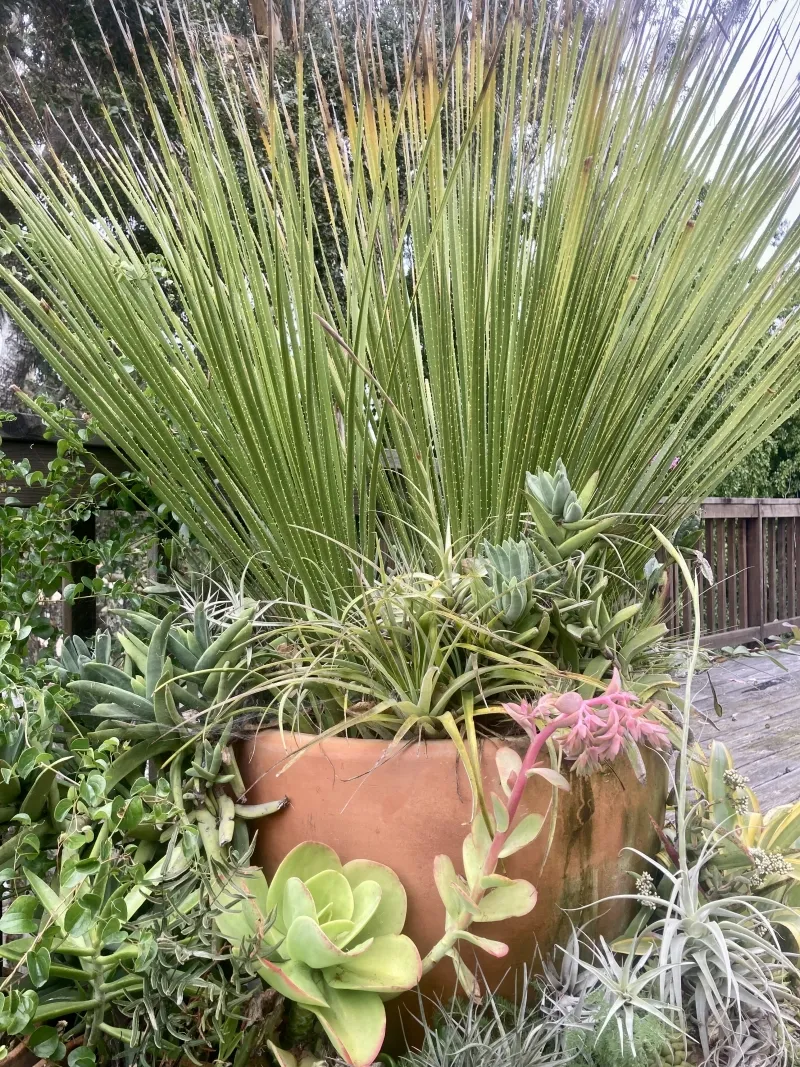
Green sotol forms a satellite orb with rays of hooked leaves, eventually over a stout trunk. Slow on coast. Produces tall spike of flowers, a honeybee feast.
 Altura Altura | 3–10 pies |
|---|---|
 Ancho Ancho | 3–6 pies |
 Tolera Tolera | Frío, Sequía, Calor, Macetas, Azoteas, Descuido, Viento |
 Riego Riego | Bajo |
Dasylirions are unusual plants from North American deserts. They are exceptionally drought tolerant, especially once established. They will love a sunny hot spot, but they'll want summer water every week or two for the first few years to get established, since summer is when they receive rainfall in nature. Yellowing of leaves is a sign of overwatering or not enough drainage. Generally dasylirions remain solitary, though they do sometimes split from the top and grow into multi-trunked forms with great age. | |
 Resiste hasta Resiste hasta | 10 °F |
 Exposición Exposición | Sombra parcial – Pleno sol |
 Características Características | Con espinas, Con flores, Roseta, Escultural, Forma tronco |
 Interior / exterior Interior / exterior | Exterior |
 Drenaje Drenaje | En el suelo: mezcla para cactus, En maceta: mezcla para cactus, Tolera suelo arenoso |
 Fertilización Fertilización | Uso general |
 Origen Origen | Centro-norte de México |
 Nativa de California Nativa de California | No |
 Zonas Sunset Zonas Sunset | 6–24 |
Notas de cultivo
Dasylirions create a head of many long, thin leaves in an orb shape over a stout trunk. You can either let these leaves age and turn into a beard as they would in nature, or prune off the oldest leaves as they age and get replaced by new ones from the crown. Pruning the lower leaves will expose the trunk, giving the plant a clean textured look over time. This can also make it easier to weed around the base of your plant, especially with the spinier dasylirion species, like this one.
To create a fountain-like appearance, prune lower leaves higher up, until the lowest leaves are at an upward angle. This will also narrow the spread of your dasylirion.
Adding to the uniqueness of these plants, a centimeter or less of the leaf tips will naturally brown and even become tufted over time.
Interés especial
Once mature, dasylirions have tall thin flower spikes during summer, up to ten feet tall! They are similar to agave flowers, in that they are a central spear covered in small flowers, but since dasylirions aren't monocarpic your plant will continue to live on beyond their flowers. Remove the spike once it's fully matured. Since dasylirions are either male or female, your flower spikes will reflect the gender of the plant, being different in color and shape. Flowers bloom in understated earthy tones.
Esta información refleja las observaciones de Grubb and Nadler y de nuestra comunidad de amantes de las plantas. Siempre tomamos en cuenta las aportaciones de otros horticultores y agradecemos los comentarios de quienes tengan más información sobre el cultivo de esta planta.
© 2020–2026 Grubb and Nadler. Todos los derechos reservados.