
Dudleya pulverulenta
chalk dudleya
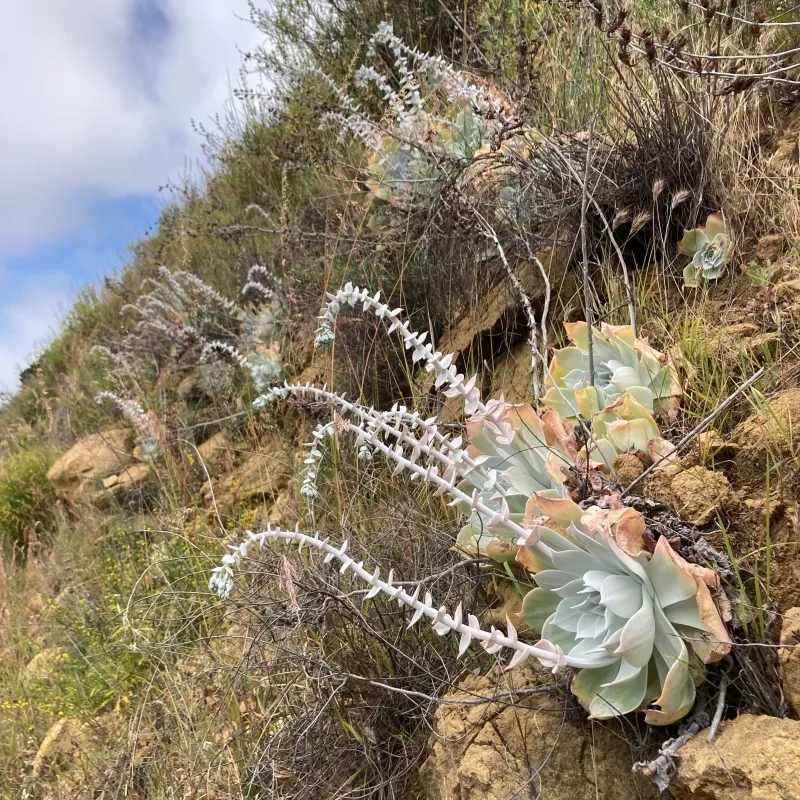
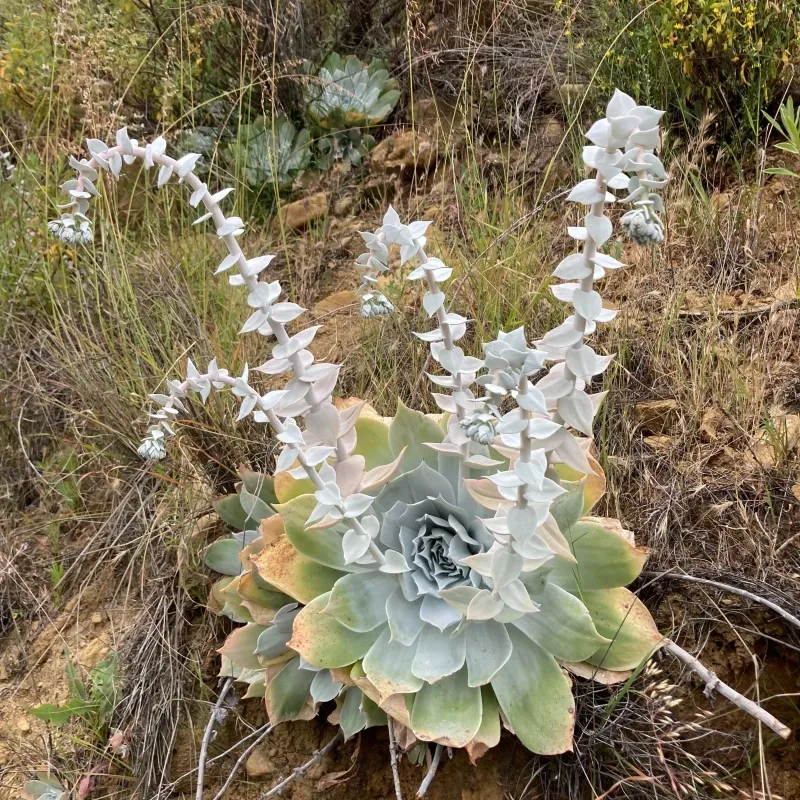
Brilliant, chalk-white succulent grows along rocky slopes of California's chaparral, Monterey County south into northern Baja. Pots, rockeries, dry gardens. Avoid summer water.
 Altura Altura | 8–20 pulg. |
|---|---|
 Ancho Ancho | 8–20 pulg. |
 Tolera Tolera | Costa, Frío, Sequía, Venados, Tuzas, Calor, Macetas, Azoteas, Descuido, Sal, Viento |
 Riego Riego | Mínimo |
This winter growing succulent, thrives with only rainfall within its native range. It will tolerate some light summer watering to keep it plump, say once a month, but typical wet to dry succulent watering during summer will kill this plant. Preferably, allow it to go through its natural cycle of leaf attrition, where the crown will shrivel up, appearing almost 'dead' during summer only to explode into growth with winter rains. If rains fail water monthly from fall through spring. | |
 Resiste hasta Resiste hasta | 20 °F |
 Exposición Exposición | Sombra parcial – Pleno sol |
 Características Características | Con flores, Colibríes, Jardín de rocas, Roseta, Solitaria, Suculenta |
 Interior / exterior Interior / exterior | Exterior |
 Drenaje Drenaje | En el suelo: mezcla para cactus, En maceta: mezcla para cactus, Tolera suelo arenoso |
 Fertilización Fertilización | Necesita poco |
 Origen Origen | California |
 Nativa de California Nativa de California | Sí |
 Zonas Sunset Zonas Sunset | 14–24 |
Notas de cultivo
Some growers note that planting this succulent at an angle allows rain water to drain away, preventing crown rot. Others say that this plant prefers to be grown on a slope, as it is often seen in habitat.
Appreciates full sun with an eastern or western exposure, but if grown in a southern exposure it prefers part shade.
Since this plant prefers a dry summer grow it in a medium to large sized pot, allowing it to make the most of winter rains.
Interés especial
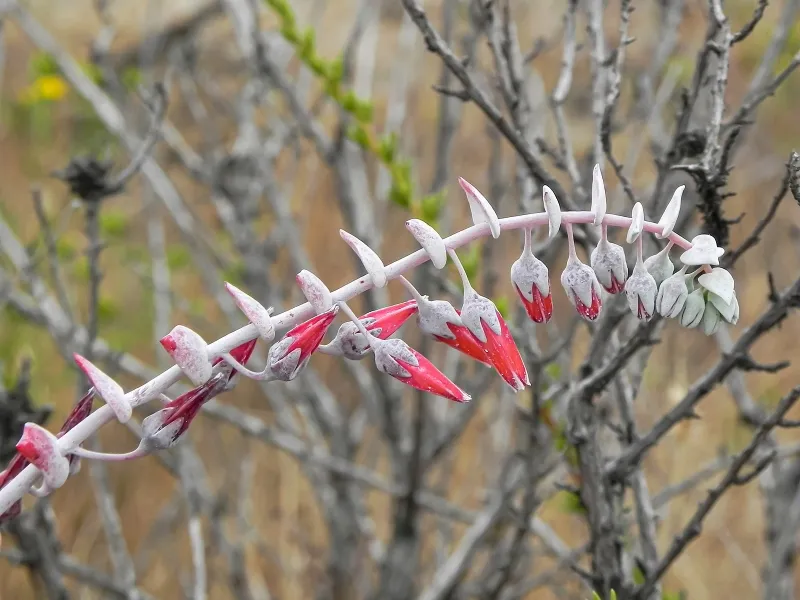
In late winter to spring pinkish white flower spikes emerge, around a foot tall, and hold pale green to white flower buds, which open rose-red.
Enlaces
Esta información refleja las observaciones de Grubb and Nadler y de nuestra comunidad de amantes de las plantas. Siempre tomamos en cuenta las aportaciones de otros horticultores y agradecemos los comentarios de quienes tengan más información sobre el cultivo de esta planta.
© 2020–2026 Grubb and Nadler. Todos los derechos reservados.