
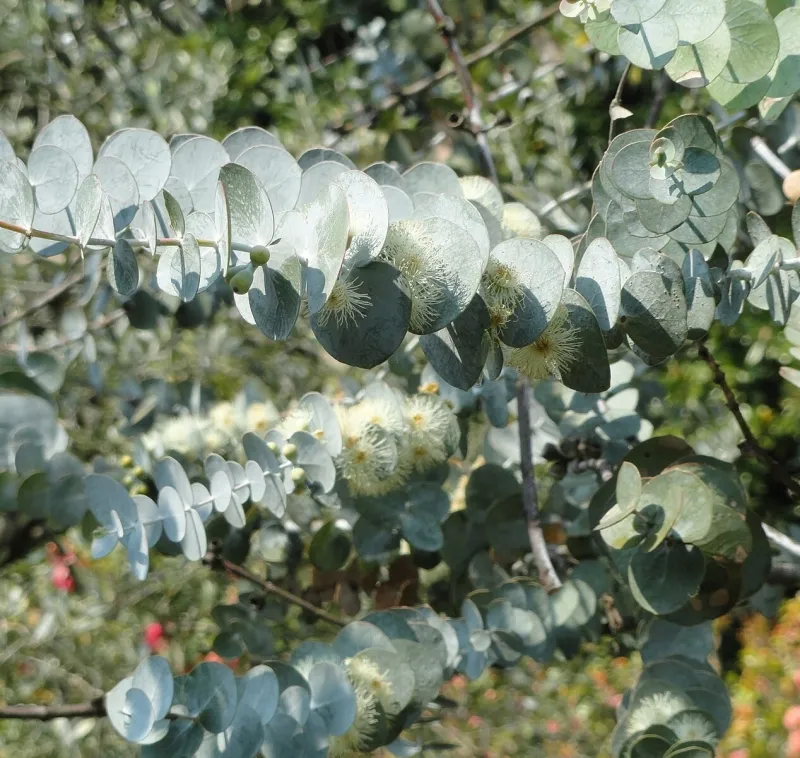
Eucalyptus pulverulenta ‘Baby Blue’
florist silver dollar
Silver dollar leaves are 'skewered' on thin branches. Florists' foliage filler. Cream flowers in fall & spring. Sprawling shrub, prune to keep tidy.
 Altura Altura | 9–20 pies |
|---|---|
 Ancho Ancho | 10–20 pies |
 Tolera Tolera | Frío, Sequía, Macetas, Viento |
 Riego Riego | Bajo – Moderado |
 Resiste hasta Resiste hasta | 15 °F |
 Exposición Exposición | Pleno sol |
 Características Características | Follaje vistoso, Follaje fragante, Arbusto |
 Interior / exterior Interior / exterior | Exterior |
 Drenaje Drenaje | En el suelo: mezcla para plantar, En maceta: tierra para macetas, Tolera suelo pesado, Tolera suelo arenoso |
 Fertilización Fertilización | Uso general, Necesita poco |
 Origen Origen | Sureste de Australia |
 Nativa de California Nativa de California | No |
 Zonas Sunset Zonas Sunset | 5, 6, 8–24 |
Notas de cultivo
While many eucalyptus have similar juvenile leaves, this tree keeps its attractive, glaucous blue leaves into maturity. A waxy coating on leaves helps them hold onto moisture, making them a long last cut foliage favorite. Leaves also have a high menthol fragrance.
Wide, erratic branching pattern makes for interesting mature specimens. Prune early to develop the desired structure. Alternate pruning a branch in one direction and then in the next to create a zig zag pattern in the branches. This plant can also be forced into a more treelike (though wide) form by pruning up the lower branches early on and then thinning out the interior of the plant once mature.
While this shrub will survive some shade its dusty silver leaves are most dramatic in the sun.
Creamy white flowers in fall and spring.
Since this plant has a lignotuber (swollen underground root) it is likely to regrow from even more extreme cold than noted here (in the sunset zones and hardiness.) Typically plants with lignotubers will also regrow from devastating fire damage.
Interés especial
The species name pulverulenta is a throwback to the Latin 'pulveratus' meaning 'powdered' and referring to the dusted leaves of this plant.
Enlaces
Esta información refleja las observaciones de Grubb and Nadler y de nuestra comunidad de amantes de las plantas. Siempre tomamos en cuenta las aportaciones de otros horticultores y agradecemos los comentarios de quienes tengan más información sobre el cultivo de esta planta.
© 2020–2026 Grubb and Nadler. Todos los derechos reservados.