
Euphorbia abyssinica
Candelabra tree spurge
Tree-like euphorbia resembles a cactus with a dense candelabra form. Specimen plant for indoors in high light or in the landscape where adapted.
 Altura Altura | 10–20 pies |
|---|---|
 Ancho Ancho | 10–15 pies |
 Tolera Tolera | Sequía, Venados, Tuzas, Calor, Macetas, Azoteas |
 Riego Riego | Bajo – Moderado |
Appreciates infrequent, deep watering in the warmer parts of the year for steady growth. | |
 Resiste hasta Resiste hasta | 35 °F |
 Exposición Exposición | Sombra parcial – Pleno sol |
 Características Características | Escultural, Suculenta, Savia tóxica, Árbol |
 Interior / exterior Interior / exterior | Interior o exterior |
 Drenaje Drenaje | En el suelo: mezcla para cactus, En maceta: mezcla para cactus, Tolera suelo arenoso |
 Fertilización Fertilización | Uso general |
 Origen Origen | Etiopía, Somalia, Sudán, Eritrea |
 Nativa de California Nativa de California | No |
 Zonas Sunset Zonas Sunset | 13, 23, 24, H2 |
Notas de cultivo
Excellent drainage helps this tropical succulent thrive in winter-wet California landscapes. As with all euphorbias, wash off any sap from skin or eyes immediately.
Interés especial
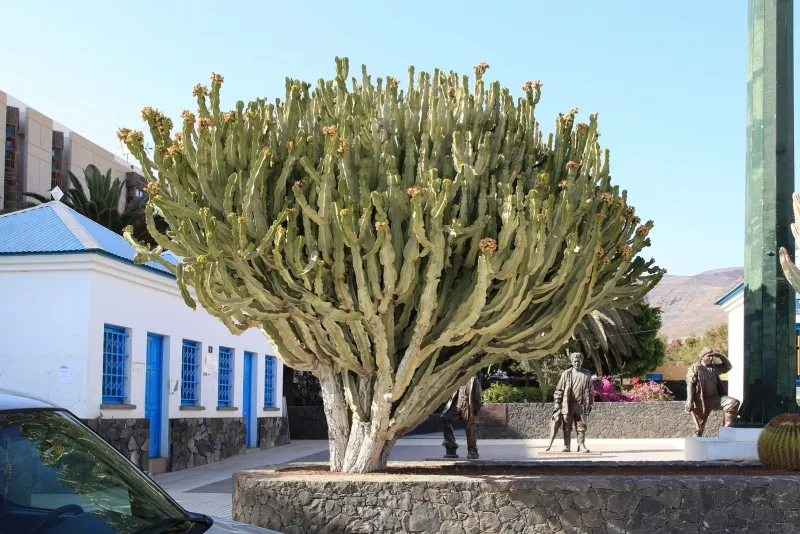
While this species is variable, it consistently has either no trunk or a very short trunk. Branching is typically so dense and consistent that you cannot see through the tree, which has an inverted triangle shape when young, shifting to a more rounded typical tree-like form with great age.
Más información
Photo by Frank Vincentz.
This plant was grown for an outdoor environment, so we do not recommend moving it inside. In general we do not recommend moving plants raised for an outdoor environment indoors.
This plant would make a good houseplant if it had been grown in a controlled greenhouse with houseplant soil. This 'greenhousing' ensures that plants who come home with you are well acclimated to indoor life, and also that they don't have any pests. It is common for outdoor plants to have other passengers as well, such as earthworms or centipides that don't necessarily hurt the plant, but aren't welcome indoors.
If you consider yourself an expert gardener, you can of course attempt to transition this plant indoors. In that case you'll want to strip all the soil from the rootball, wash the roots clean and then spray the entire plant (leaves, undersides of the leaves, all the cracks and roots) with a mix of one tablespoon of rubbing alcohol in a cup of water. Repot the plant in the appropriate sterile soil/pot and take extra care as it transitions to the indoors, especially looking for pests and treating at the first sign of problems. Always consider the risk that any bugs could also affect other houseplants you have nearby.
Enlaces
Esta información refleja las observaciones de Grubb and Nadler y de nuestra comunidad de amantes de las plantas. Siempre tomamos en cuenta las aportaciones de otros horticultores y agradecemos los comentarios de quienes tengan más información sobre el cultivo de esta planta.
© 2020–2026 Grubb and Nadler. Todos los derechos reservados.