
Euphorbia anoplia ‘Mother Hubbard’
mother hubbard or Tanzanian zipper plant
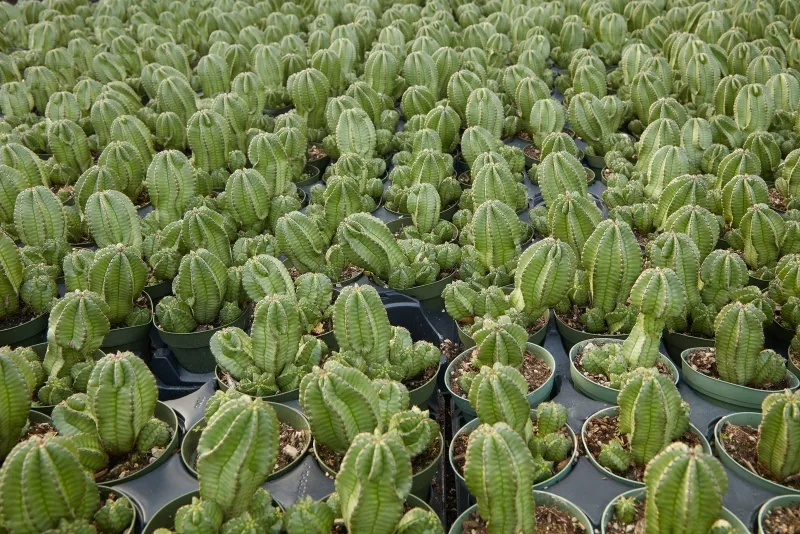
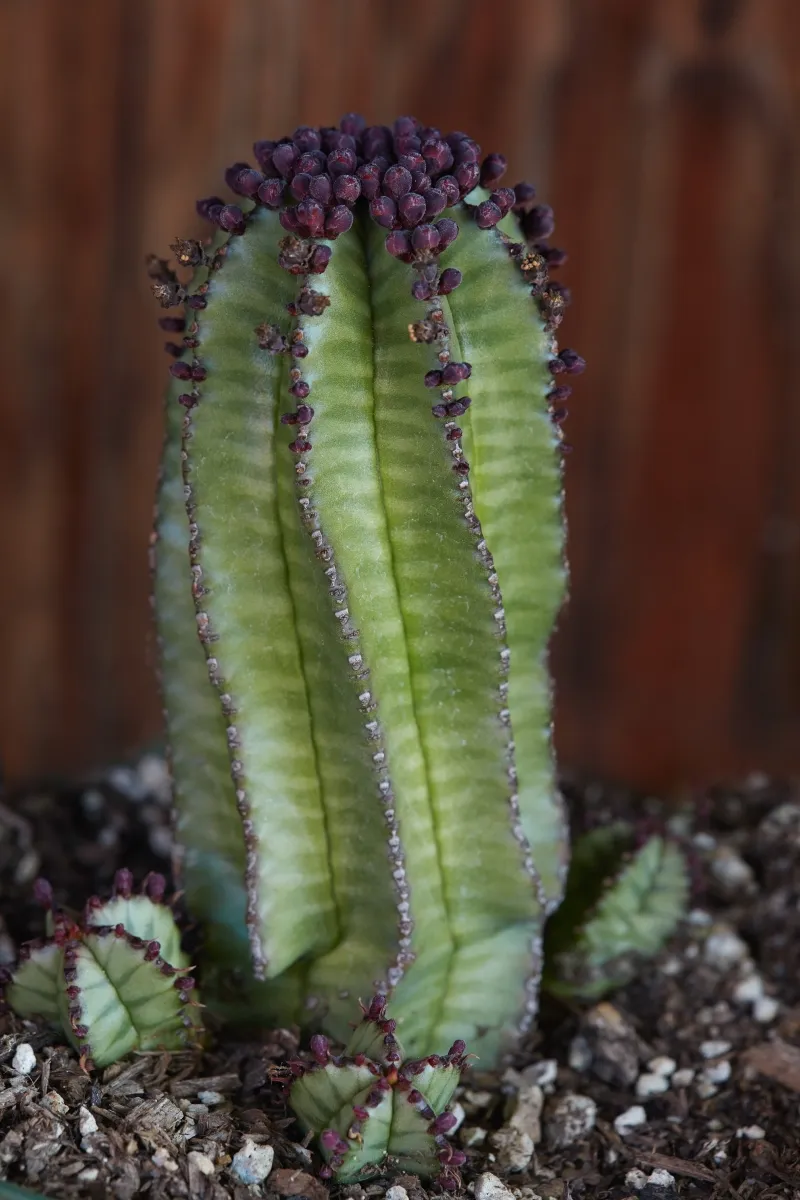
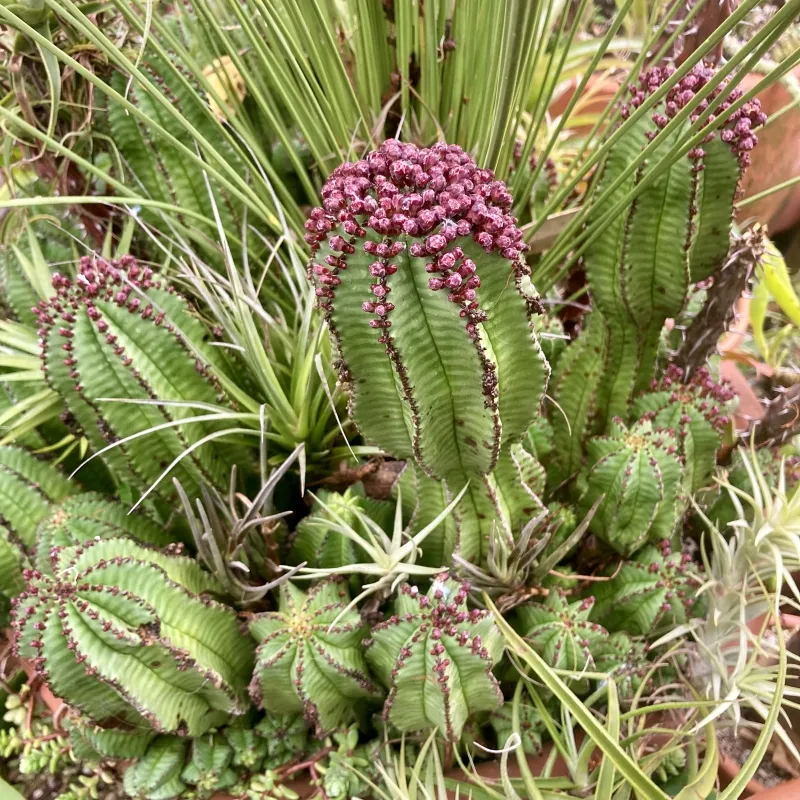
Thornless, cactus-like succulent spurge; flowers dark purple. Offsets rapidly to make a dense colony. Nice in pots. Wash milky sap off skin immediately.
 Altura Altura | 6–20 pulg. |
|---|---|
 Ancho Ancho | 1–2 pies |
 Tolera Tolera | Sequía, Venados, Tuzas, Calor, Macetas, Azoteas, Viento |
 Riego Riego | Bajo |
This euphorbia is from a dry area and as such likes to go totally bone dry between waterings, making it very low-maintenance. To get good healthy growth your plant doesn't want to sit around totally dried out during it's growing season. Once it is dry water it. This euphorbia comes from an area with summer rainfall and is actively growing during that time, when it is forgiving of overwatering errors. During winter dormancy it should be kept extra dry and will be intolerant of overwatering. Remember that if kept in a small pot your plant will want more frequent watering. | |
 Resiste hasta Resiste hasta | 25 °F |
 Exposición Exposición | Sol parcial – Pleno sol |
 Características Características | Jardín de rocas, Escultural, Suculenta, Produce hijuelos, Savia tóxica |
 Interior / exterior Interior / exterior | Exterior |
 Drenaje Drenaje | En el suelo: mezcla para cactus, En maceta: mezcla para cactus |
 Fertilización Fertilización | Uso general |
 Origen Origen | Tanzania |
 Nativa de California Nativa de California | No |
 Zonas Sunset Zonas Sunset | 13–17, 19–24 |
Notas de cultivo
If you desire a large colony plant in the ground, or repot when the pups reach the side of your pot. Looks great in low bowls.
Pups can be removed and rooted, but they aren't the easiest to root. Let sit for a week to callous, use rooting hormone and replant into very sharp drainage. Keep warm and do this during early summer. Do not get the toxic sap on your hands when doing this, and wash off immediately if exposed.
Looks best in full sun, keeping the plant dense. If grown in part shade or part sun the plant will grow but elongates.
Interés especial
Called the Tanzanian zipper plant because of the cool patterning running along the margins of each head.
Esta información refleja las observaciones de Grubb and Nadler y de nuestra comunidad de amantes de las plantas. Siempre tomamos en cuenta las aportaciones de otros horticultores y agradecemos los comentarios de quienes tengan más información sobre el cultivo de esta planta.
© 2020–2026 Grubb and Nadler. Todos los derechos reservados.