
Graptopetalum rusbyi
San Francisco River leatherpetal
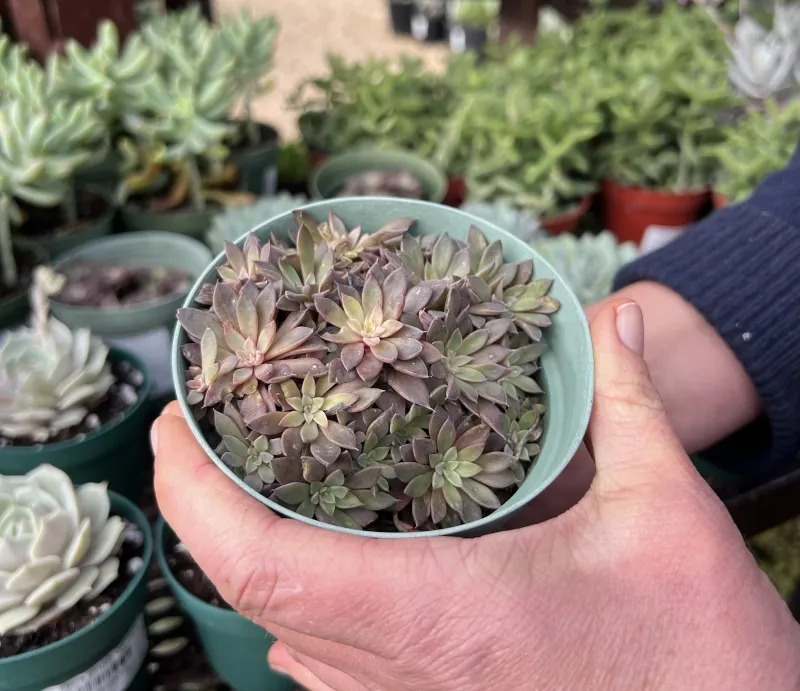
Adorable miniature rosette, suckering. White star-shaped flowers with red speckling. Great for small pots or rockeries.
 Altura Altura | 2–4 pulg. |
|---|---|
 Ancho Ancho | 2–4 pulg. |
 Tolera Tolera | Sequía, Calor, Macetas, Viento |
 Riego Riego | Bajo |
This succulent likes to be fully saturated and then go totally dry before its next watering. Each leaf is a little water tank that stores water for the plant. If you see leaves shriveling, your plant is thirsty. If drought persists the plant will use up the water in its lowest leaves and shed them. Watering when the soil has residual moisture increases the risk of root rot. Remember your watering schedule will depend on the size of the pot (smaller pots needing more frequent watering) and environmental factors such as the season, weather, humidity and exposure. Don't leave succulents in standing water, such as a saucer, for more than a day. | |
 Resiste hasta Resiste hasta | 20 °F |
 Exposición Exposición | Sol parcial – Pleno sol |
 Características Características | Jardín de rocas, Roseta, Suculenta, Produce hijuelos |
 Interior / exterior Interior / exterior | Exterior |
 Drenaje Drenaje | En el suelo: mezcla para cactus, En maceta: mezcla para cactus |
 Fertilización Fertilización | Uso general, Necesita poco |
 Origen Origen | Arizona, EE. UU. |
 Nativa de California Nativa de California | No |
 Zonas Sunset Zonas Sunset | 8–24, H1, H2 |
Notas de cultivo
This plant is best grown with very sharp drainage in a pot or rockery and is inclined to rot if planted in typical garden soil.
Closer to the coast, the more sun it tolerates.
Interés especial
The genus Graptopetalum originates from Greek. Graptos means 'written' and petalon mean 'petal'. This refers to the unusual markings on flowers common to this genus.
This species grows in partial shade at moderate altitudes (1900 ft to 5000 ft above sea level) in the Pinaleno, Santa Teresa, Santa Catalina, Rincon, and Waterman Mountains of Arizona and in several mountain ranges in Sonora, Mexico.
Enlaces
Esta información refleja las observaciones de Grubb and Nadler y de nuestra comunidad de amantes de las plantas. Siempre tomamos en cuenta las aportaciones de otros horticultores y agradecemos los comentarios de quienes tengan más información sobre el cultivo de esta planta.
© 2020–2026 Grubb and Nadler. Todos los derechos reservados.