
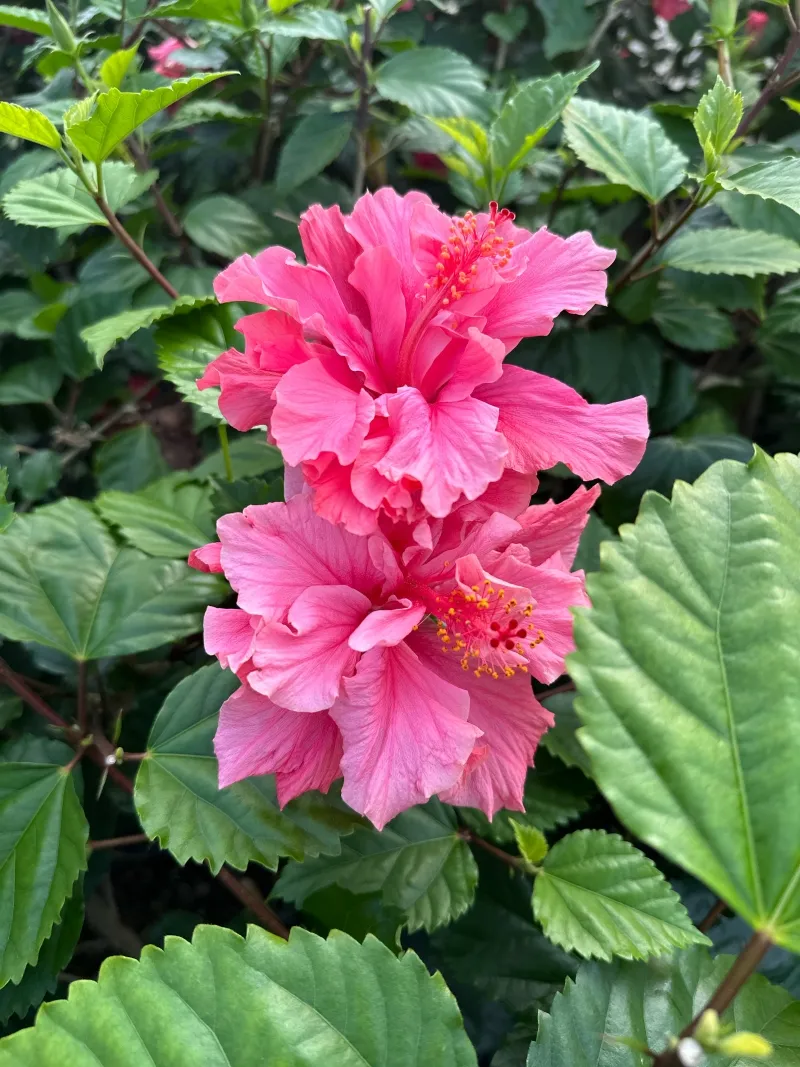
Hibiscus rosa-sinensis ‘Kona’
Edible flowers have a zesty flavor, they are also
The iconic tropical flower brightens areas with abundant blooms during summer months or longer with warm weather. Prune to shape in early spring. Ruffled pink pom-pom flowers.
 Altura Altura | 3–15 pies |
|---|---|
 Ancho Ancho | 3–8 pies |
 Tolera Tolera | Costa, Calor, Macetas, Sal |
 Riego Riego | Moderado – Alto |
Water this plant regularly, when the surface of the soil feels dry. Usually this will mean once or twice a week in warm dry weather. Use drippers, emitters, or a slow stream of water so that it does not run off; allow the water to trickle all the way down through to the deepest layers of soil. In a pot slowly water the entire surface until water comes out of the bottom of your pot. | |
 Resiste hasta Resiste hasta | 30 °F |
 Exposición Exposición | Sombra parcial – Pleno sol |
 Características Características | Con flores, Seto, Barrera visual, Arbusto, Tropical |
 Interior / exterior Interior / exterior | Exterior |
 Drenaje Drenaje | En el suelo: mezcla para plantar, En maceta: tierra para macetas, Tolera suelo pesado, Tolera suelo arenoso |
 Fertilización Fertilización | Para floración |
 Origen Origen | Asia tropical |
 Nativa de California Nativa de California | No |
 Zonas Sunset Zonas Sunset | 9, 12–16, 18–24, H1, H2 |
Notas de cultivo
Good hibiscus for cool-summer fog belt gardens, where it can bloom from summer until early winter.
Responds very well to pruning to keep a dense plant and can even be hedged. Truly one of the most impressive, flamboyant, flowering shrubs in tropical to temperate gardens. While each blossom lasts only a day, they come with rapid abundance through the blooming season. This does create a bit of shedding to be swept up but wow, so worth it!
In tropical climates this shrub can get much larger, unto thirty feet.
Can be espaliered and trained along a flat wall or fence.
Interés especial
Edible flowers have a zesty flavor, they are also used to make tangy teas, though if you are purchasing hibiscus tea it is usually made from Hibiscus sabdariffa.
Esta información refleja las observaciones de Grubb and Nadler y de nuestra comunidad de amantes de las plantas. Siempre tomamos en cuenta las aportaciones de otros horticultores y agradecemos los comentarios de quienes tengan más información sobre el cultivo de esta planta.
© 2020–2026 Grubb and Nadler. Todos los derechos reservados.