
Leucospermum ‘Tango’
pincushion protea
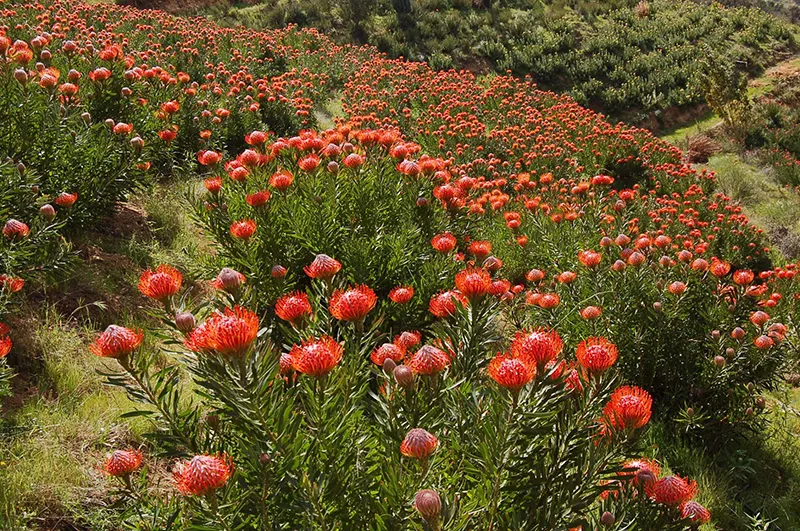
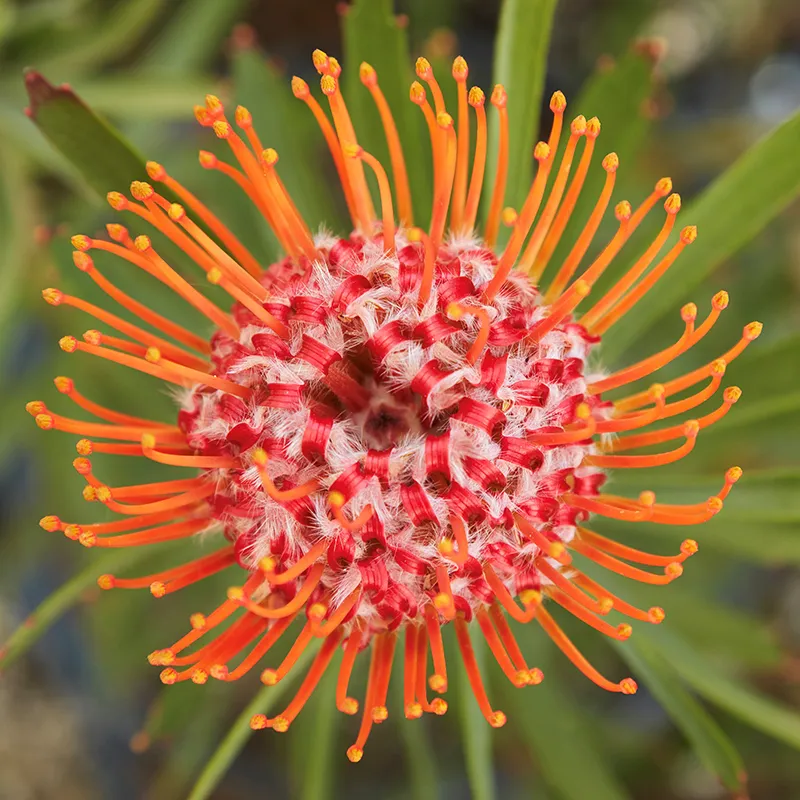
3"-5" tangerine pincushion flower in winter/spring. Upright shrub ideal for poor sandy soils & rocky slopes. No phosphorus fertilizer.
 Altura Altura | 6–8 |
|---|---|
 Ancho Ancho | 4–6 pies |
 Tolera Tolera | Costa, Veranos frescos, Sequía, Neblina, Viento |
 Riego Riego | Bajo |
Many leucospermums are from Mediterranean climates of South Africa, so they adapt well to California, particularly along the coast. They appreciate good drainage, but they're somewhat adaptable to heavier soil as long as they're in a sunny spot and watering is infrequent (once established). Leucospermums will grow and look their best when watered deeply every other week to once a month during summer. With sharp drainage, they will tolerate even more water. | |
 Resiste hasta Resiste hasta | 25 °F |
 Exposición Exposición | Sombra parcial – Pleno sol |
 Características Características | Abejas, Con flores, Seto, Barrera visual, Arbusto |
 Interior / exterior Interior / exterior | Exterior |
 Drenaje Drenaje | En el suelo: mezcla para cactus, En maceta: mezcla para cactus, Tolera suelo arenoso |
 Fertilización Fertilización | Harina de sangre, Emulsión de pescado, Necesita poco, Sin fósforo |
 Origen Origen | Híbrido, Sudáfrica |
 Zonas Sunset Zonas Sunset | 15–17, 19–24 |
Notas de cultivo
Giving this plant all purpose fertilizer will kill it immediately! Generally fertilizer is not necessary. Leucospermums prefer a mildly acidic soil, and if your PH is on the high side, (one cause of yellowing leaves) you can add cottonseed meal, iron, or other mild acidifying fertilizer to adjust it. They appreciate nitrogen in the form of fish emulsion or blood meal, but never give them any significant phosphorus and avoid potassium.
Naturally pincushion proteas have a thick bushy form, but they can be kept smaller and made even bushier by pruning. Don't prune more than two years of growth (where the old woody leafless stems start), or you risk the plant not budding back. They can even be groomed into modest-sized formal hedges.
Interés especial
Tango is the most shade-tolerant of the leucospermum in our experience. In fact, on our farm in Northern San Diego county, it prefers a bit of shade.
Enlaces
Esta información refleja las observaciones de Grubb and Nadler y de nuestra comunidad de amantes de las plantas. Siempre tomamos en cuenta las aportaciones de otros horticultores y agradecemos los comentarios de quienes tengan más información sobre el cultivo de esta planta.
© 2020–2026 Grubb and Nadler. Todos los derechos reservados.