
Mammillaria spinosissima ‘Un Pico’
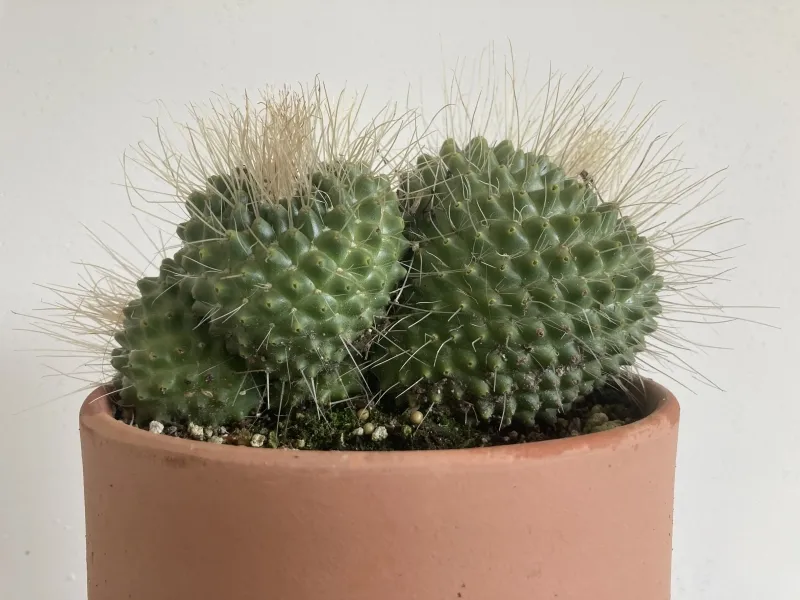
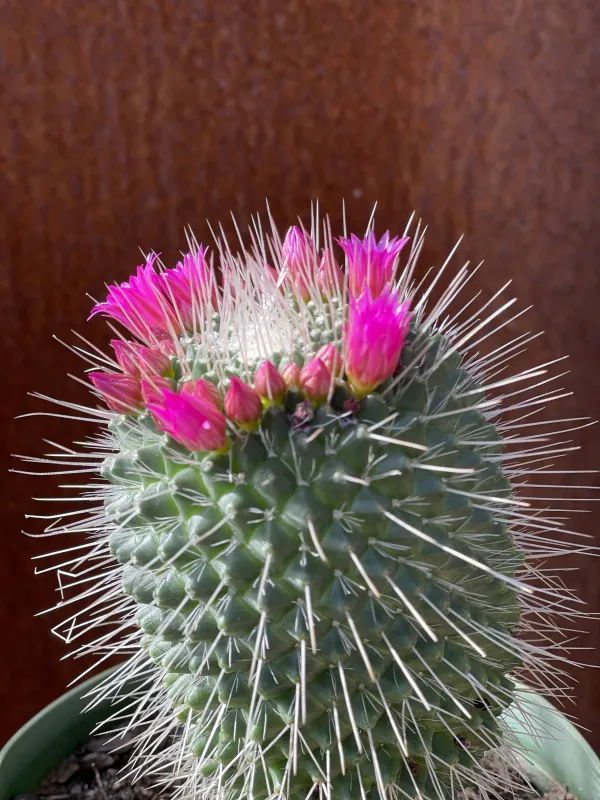
Long thin spines on easy, fast growing, globose cactus. Crown of magenta flowers appears in winter amidst copper spines. Small cactus nice in containers.
 Altura Altura | 6–14 pulg. |
|---|---|
 Ancho Ancho | 3–5 pulg. |
 Tolera Tolera | Sequía, Venados, Calor, Macetas |
 Riego Riego | Bajo |
Most cactus are from the deserts of the world and as such like to go totally bone dry between waterings, making them very low-maintenance. If you see your cactus begin to shrivel or lose firmness, your cactus is likely totally dry and should be watered. To get good healthy growth your plant does not want to sit around totally dried out during its growing season. Once it is dry, water it. This cactus comes from an area with summer rainfall and is actively growing during that time, when it is forgiving of overwatering errors. During winter dormancy it should be kept on the dry side and won't appreciate overwatering, though this cactus is considered easy and isn't particularly touchy about winter rains. Remember that if kept in a small pot your plant will want more frequent watering. | |
 Resiste hasta Resiste hasta | 20 °F |
 Exposición Exposición | Sombra parcial – Pleno sol |
 Características Características | Con espinas, Cactus, Con flores, Jardín de rocas |
 Interior / exterior Interior / exterior | Exterior |
 Drenaje Drenaje | En el suelo: mezcla para cactus, En maceta: mezcla para cactus, Tolera suelo arenoso |
 Fertilización Fertilización | Uso general |
 Origen Origen | Sureste de México |
 Nativa de California Nativa de California | No |
 Zonas Sunset Zonas Sunset | 8, 9, 12–24 |
Notas de cultivo
This species has variable spines and the selection 'Un Poco' is one of the most interesting. Spines are more dramatic in more sun. A single long spine grows from each petiole, giving the cactus tons of character. Looks furry and tolerates light touching, but pet it too hard and it'll poke you!
Typically solitary, but occasionally develops multiple heads.
Esta información refleja las observaciones de Grubb and Nadler y de nuestra comunidad de amantes de las plantas. Siempre tomamos en cuenta las aportaciones de otros horticultores y agradecemos los comentarios de quienes tengan más información sobre el cultivo de esta planta.
© 2020–2026 Grubb and Nadler. Todos los derechos reservados.