
Musa basjoo
hardy banana
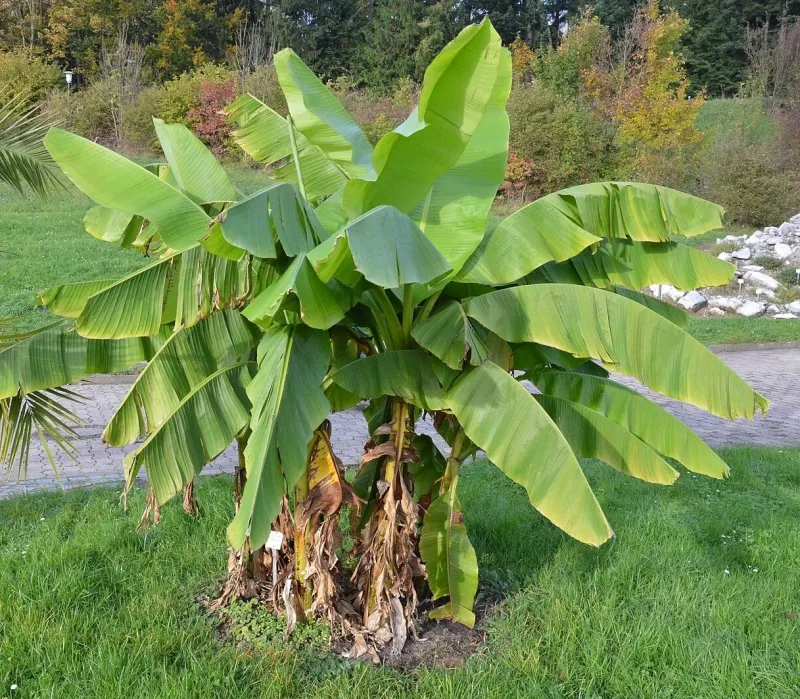
Extremely cold hardy, but will die back to the ground. Protect from wind, which damages leaves. Cream to yellow flower makes inedible green fruit. Suckering.
 Altura Altura | 6–14 |
|---|---|
 Ancho Ancho | 8–10 pies |
 Tolera Tolera | Frío, Calor |
 Riego Riego | Alto |
Water this plant regularly, when the surface of the soil feels dry. Usually this will mean once or twice a week in dry weather. Use drippers, emitters, or a slow stream of water so that it doesn't run off; allow the water to trickle all the way down through to the deepest layers of soil. In a pot slowly water the entire surface until water comes out of the bottom of your pot. | |
 Resiste hasta Resiste hasta | -10 °F |
 Exposición Exposición | Sombra total – Pleno sol |
 Características Características | Follaje vistoso, Barrera visual, Produce hijuelos, Tropical |
 Interior / exterior Interior / exterior | Exterior |
 Drenaje Drenaje | En el suelo: mezcla para plantar, En maceta: tierra para macetas |
 Fertilización Fertilización | Uso general |
 Origen Origen | Islas Ryukyu, Japón |
 Nativa de California Nativa de California | No |
 Zonas Sunset Zonas Sunset | 4–24, H1, H2 |
Notas de cultivo
If you are growing this plant in an extremely cold climate (below 20F) a good thick layer of mulch in winter will help protect the underground rhizome.
Interés especial
Another common name for this banana is Japanese fibre banana, owning to the plants use in textiles.
Enlaces
Esta información refleja las observaciones de Grubb and Nadler y de nuestra comunidad de amantes de las plantas. Siempre tomamos en cuenta las aportaciones de otros horticultores y agradecemos los comentarios de quienes tengan más información sobre el cultivo de esta planta.
© 2020–2026 Grubb and Nadler. Todos los derechos reservados.