
Protea cynaroides
king protea
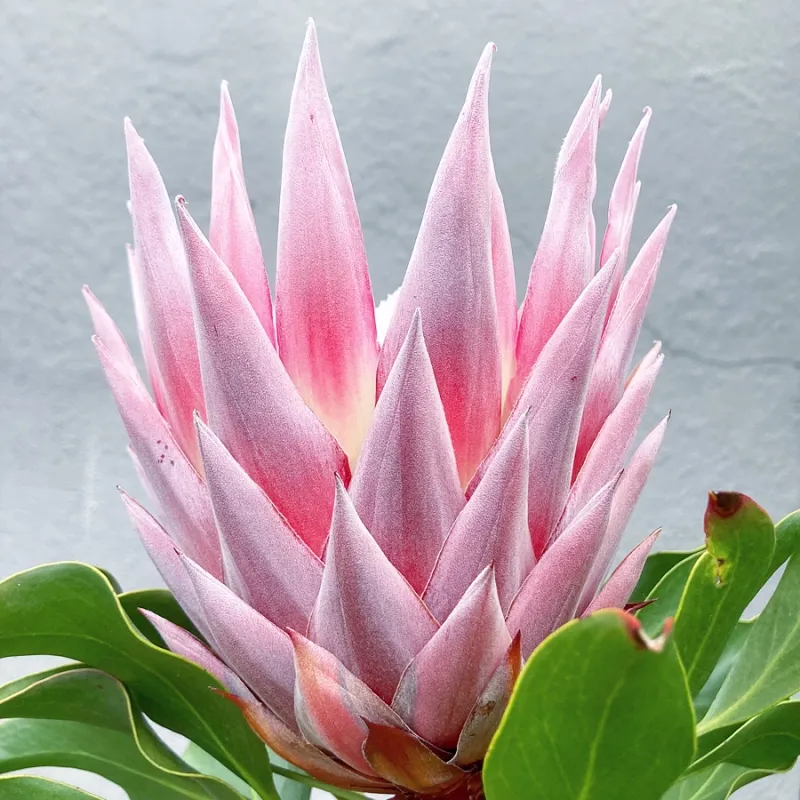
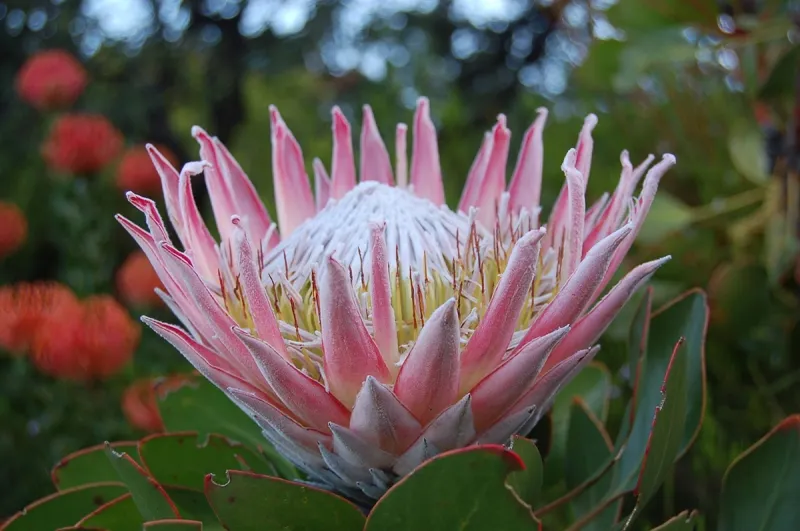
The superlative coastal flowering shrub. Exceptional large blooms, good cut. Shiny, attractive foliage. Good in pots. Avoid phosphorus, potassium, clay soils.
 Altura Altura | 3–5 pies |
|---|---|
 Ancho Ancho | 4–6 pies |
 Tolera Tolera | Costa, Sequía, Macetas, Azoteas, Viento |
 Riego Riego | Bajo |
roteas are well adapted to our Mediterranean climate, making them carefree plants with bountiful rewards. After a few years, when your protea is established, it will want deep watering every couple weeks, though it will tolerate more if the drainage is excellent. Protea respond very poorly to clay soils, especially if they are overwatered. If you just have to plant one in your clay garden, mounding or planting on a slope can help. Also amending with liberal minerals such as lava or pumice helps. | |
 Resiste hasta Resiste hasta | 27 °F |
 Exposición Exposición | Sombra parcial – Pleno sol |
 Características Características | Con flores, Follaje vistoso, Arbusto |
 Interior / exterior Interior / exterior | Exterior |
 Drenaje Drenaje | En el suelo: mezcla para cactus, En maceta: mezcla para cactus, Tolera suelo arenoso |
 Fertilización Fertilización | Harina de sangre, Emulsión de pescado, Necesita poco, Sin fósforo |
 Origen Origen | Sudáfrica |
 Nativa de California Nativa de California | No |
 Zonas Sunset Zonas Sunset | 16, 17, 19–24, H2 |
Notas de cultivo
We also grow a plant named Protea cyanoides 'Pink King'. While Protea cynarioides (this guide) will typically have flowers in shades of pink it is seed grown and thus flowers are more variable than the cultivar 'Pink King' which is grown from cuttings to have consistently large pink flowers.
Proteas can be kept smaller by pruning, but don't prune more than two years of growth where there are no leaves and the branches are woody. Proteas can even be espaliered or pruned into a loose informal screen.
By tip-pinching buds early on (each time they have grown a few leaves), you can force your protea to become more dense. Since they bloom on the terminal buds, this will delay flowering.
Proteas have evolved to live in very poor soils, and so they should never have phosphorus fertilizer, which many a grower has learned the hard way. If you give your protea all-purpose fertilizer, it'll likely be completely dead within a couple weeks. They do respond well to light acidic fertilizer, such as cotton seed meal, or nitrogen fertilizers such as blood meal and fish emulsion. Generally its better to sit back and see how the plant grows without fertilzier, which is typically not needed.
Interés especial
Their coveted flowers on stiff stems are long-lasting after they're cut, perfect for arrangements.
Enlaces
Esta información refleja las observaciones de Grubb and Nadler y de nuestra comunidad de amantes de las plantas. Siempre tomamos en cuenta las aportaciones de otros horticultores y agradecemos los comentarios de quienes tengan más información sobre el cultivo de esta planta.
© 2020–2026 Grubb and Nadler. Todos los derechos reservados.