
Ravenea glauca
mini majestic palm
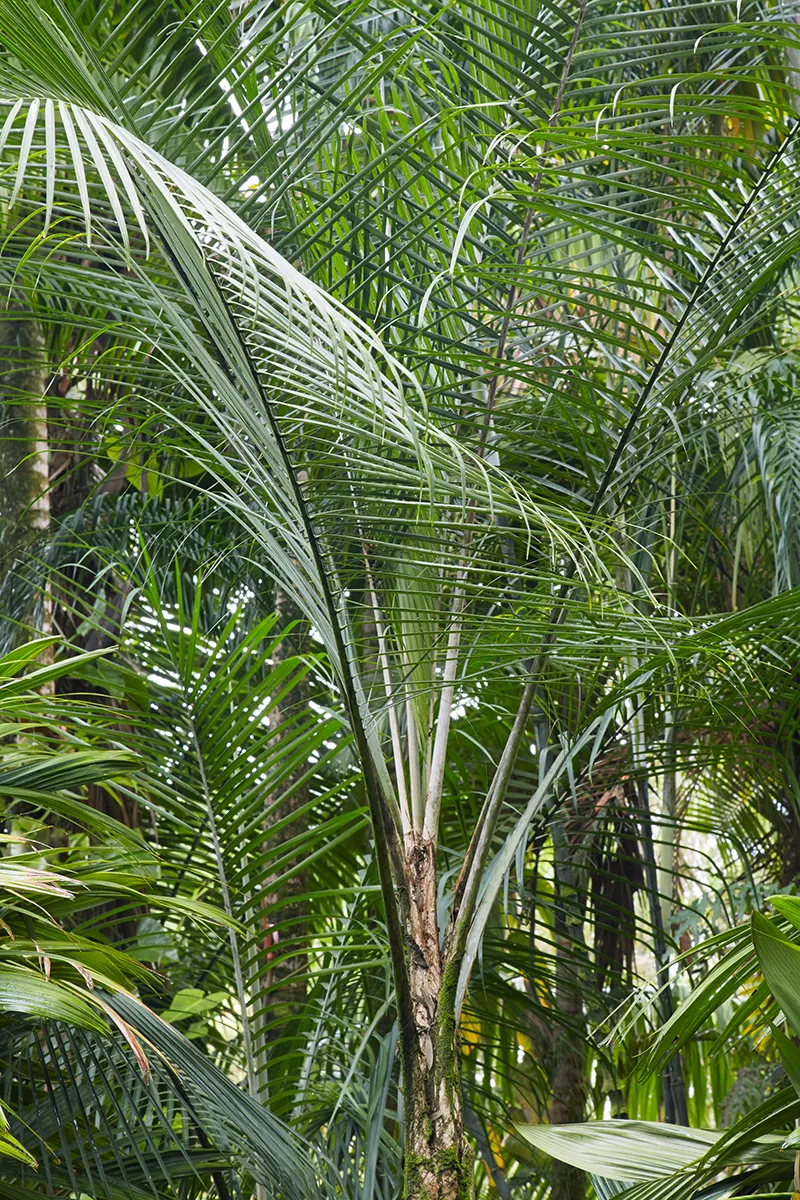
Modest-size, graceful feather palm with a thin trunk, fine foliage and neat habit. Undersides of leaves are white. Moderate water. Ensure good drainage. Nice flowers.
 Altura Altura | 12–20 |
|---|---|
 Ancho Ancho | 6–10 |
 Tolera Tolera | Calor, Macetas |
 Riego Riego | Moderado |
This palm should be watered deeply every week or two once it's established. It doesn't want to ever dry out completely. Given the sharp drainage it appreciates it'll need more frequent watering. | |
 Resiste hasta Resiste hasta | 28 °F |
 Exposición Exposición | Sombra total – Pleno sol |
 Características Características | Palma, Solitaria, Tropical |
 Interior / exterior Interior / exterior | Exterior |
 Drenaje Drenaje | En el suelo: mezcla para cactus, En maceta: mezcla para cactus, Tolera suelo arenoso |
 Fertilización Fertilización | Fertilizante para palmas |
 Origen Origen | Madagascar |
 Zonas Sunset Zonas Sunset | 16, 17, 21–24 |
Notas de cultivo
This palm naturally grows in the gravely cracks between rocks in Isalo national park in Madagascar. As such, we find good drainage is important and root rot occasionally occurs when planted in heavy soil. That said, one member of our team has grown this palm through a few winters in SSZ 16 in heavy shaded clay without trouble, and many other growers promote this palms durability in various soils. If you have experience with this palm in heavy soil we'd love to hear from you!
Given this palms habitat, in tight canyons, it does well in both full sun (where palms high in the canyons grow) and full shade (where lower palms live). Palms in the shade will be thiner trunked and even more lacy and delicate looking, while those in full sun will be stouter and have brighter powdery blue-green leaves.
Interés especial
There are two forms of this palm in Isalo National Park; one grows in shady steep canyons and has a smaller overall stance, the other grows out on open flat rocky ledges in hot baking sun and has a larger stance. Unfortunately, the two forms are not often distinguished in cultivation.
The species 'glauca' refers to the glaucous (powdery) blue new growth.
Enlaces
Esta información refleja las observaciones de Grubb and Nadler y de nuestra comunidad de amantes de las plantas. Siempre tomamos en cuenta las aportaciones de otros horticultores y agradecemos los comentarios de quienes tengan más información sobre el cultivo de esta planta.
© 2020–2026 Grubb and Nadler. Todos los derechos reservados.