
Rhipsalis cereuscula
coral cactus
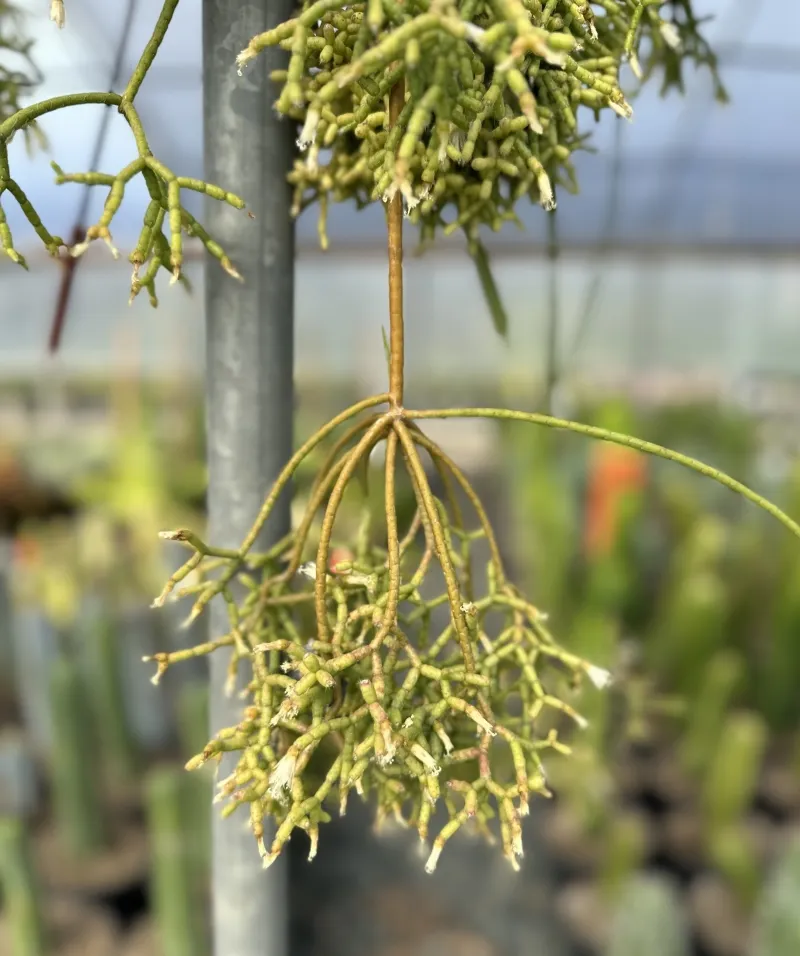
Shrubby epiphytic cactus looks great in pots, baskets, and vertical gardens. Long dangling stems end in bushy clusters. Mature plants bob in the breeze like living mobile art pieces.
 Altura Altura | 1–3 pies |
|---|---|
 Ancho Ancho | 1–2 pies |
 Tolera Tolera | Calor, Macetas |
 Riego Riego | Moderado |
This plant is a stereotype buster. Not only is it a cactus, yes a cactus! It also lives up in the tree tops - a so called epiphyte. While these plants can go mostly dry, do not water them like a cactus. Rhipsalis are from South American forests that receive consistent rainfall and, as such, they appreciate a drink when they are mostly dry to just barely dried out. If you push them too far the stems will begin to shrivel and later fall off. While they can take some sun they respond to drought much better in shady locations. If rhipsalis are in very fast draining material they are hard to overwater. | |
 Resiste hasta Resiste hasta | 30 °F |
 Exposición Exposición | Sombra total – Sombra parcial |
 Características Características | Cactus, Epífita, Colgante, Suculenta, Jardín vertical |
 Interior / exterior Interior / exterior | Exterior |
 Drenaje Drenaje | En maceta: mezcla para cactus, Corteza para orquídeas |
 Fertilización Fertilización | Uso general |
 Origen Origen | Oeste de Sudamérica |
 Nativa de California Nativa de California | No |
 Zonas Sunset Zonas Sunset | 16, 17, 21–24, H2 |
Notas de cultivo
In habitat these plants cascade from the treetops, rooting wherever they land. This makes them ideal for hanging planters and elevated pottery. It also makes them exceedingly easy to propagate by cutting. They do well in pots, even tiny ones, where they can live indefinitely as long as the water is consistent.
Many small white bell shaped flowers at branch tips add grace when in bloom, though this plant is shy to put on such a show.
Typically this plant is not grown in the ground.
Esta información refleja las observaciones de Grubb and Nadler y de nuestra comunidad de amantes de las plantas. Siempre tomamos en cuenta las aportaciones de otros horticultores y agradecemos los comentarios de quienes tengan más información sobre el cultivo de esta planta.
© 2020–2026 Grubb and Nadler. Todos los derechos reservados.