
Syagrus weddelliana
wedding palm
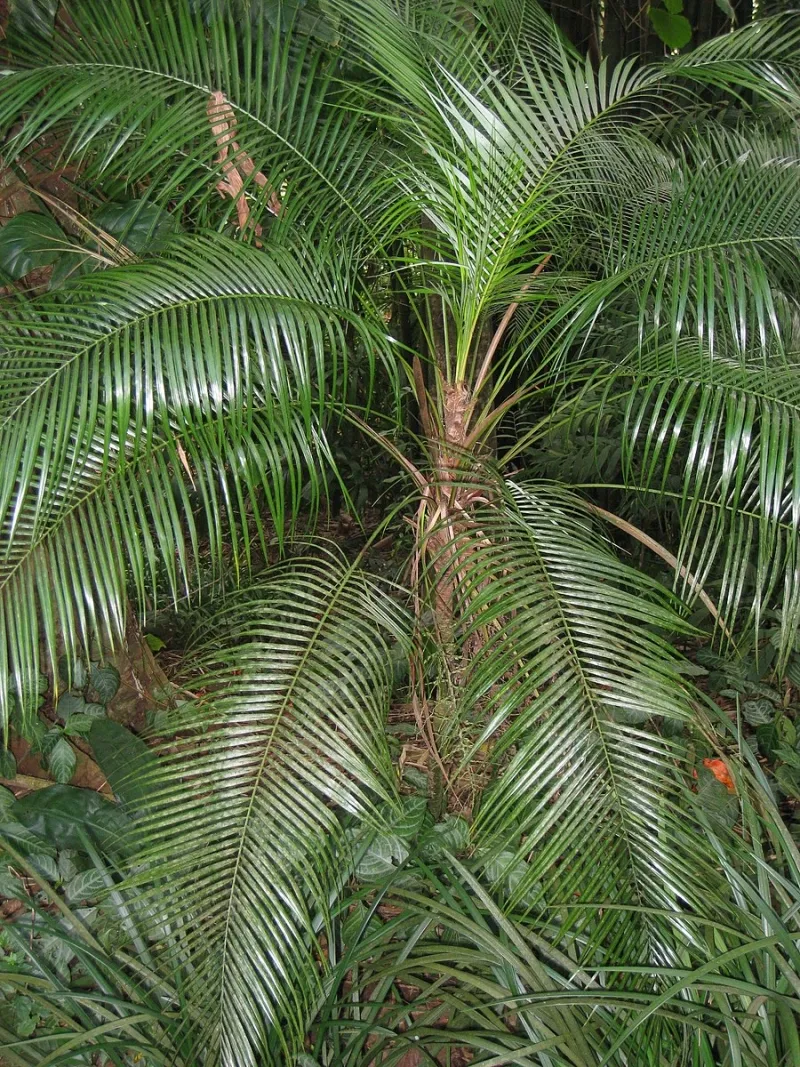
Exquisite miniature feather palm nice in understory and potted. Best in warm-summer areas, good drainage.
 Sinónimos Sinónimos | Lytocaryum weddellianum Cocos weddelliana Microcoelum weddellianum |
|---|---|
 Altura Altura | 3–12 pies |
 Ancho Ancho | 3–5 pies |
 Tolera Tolera | Veranos frescos, Neblina, Espacios angostos, Macetas |
 Riego Riego | Moderado |
Water this plant regularly, when the top inch or so of soil feels dry. If you establish this pattern over several years, then you can cut back to watering every week or two in dry weather. Use drippers, emitters, or a slow stream of water so that it doesn't run off; allow the water to trickle all the way down through the deepest layers of soil. In a pot slowly water the entire surface until water comes out of the bottom of your pot. | |
 Resiste hasta Resiste hasta | 25 °F |
 Exposición Exposición | Sombra total – Sombra parcial |
 Características Características | Palma, Solitaria, Tropical |
 Interior / exterior Interior / exterior | Exterior |
 Drenaje Drenaje | En el suelo: mezcla para cactus, En el suelo: mezcla para plantar, En maceta: mezcla para cactus, Tolera suelo arenoso |
 Fertilización Fertilización | Fertilizante para palmas |
 Origen Origen | Sur de Brasil |
 Nativa de California Nativa de California | No |
 Zonas Sunset Zonas Sunset | 16, 17, 19–24, H1, H2 |
Notas de cultivo
Prune off lowest leaves as they brown to keep this palm looking tidy. Mature plants in warmer areas can produce marble-size coconuts with husks that split when ripe.
Interés especial
Grows up to 3,000 feet in Brazil's Atlantic forest in the states of Rio de Janeiro and Espirito Santo. Its home climate is tropical with a cool, drier winter and rainy summer.
Más información
Can this plant be a houseplant? Well that's a tricky question. This specific plant hasn't been grown to be a houseplant. Houseplants are grown under regulated conditions and with sterile soil, setting them up to thrive in your home. When outdoor-grown plants are taken indoors, they tend to transition poorly, often becoming magnets for pests. That said, if you decide to live dangerously and bring this plant indoors, here's some advice to help you out. Start by un potting the plant and removing any loose soil (but don't disturb the roots). Next, preemptively treat the entire plant, including the roots, with an insecticidal soap. Be sure to treat the roots gently throughout this process. Use a new nursery can or sterilize the previous one with bleach. Repot the plant in a fresh mix and then water deeply with the insecticidal soap mix. Be sure to keep an extra close eye out for any pests that might pop up. Always consider the risk of introducing pests to your other houseplants.
Enlaces
Esta información refleja las observaciones de Grubb and Nadler y de nuestra comunidad de amantes de las plantas. Siempre tomamos en cuenta las aportaciones de otros horticultores y agradecemos los comentarios de quienes tengan más información sobre el cultivo de esta planta.
© 2020–2026 Grubb and Nadler. Todos los derechos reservados.