
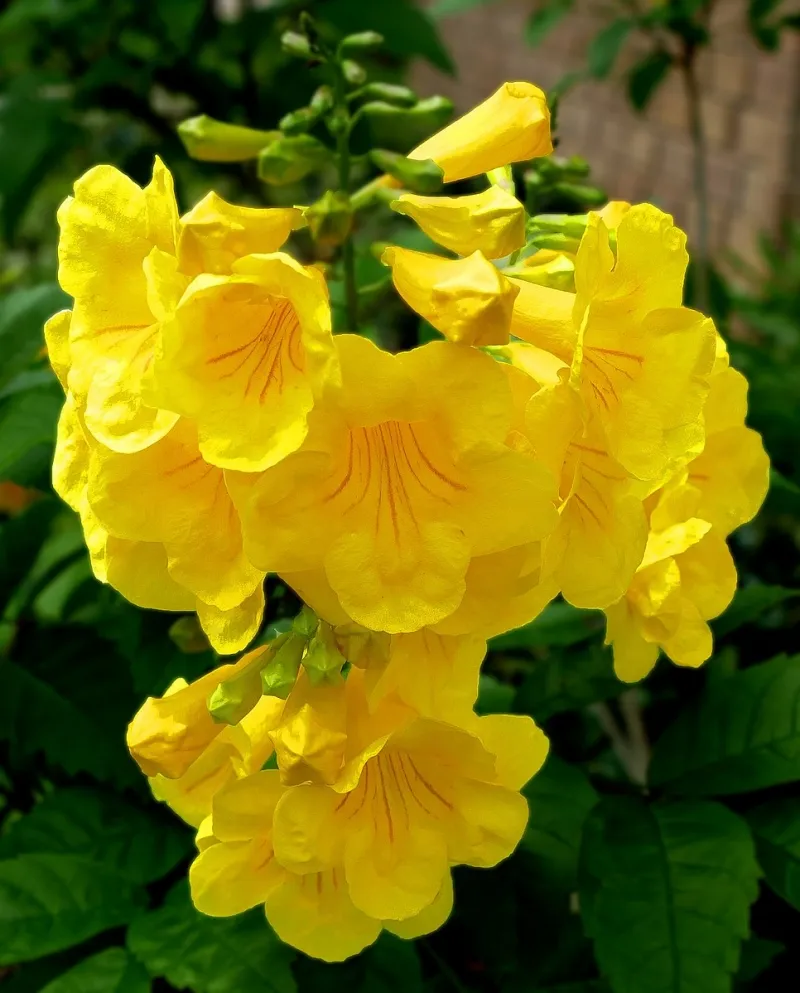
Tecoma stans
yellow bells
Grown for its golden yellow flower clusters at branch tips from spring through summer into fall. Prune into a shrub or small tree. Semi-deciduous.
 Altura Altura | 6–10 pies |
|---|---|
 Ancho Ancho | 5–8 pies |
 Tolera Tolera | Calor, Macetas, Viento |
 Riego Riego | Bajo – Moderado |
Water this plant infrequently, when the top two inches or so of soil feel dry. Usually this will mean every week or two in dry weather. If you establish this pattern over several years, then you can cut back to watering every four to six weeks in dry weather. Use drippers, emitters, or a slow stream of water so that it doesn't run off; allow the water to trickle all the way down through the deepest layers of soil. This plant will look more lush if given water every two to four weeks during dry weather once established. In a pot slowly water the entire surface until water comes out of the bottom of your pot. | |
 Resiste hasta Resiste hasta | 25 °F |
 Exposición Exposición | Sombra parcial – Pleno sol |
 Características Características | Abejas, Mariposas, Caducifolia, Con flores, Arbusto, Tropical, Forma tronco |
 Interior / exterior Interior / exterior | Exterior |
 Drenaje Drenaje | En el suelo: mezcla para cactus, En el suelo: mezcla para plantar, En maceta: tierra para macetas, Tolera suelo arenoso |
 Fertilización Fertilización | Uso general |
 Origen Origen | América |
 Nativa de California Nativa de California | No |
 Zonas Sunset Zonas Sunset | 9, 12–24, H1, H2 |
Notas de cultivo
Established plants may die back from frost but will regrow when warm weather sets in in spring. Very tough and resilient, and floriferous.
Surprisingly successful in banana belts of coastal central California, such as the east side of San Francisco. Exceptional performance in hot inland regions.
Interés especial
Tecoma stans is nontoxic itself, but the honey from its flowers is poisonous nonetheless.
Enlaces
Esta información refleja las observaciones de Grubb and Nadler y de nuestra comunidad de amantes de las plantas. Siempre tomamos en cuenta las aportaciones de otros horticultores y agradecemos los comentarios de quienes tengan más información sobre el cultivo de esta planta.
© 2020–2026 Grubb and Nadler. Todos los derechos reservados.