
Tylecodon paniculatus
butterboom
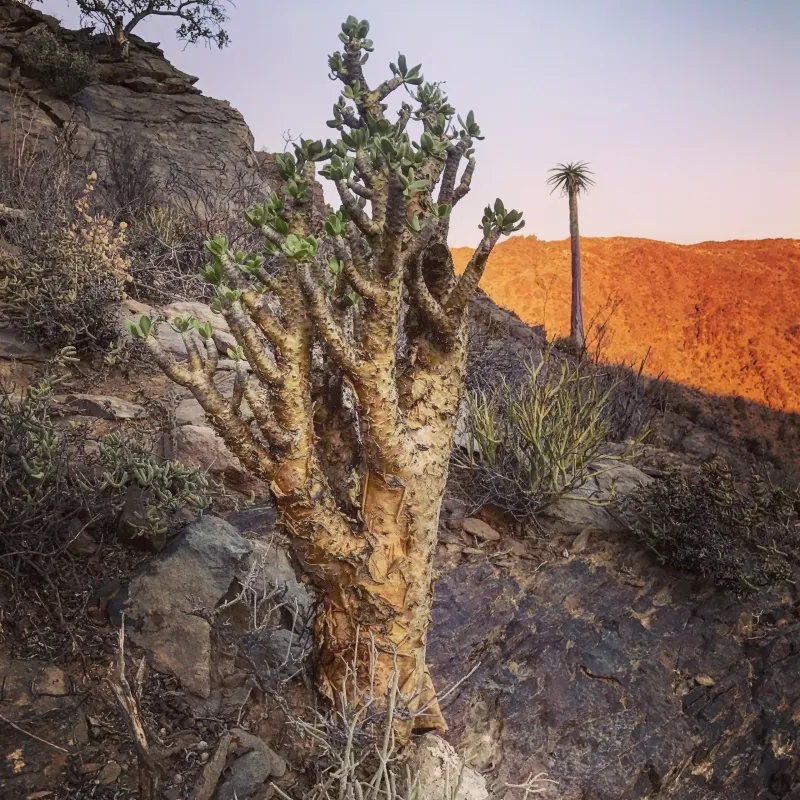
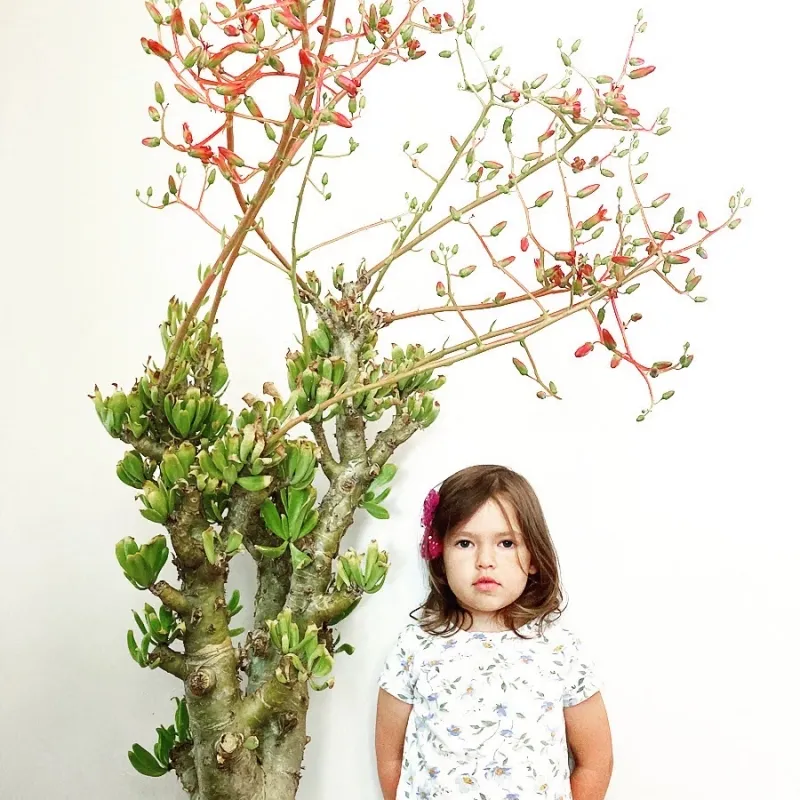
Peeling bark adorns this natural bonsai. If water is withheld, loses leaves during summer, when flowers are held on long upright stems. Good drainage.
 Altura Altura | 2–4 pies |
|---|---|
 Ancho Ancho | 1–3 pies |
 Tolera Tolera | Sequía, Calor, Macetas, Azoteas |
 Riego Riego | Bajo – Moderado |
Most tylecodon are from the deserts of Southern Africa and as such like to go totally bone dry between waterings, making them very low-maintenance. If you see your tylecodon begin to shrivel or lose firmness, your plant is likely totally dry and should be watered. This tylecodon comes from an area with winter rainfall and is actively growing during that time, when it is forgiving of overwatering errors. During summer dormancy it should be kept extra dry and won't tolerate overwatering. If you see the trunk shriveling, or branches shriveling and falling off you know your plant needs some water. Remember that if kept in a small pot your plant will want more frequent watering. | |
 Resiste hasta Resiste hasta | 25 °F |
 Exposición Exposición | Sombra parcial – Pleno sol |
 Características Características | Caudiciforme, Con flores, Arbusto, Suculenta |
 Interior / exterior Interior / exterior | Exterior |
 Drenaje Drenaje | En el suelo: mezcla para cactus, En maceta: mezcla para cactus, Requiere drenaje perfecto, Tolera suelo arenoso |
 Fertilización Fertilización | Uso general |
 Origen Origen | Oeste de Sudáfrica |
 Nativa de California Nativa de California | No |
 Zonas Sunset Zonas Sunset | 16, 17, 19–24, H2 |
Notas de cultivo
Appreciates a spot with full winter sun, but won't mind summer shade.
Cut back hard every few years to keep the trunk more stout, if desired.
Does not tolerate heavy clay soil.
Cut branches can be rooted in fall or early spring, but are not the easiest to root.
Más información
The stunning photo of this plant in habitat (with Aloe pillansii photo bombing in the background) was taken by our staff member Tyson Curtis in Namibia.
Esta información refleja las observaciones de Grubb and Nadler y de nuestra comunidad de amantes de las plantas. Siempre tomamos en cuenta las aportaciones de otros horticultores y agradecemos los comentarios de quienes tengan más información sobre el cultivo de esta planta.
© 2020–2026 Grubb and Nadler. Todos los derechos reservados.