
Xanthorrhoea glauca
grass tree
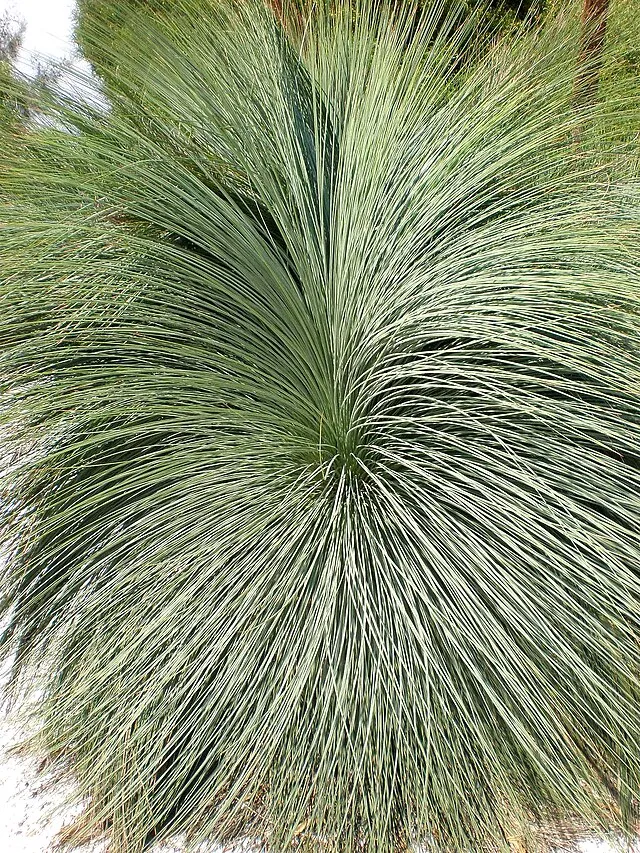
Tall grass tree grows several arms with long thin grey green leaves. Thick textured trunk over time. Slow growing, unique and rare. Excellent drainage a must.
 Altura Altura | 8–12 pies |
|---|---|
 Ancho Ancho | 6–8 pies |
 Tolera Tolera | Frío, Veranos frescos, Sequía, Macetas |
 Riego Riego | Bajo – Moderado |
Water this plant infrequently, when the top two inches or so of soil feel dry. Usually this will mean every week or two in dry weather. If you establish this pattern over several years, then you can cut back to watering every four to six weeks in dry weather. Use drippers, emitters, or a slow stream of water so that it does not run off; allow the water to trickle all the way down through the deepest layers of soil. This plant will look more lush if given water every two to four weeks during dry weather once established. In a pot slowly water the entire surface until water comes out of the bottom of your pot. This plant can also tolerate regular water in the garden, given good drainage. | |
 Resiste hasta Resiste hasta | 17 °F |
 Exposición Exposición | Sombra parcial – Pleno sol |
 Características Características | Abejas, Con flores, Follaje vistoso, Tipo pasto, Escultural, Árbol, Forma tronco |
 Interior / exterior Interior / exterior | Exterior |
 Drenaje Drenaje | En el suelo: mezcla para cactus, En maceta: mezcla para cactus, Requiere drenaje perfecto, Tolera suelo arenoso |
 Fertilización Fertilización | Necesita poco, Sin fósforo |
 Origen Origen | Este de Australia |
 Nativa de California Nativa de California | No |
 Zonas Sunset Zonas Sunset | 8, 9, 14–24, H1 |
Notas de cultivo
This plant grows a beard (accumulation of old dead leaves) on its trunk, giving it a husky look. Leave the beard as it appears in nature (until it burns off leaving a blackened trunk) or trim off the older leaves to expose a rough trunk. This plant survives fires in Australia and as such is likely to survive a forest fire here in California. Plant it as part of your fire resilient garden strategy in the urban interface.
While this plant is quite slow it sure is worth the wait and makes a stunning foliage feature in the short term. Expect a branched 'tree' with trunks around five feet tall in thirty to forty years.
Avoid fertilizer with phosphorus. Most California soils will contain sufficient nutrients for this plant without amendment.
Interés especial
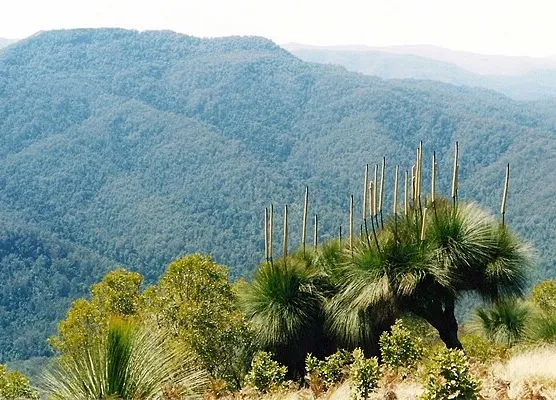
Atop this handsome tree come tall, cylindrical flower spikes that add an additional ten feet!
Más información
This widespread eastern Australian species ranges from the mountains west of Brisbane to mountains northwest of Melbourne.
You might spot one of the two subspecies, angustifolia, in the Blue Mountains, west of Sydney, among its many natural occurrences.
Enlaces
Esta información refleja las observaciones de Grubb and Nadler y de nuestra comunidad de amantes de las plantas. Siempre tomamos en cuenta las aportaciones de otros horticultores y agradecemos los comentarios de quienes tengan más información sobre el cultivo de esta planta.
© 2020–2026 Grubb and Nadler. Todos los derechos reservados.