
Abutilon ‘Red Tiger’
flowering maple
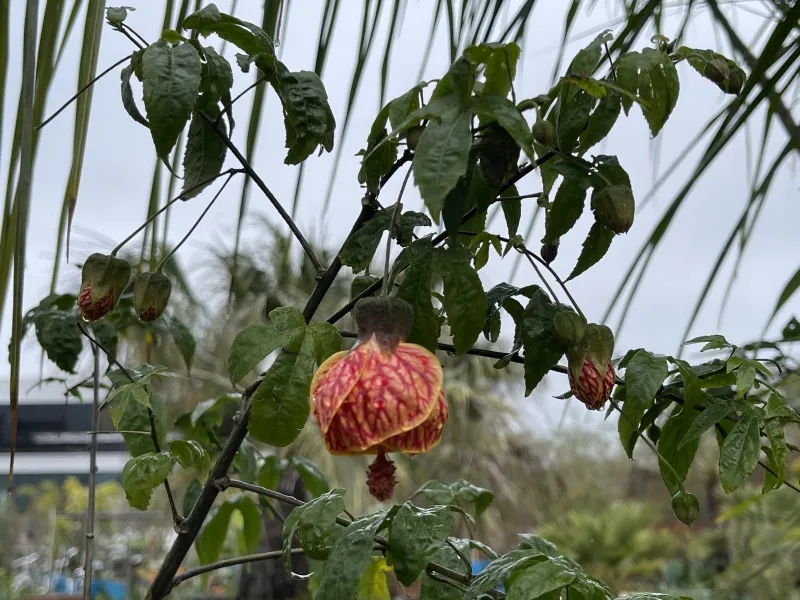
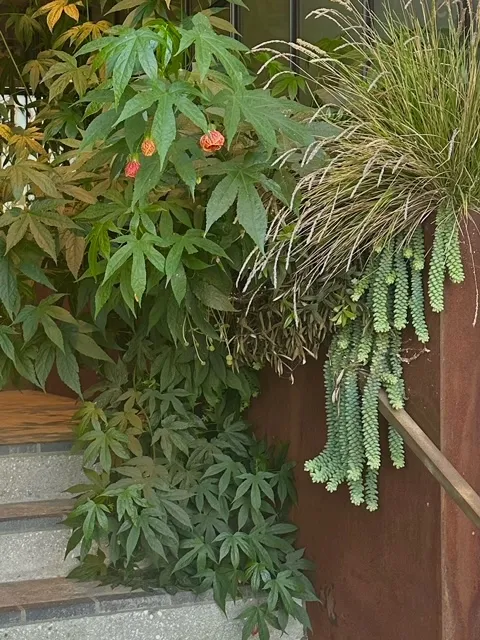
Tropical lobed foliage on a loose open plant. Takes well to pruning, making the plant bushier. Pendent lantern-shaped yellow flowers with prominent red veins.
 Altura Altura | 3–4 pies |
|---|---|
 Ancho Ancho | 2–3 pies |
 Tolera Tolera | Veranos frescos, Neblina, Macetas |
 Riego Riego | Moderado – Alto |
Water your flowering maple regularly, when the top inch or so of soil feels dry. If you establish this pattern over several years, then you can cut back to watering every week or two in dry weather. Use drippers, emitters, or a slow stream of water so that it doesn't run off; allow the water to trickle all the way down through the deepest layers of soil. In a pot slowly water the entire surface until water comes out of the bottom of your pot. There are places in Sunset Zone 17 with consistent fog drip that this plant thrives and even naturalizes in shady areas under trees without additional irrigation. We have seen this in both San Francisco and Santa Cruz. | |
 Resiste hasta Resiste hasta | 15 °F |
 Exposición Exposición | Sombra total – Pleno sol |
 Características Características | Con flores, Colibríes, Barrera visual, Arbusto, Tropical |
 Interior / exterior Interior / exterior | Exterior |
 Drenaje Drenaje | En el suelo: mezcla para plantar, En maceta: tierra para macetas, Tolera suelo pesado, Tolera suelo arenoso |
 Fertilización Fertilización | Para floración |
 Origen Origen | Híbrido, Sudamérica |
 Nativa de California Nativa de California | No |
 Zonas Sunset Zonas Sunset | 5, 6, 8, 9, 14–24 |
Notas de cultivo
Abutilon look best with a yearly hard pruning in late winter or early spring to keep the plant dense, otherwise they tend to get very lanky over time. They do well with some support, or nearby plantings that they can grow through to support them. Avoid windy spots.
Interés especial
Long consistent blooming period from spring through summer.
The common name flowering maple refers to this plant's palmate leaves, which resemble maples. They are in fact not related to maples, so much as they are to other mallows such as hibiscus.
Esta información refleja las observaciones de Grubb and Nadler y de nuestra comunidad de amantes de las plantas. Siempre tomamos en cuenta las aportaciones de otros horticultores y agradecemos los comentarios de quienes tengan más información sobre el cultivo de esta planta.
© 2020–2026 Grubb and Nadler. Todos los derechos reservados.