
Acacia aphylla
live wire
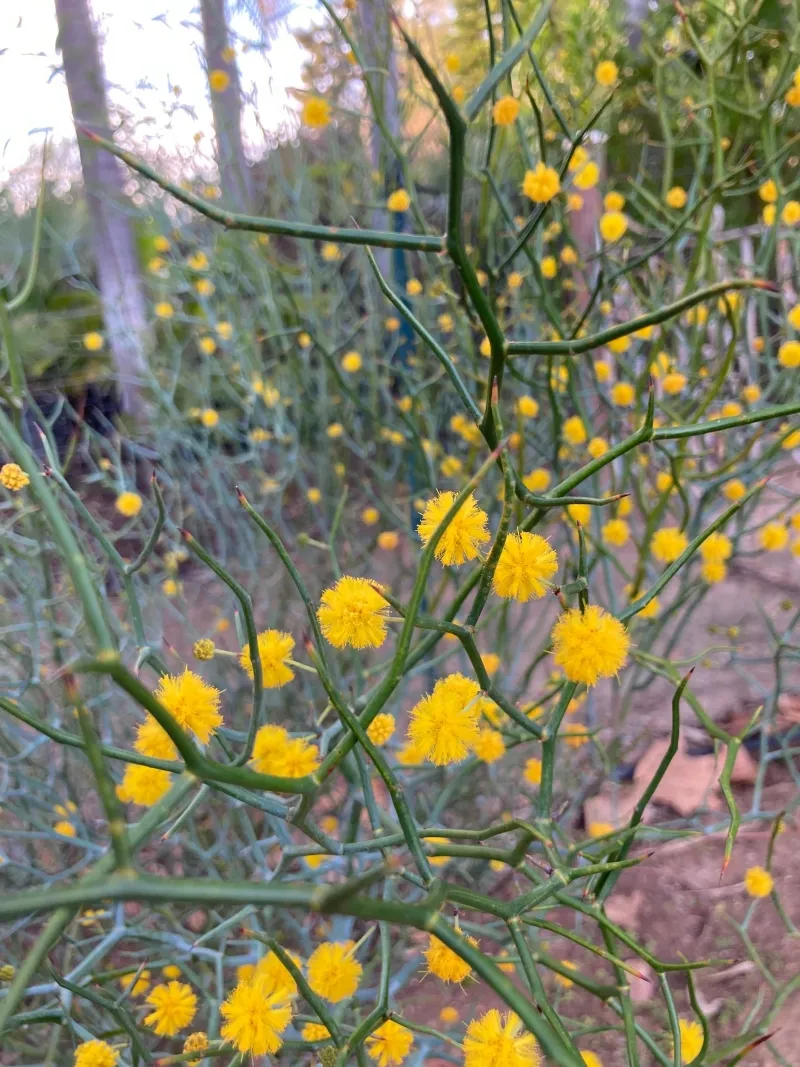
Quirky leafless soft-spiny shrub with showy golden orb flowers from late winter into spring. Tolerates drought, heat, frost.
 Altura Altura | 6–8 pies |
|---|---|
 Ancho Ancho | 4–6 pies |
 Tolera Tolera | Sequía, Calor, Macetas, Azoteas, Descuido |
 Riego Riego | Bajo |
For the first three years after it's planted, this acacia should be watered deeply but infrequently (when the top three inches of soil or so have dried). After that, it won't need supplemental water except in exceptionally hot and dry environments but will look its best with occasional summer irrigation once dry. Use drippers, emitters or a slow stream of water so that it doesn't run off; allow the water to trickle all the way down through the deepest layers of soil. | |
 Resiste hasta Resiste hasta | 20 °F |
 Exposición Exposición | Sombra parcial – Pleno sol |
 Características Características | Con espinas, Con flores, Escultural, Arbusto |
 Interior / exterior Interior / exterior | Exterior |
 Drenaje Drenaje | En el suelo: mezcla para cactus, En maceta: mezcla para cactus, Tolera suelo arenoso |
 Fertilización Fertilización | Uso general |
 Origen Origen | Oeste de Australia |
 Nativa de California Nativa de California | No |
 Zonas Sunset Zonas Sunset | 8, 9, 14–24, H1 |
Notas de cultivo
Appreciates fertilizer during the late spring and summer season.
Can be pruned hard in spring (after it's done flowering) to reset the overall size of the plant.
Does well in pots, which will dwarf the plant to be in harmonious balance with the pot.
This plant really looks its best in full sun. One grower notes that part of their tree is shaded by a larger eucalyptus; the side that receives full sun looks robust, while the part in the shade looks stunted and listless.
Interés especial
This plant has evolved the ability to photosynthesize through its stems, rather than leaves. This allows it to retain water more efficiently, making it a very drought tolerant choice for your garden.
Esta información refleja las observaciones de Grubb and Nadler y de nuestra comunidad de amantes de las plantas. Siempre tomamos en cuenta las aportaciones de otros horticultores y agradecemos los comentarios de quienes tengan más información sobre el cultivo de esta planta.
© 2020–2026 Grubb and Nadler. Todos los derechos reservados.