
Acacia boormanii
Snowy River wattle
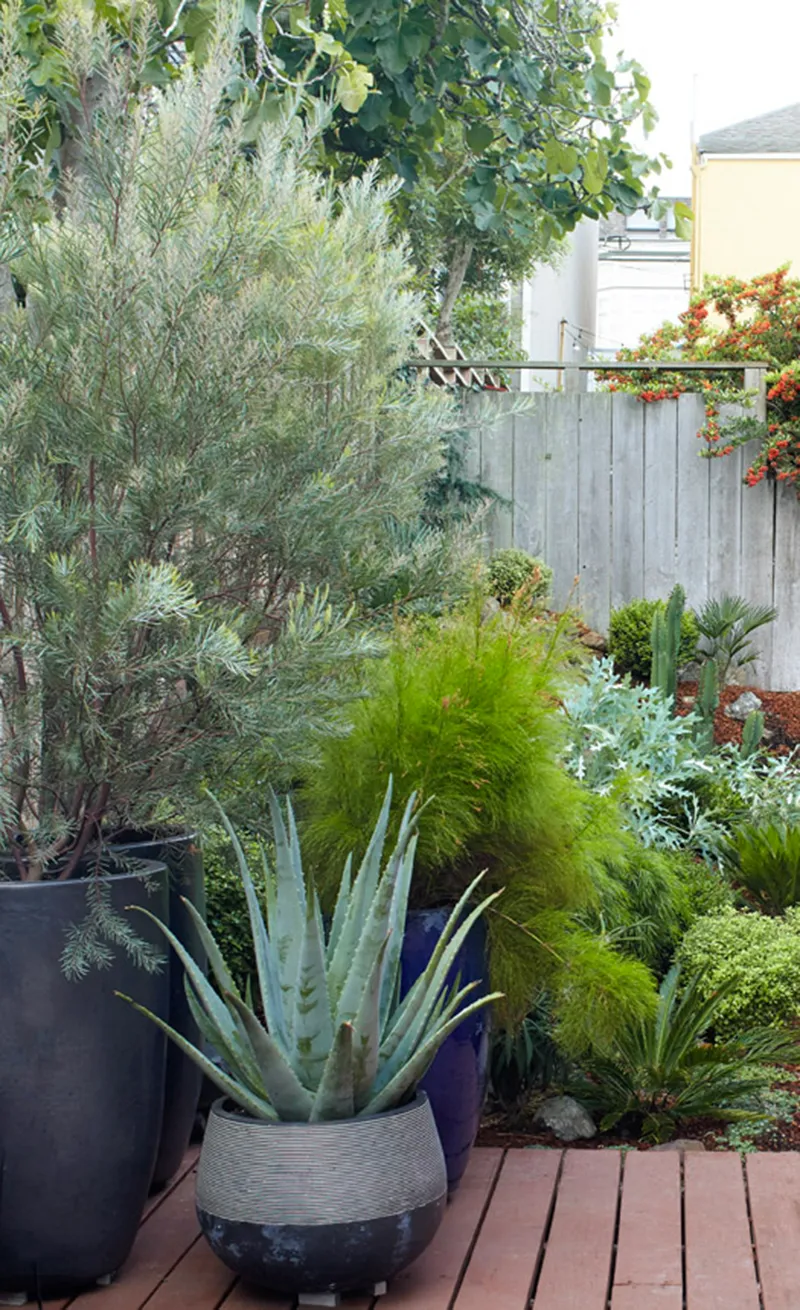
This small tree can be grown in a narrow, part shade spot in which case it will grow much taller than wide, making it a great choice for a narrow area. Wonderful in a pot.
 Height Height | 12–20ft |
|---|---|
 Width Width | 6–10ft |
 Tolerates Tolerates | Coast, Drought, Deer, Pots, Rooftops, Salt, Wind |
 Water needs Water needs | Low |
For the first three years after it's planted, this acacia should be watered deeply but infrequently (when the top three inches of soil or so have dried). After that, it won't need supplemental water except in exceptionally hot and dry environments. Use drippers, emitters or a slow stream of water so that it doesn't run off; allow the water to trickle all the way down through the deepest layers of soil. A great trick for watering street trees is to drill a 1/8-inch hole on the bottom edge of a 5-gallon bucket, then set the bucket with the hole aligned next to the tree and fill the bucket with water. Fill once for a 1-5 gallon plant, fill twice for a 7-15 gallon plant, three times for 25g or larger plants. Though these trees are drought tolerant, never let them go bone dry in a pot. | |
 Hardy to Hardy to | 20°F |
 Exposure Exposure | Part Sun – Full Sun |
 Plant traits Plant traits | Flowering, Fragrant Flower, Screen, Shrub, Tree |
 Indoor / outdoor Indoor / outdoor | Outdoor |
 Drainage Drainage | In Ground: Cactus Mix, In Pots: Cactus Mix, Tolerates Heavy Soil, Tolerates Sandy Soil |
 Fertilizing Fertilizing | All Purpose, Low Needs |
 Origin Origin | Australia |
 California native California native | No |
 Sunset zones Sunset zones | 8, 9, 12–23, H2 |
Growing Notes
Acacia are FAST growers - this plant will reach full size in under five years making it a great choice for privacy needs in your garden. Acacia are also relatively short lived, typically growing for twenty to thirty years. This combination can be used to your advantage by planting longer lived slower growing plants near your acacia.
Acacia do well in pots, which effectively "dwarf" them.
In some shade, acacia look softer and the colors come out more. They also tend to get more upright as they reach for the sun. This makes them a great choice for tight urban gardening.
This tree is forgiving of pruning. Choose to prune off lower branches for a standard tree form, or tip prune to create a dense shrub or screen. Typically wide acacia can be pruned into a narrower form.
Special Interest
You may have noticed the beautiful Acacia boormanii growing in a large cone pot at the front of our San Francisco store. It's been there for over ten years and looks fabulous!
Let's dispel some rumors. All acacia are not invasive. Some can be quite problematic, but this one is not. Also, acacia allergies are not common. Many people who believe they are allergic to acacia are actually allergic to conifers, which produce pollen at the same time of year, but since they don't have flowers are less likely to be connected to the allergy.
The above information reflects the observations of Grubb and Nadler and our extended plant community. We always consider input from fellow horticulturists and welcome feedback from those with additional information on the culture of this plant.
© 2020–2026 Grubb and Nadler. All rights reserved.