
Acacia cultriformis
knife-leaf wattle
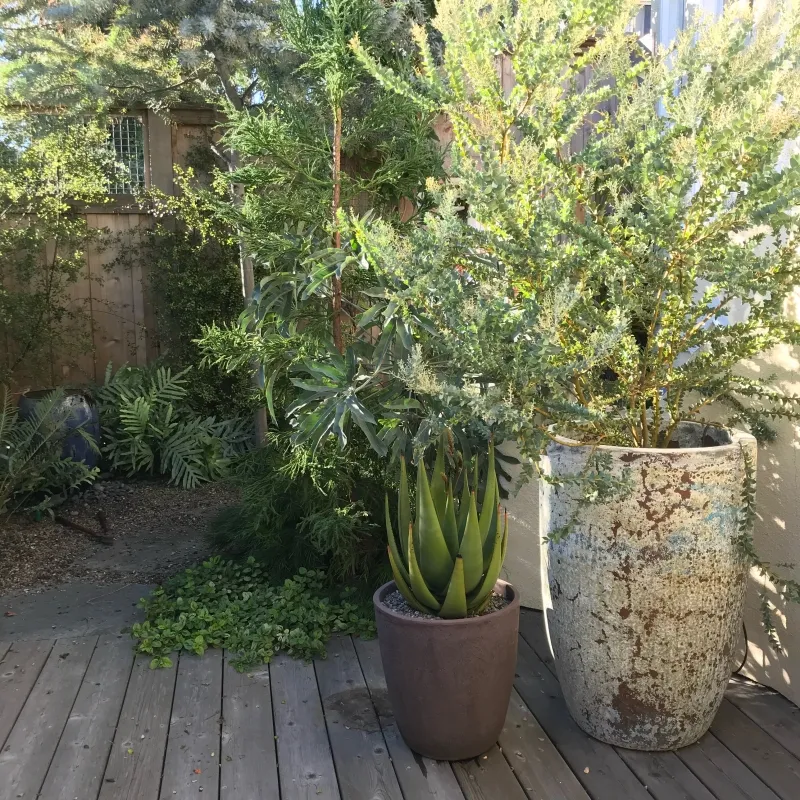
Very fast-growing shrub or small tree with silvery leaves sunny pom-pom blooms in spring. Plant in well-drained soil. Great in a large pot.
 Mature size | 10–16ft tall 10–15ft wide |
|---|---|
 Exposure | Part Shade – Full Sun |
 Hardy to | 23°F |
 Sunset zones | 9, 14–24 |
 Water needs | Low For the first three years after it's planted, this acacia should be watered deeply but infrequently (when the top three inches of soil or so have dried). Use drippers, emitters or a slow stream of water so that it doesn't run off; allow the water to trickle all the way down through the deepest layers of soil. A great trick for watering street trees is to drill a 1/8-inch hole on the bottom edge of a 5-gallon bucket, then set the bucket with the hole aligned next to the tree and fill the bucket with water. Fill once for a 1-5 gallon plant, fill twice for a 7-15 gallon plant, three times for 25g or larger plants. |
 Tolerates | Drought, Pots |
 Plant traits | Flowering, Screen, Shrub, Tree |
 Drainage | In Ground: Cactus Mix, In Pots: Cactus Mix, Tolerates Sandy Soil |
 Fertilizing | All Purpose |
 Origin | SE Australia |
Growing Notes
Acacia are FAST growers - this plant will reach full size in under five years making it a great choice for privacy needs in your garden. Acacia are also relatively short lived, typically growing for twenty to thirty years. This combination can be used to your advantage by planting longer lived slower growing plants near your acacia.
Acacia do well in pots, which effectively "dwarf" them.
In some shade, acacia look softer and the silver blue colors of this one come out more. They also tend to get more upright as they reach for the sun. This makes them a great choice for tight urban gardening.
This acacia is forgiving of pruning. Choose to prune off lower branches for a standard tree form, or tip prune to create a dense shrub or screen. Typically wide acacia can be pruned into a narrower form.
Special Interest
Let's dispel some rumors. All acacia are not invasive. Some can be quite problematic, but this one is not. Also, acacia allergies are not common. Many people who believe they are allergic to acacia are actually allergic to conifers, which produce pollen at the same time of year.
What we've learned from growing this plant ourselves and in our customers' gardens. We always love to hear more. Tell us
© 2020–2026 Grubb and Nadler. All rights reserved.