
Aeonium haworthii ‘Kiwi’
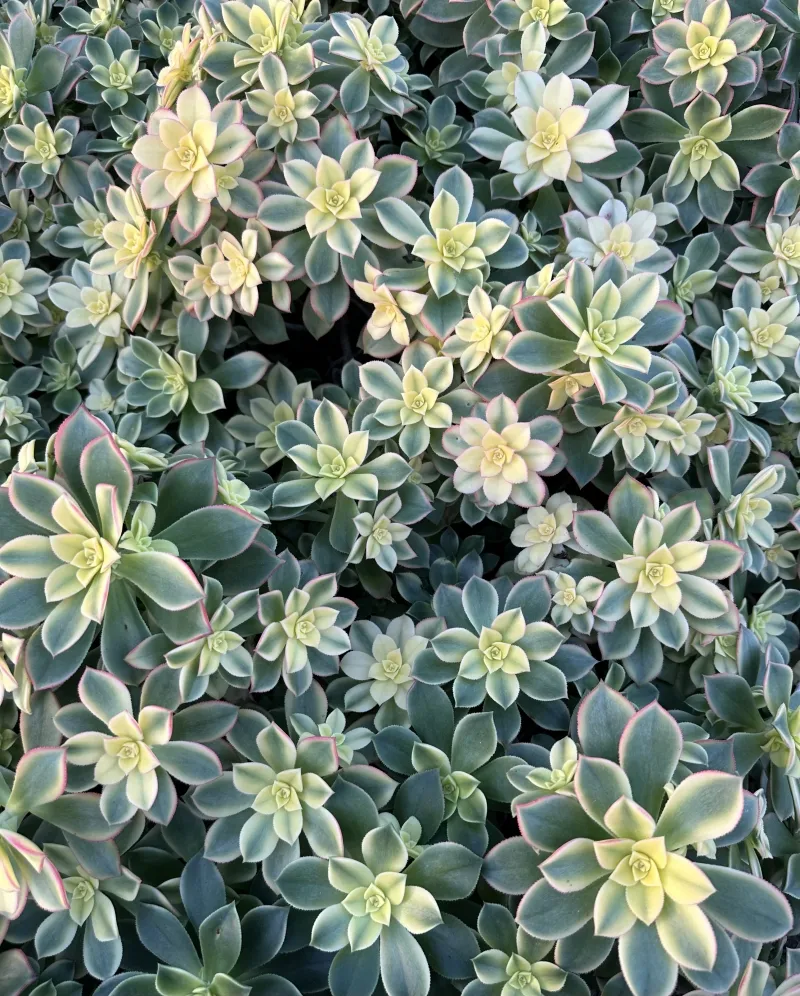
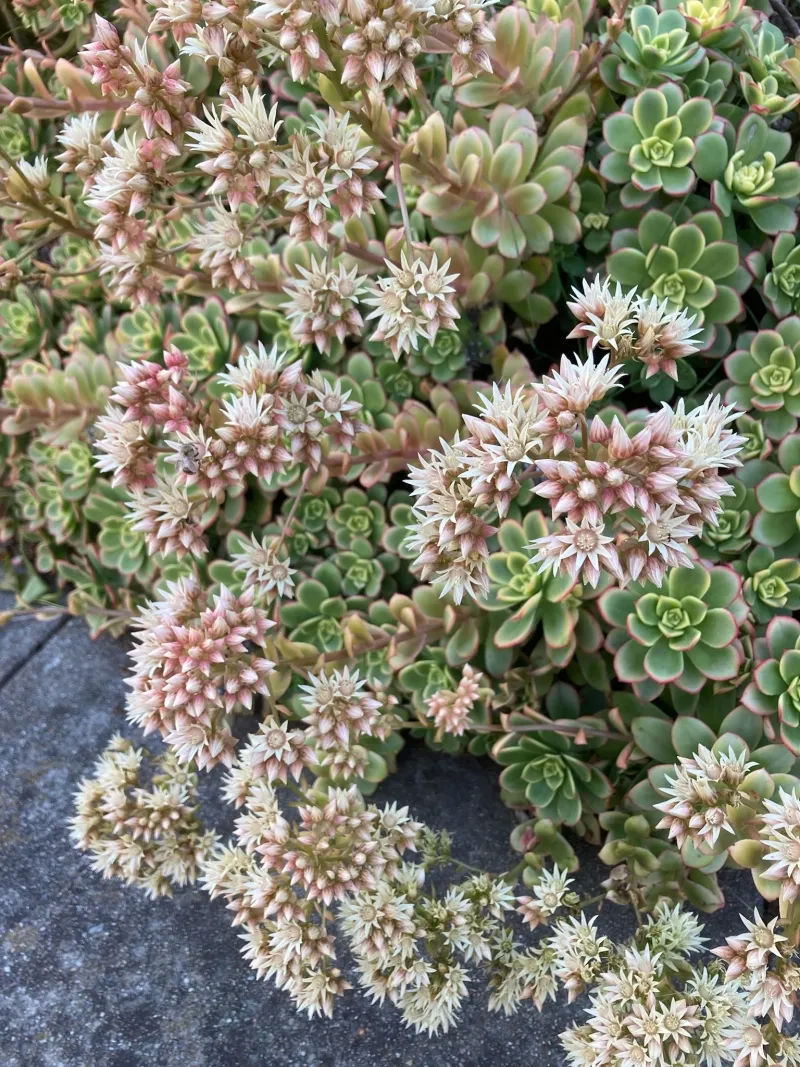
Winter growing succulent, perfect for the coast. Starry, yellow blooms. Creates similar symmetric mounds to A. haworthii, but with yellow and pink variegation for added interest.
 Height Height | 10–20in |
|---|---|
 Width Width | 1–3ft |
 Tolerates Tolerates | Coast, Cool Summers, Drought, Fog, Pots, Neglect, Salt, Wind |
 Water needs Water needs | Low |
This particular aeonium is very drought tolerant. Aeoniums are from the Mediterranean, making them a care-free plant for Bay Area gardeners. It is natural for aeonium heads to shed lower leaves during summer, becoming smaller and more compact. Once winter rains come the heads expand, adding many new leaves. This summer stress is a wonderful seasonal change in the Mediterranean garden. Once established, this aeonium will survive in Bay Area gardens without additional water. Water your aeoniums at least once a month during summer and they will look more full and lush. Be sure to let the soil dry between watering or you risk root rot or aphids. | |
 Hardy to Hardy to | 30°F |
 Exposure Exposure | Full Shade – Full Sun |
 Plant traits Plant traits | Clumping, Colorful, Mounding, Rock Garden, Sculptural, Succulent, Variegated |
 Indoor / outdoor Indoor / outdoor | Outdoor |
 Drainage Drainage | In Ground: Cactus Mix, In Pots: Cactus Mix, Tolerates Sandy Soil |
 Fertilizing Fertilizing | All Purpose, Low Needs |
 Origin Origin | Hybrid, Canary Islands |
 California native California native | No |
 Sunset zones Sunset zones | 15–17, 20–24 |
Growing Notes
Most Aeonium are monocarpic, but since this one puts of an explosion of many heads you'll hardly notice. Creates a perfectly symmetrical dome of geometric heads, a truly unique plant.
Aeonium tend to be brittle, so should be kept back from high traffic areas where physical damage is a possibility. This is especially true for this one, since any damage to the symmetry of the dome his hard to recover from.
When over fertilized Aeonium grow lush and soft, attracting aphids.
Special Interest
Most Aeonium, including this one, easily propagate from stem cuttings, just snap a stem halfway down in the fall and plant it half of the way into your soil. Wait a week to water. With this one it's best to take cuttings from the outer edge of the dome of heads.
This plant is a dry shade workhorse, but also thrives in baking sun, creating dense mounds with very little water.
The above information reflects the observations of Grubb and Nadler and our extended plant community. We always consider input from fellow horticulturists and welcome feedback from those with additional information on the culture of this plant.
© 2020–2026 Grubb and Nadler. All rights reserved.