
Agave attenuata
foxtail agave
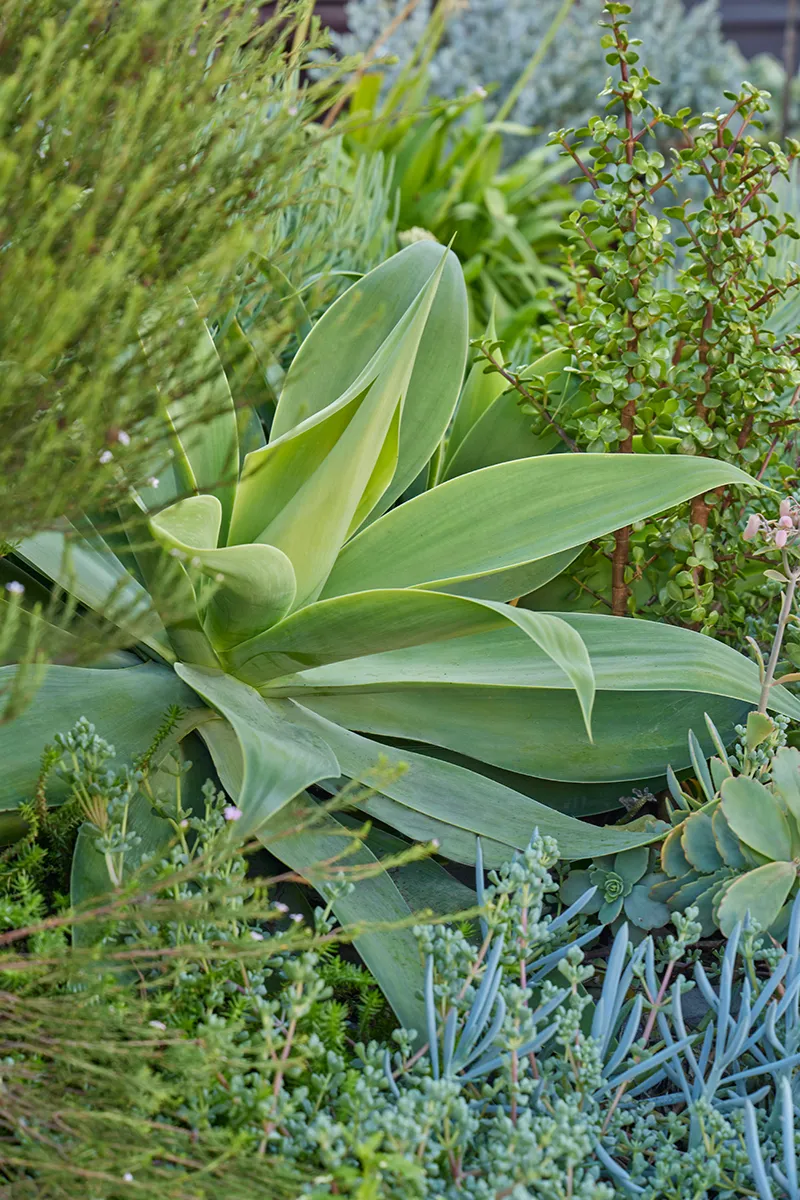
The foxtail agave is apt named for its languid arching flower stalk covered in hundreds of creamy white flowers. Versatile in water/light department and spineless! Forms multiple rosettes.
 Height Height | 1–5ft |
|---|---|
 Width Width | 6–10ft |
 Tolerates Tolerates | Coast, Cool Summers, Drought, Fog, Gophers, Pots, Neglect, Salt, Wind |
 Water needs Water needs | Low |
Agave are extremely drought tolerant, and many need no supplemental irrigation in coastal California. They will however look better and grow faster if they are given additional water, especially during summer. This agave is more forgiving than most of overwatering, especially if it's in good drainage. This agave will need some summer irrigation in sunny spots when it is away from the coast. | |
 Hardy to Hardy to | 30°F |
 Exposure Exposure | Part Sun – Full Sun |
 Plant traits Plant traits | Monocarpic, Sculptural, Succulent, Suckering, Trunking |
 Indoor / outdoor Indoor / outdoor | Outdoor |
 Drainage Drainage | In Ground: Cactus Mix, In Pots: Cactus Mix, Tolerates Sandy Soil |
 Fertilizing Fertilizing | All Purpose, Low Needs |
 Origin Origin | C Mexico |
 California native California native | No |
 Sunset zones Sunset zones | 13, 16, 17, 21–24 |
Growing Notes
This agave is monocarpic, meaning that a head will grow larger and larger over time, building up energy, then send off a spectacular flower and afterward decline and die, replaced by pups from the base.
This agave is almost unique in that it creates a woody trunk, similar to that of a palm tree. The leaves also shed naturally, so when they are dry you can peel them off, or let them fall off and pick them up.
Protect from snails. When deer are particularly hungry they will eat A. attenuata as well.
If you'd like a single head or just a couple heads, just remove the pups from the base as they grow.
This agave is inclined to physical damage, so keep it back from high traffic paths where people might bump into it.
Special Interest
When agave set pups they can easily be removed and propagated. With this species they will actually begin to grow roots on the pups, so when you see above ground roots you'll know they are easy to remove and propagate.
The above information reflects the observations of Grubb and Nadler and our extended plant community. We always consider input from fellow horticulturists and welcome feedback from those with additional information on the culture of this plant.
© 2020–2026 Grubb and Nadler. All rights reserved.