
Agave victoriae-reginae ‘Porcupine’
Queen Victoria's agave
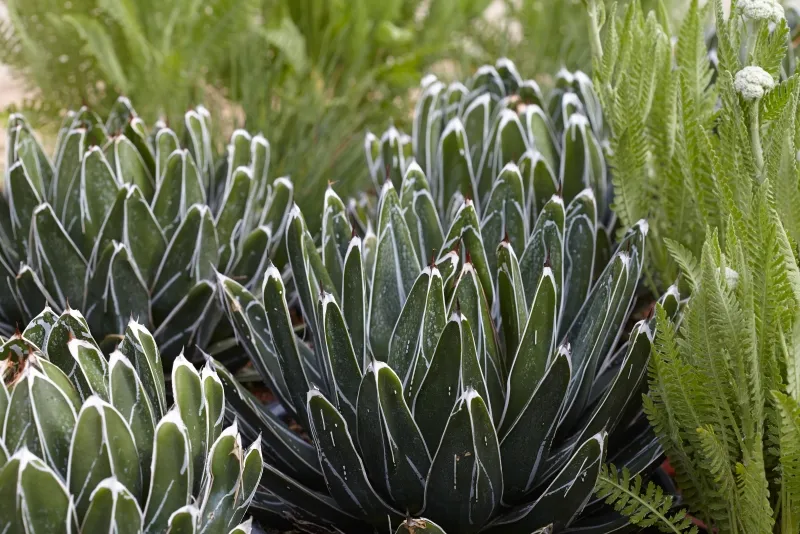
Queen Victoria's agave. Great in pots. Unmatched graphic appeal, sculptural look. Slow growth. Porcupine is a bit more tapered than typical species.
 Height | 18–24in |
|---|---|
 Width | 1–3ft |
 Tolerates | Cold, Drought, Heat, Pots, Rooftops, Neglect, Wind |
 Water needs | Lowest |
Agave plants are extremely drought tolerant, and many need no supplemental irrigation in coastal California. They will, however, look better and grow faster if they are given additional water, especially during summer. | |
 Hardy to | 0°F |
 Exposure | Part Sun – Full Sun |
 Plant traits | Armed, Monocarpic, Rock Garden, Solitary |
 Indoor / outdoor | Outdoor |
 Drainage | In Ground: Cactus Mix, In Pots: Cactus Mix, Tolerates Sandy Soil |
 Fertilizing | All Purpose 1/2 Strength, Low Needs |
 Origin | NC Mexico |
 California native | No |
 Sunset zones | 10–24 |
Growing Notes
Almost all agave, including this one, are monocarpic, meaning that a head will grow larger and larger over time, building up energy, then send off a spectacular flower, after which it will decline and die. With pupping varieties, like this one, they grow from stolons at the base, constantly replacing the older bloomed-out heads with new ones, which then grow larger and flower, continuing the life cycle.
Take care when pruning or removing agaves, as many have a toxic sap that causes inflammation and rashing. Removing spent agave heads can also be tricky as they are often ringed with other armed agaves. If you like the look of agaves, but are threatened by the terminal spikes, they can be removed. It's easiest to cut these off when they are coming out of the rosette as you'll be able to prune the thorns off many layers of leaves at one time.
You can 'pineapple' your agave by removing the lowest leaves. This is best started while it is out of the nursery can, but before planting, when you can access leaves from the bottom. This gives the plant a short trunk, textured similar to many palms, and allows you to get under the plant for weeding or removing pups.
Excellent choice for pots, staying small and performing well long term.
Special Interest
They're an excellent 'home defense' tool when planted along a fence line or beneath windows.
Which store do you shop at?
The above information reflects the observations of Grubb and Nadler and our extended plant community. We always consider input from fellow horticulturists and welcome feedback from those with additional information on the culture of this plant.
© 2020–2026 Grubb and Nadler. All rights reserved.