
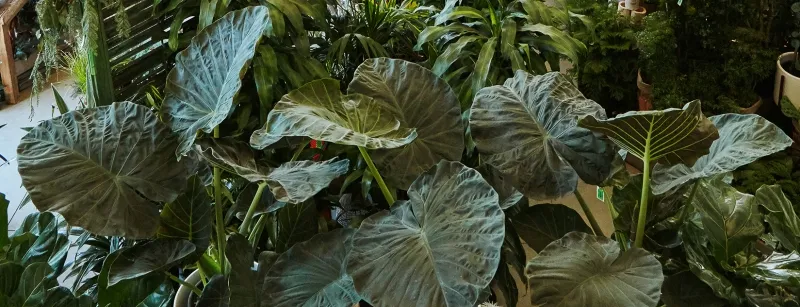
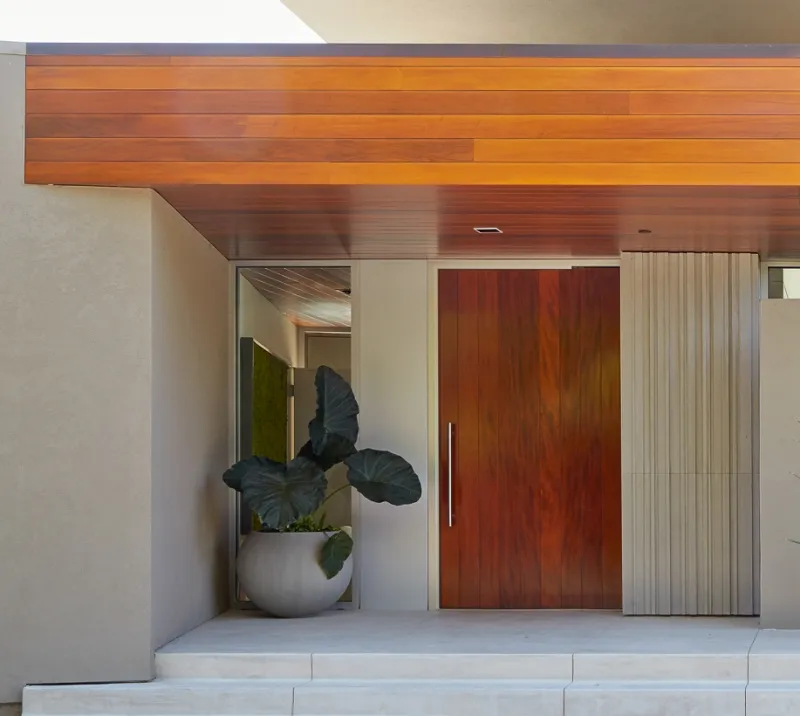
Alocasia ‘Regal Shields’
elephant ear
Growing it outdoors
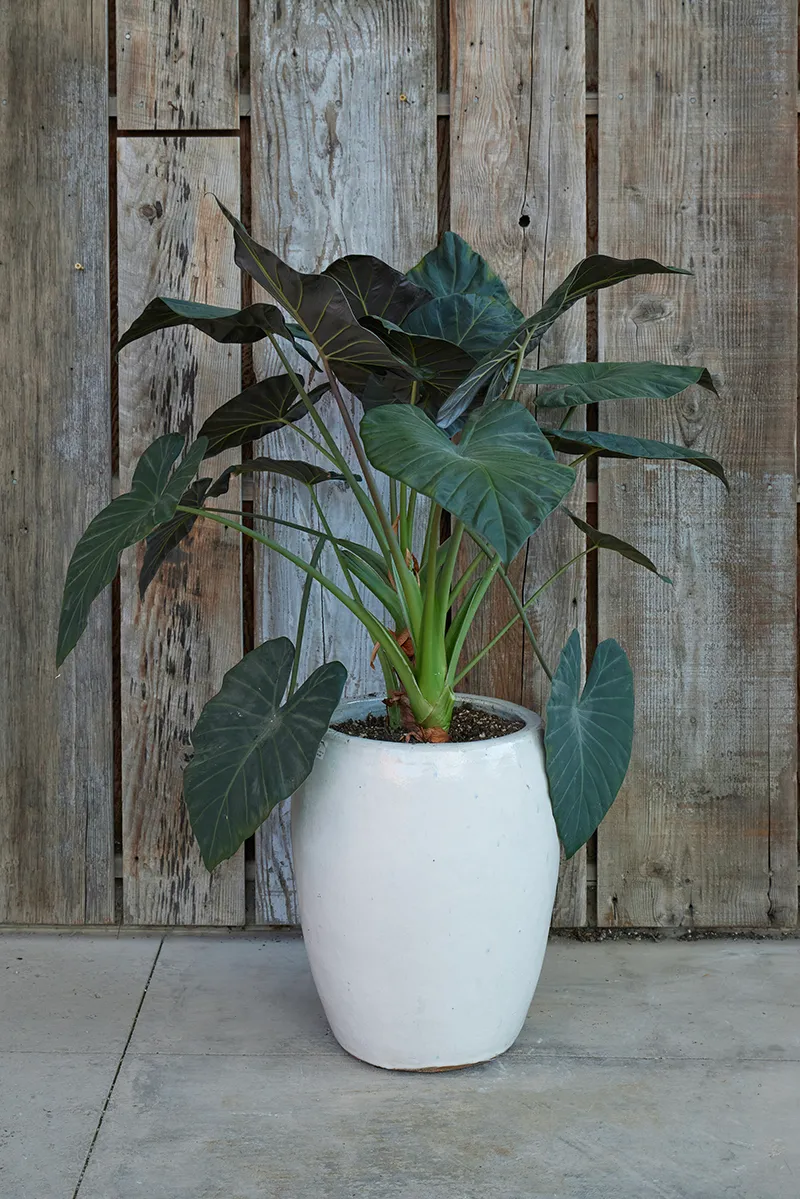
Although it grows very happily outdoors, a plant that has lived indoors may sunburn at first if it's moved straight into the sun. It will recover.
 Height | 3–6ft |
|---|---|
 Width | 2–5ft |
 Tolerates | Moist Soil, Pots |
 Water needs | Moderate – High |
Appreciates water, and can even grow in marginal pond areas or pots placed in a water feature. A sparse crown or drooping leaves are signs of underwatering. Elephant ears express a fascinating plant trait called guttation. This is when excess water within the plant is pushed through pores at the ends (or sides) of the leaves, most frequently at night. This isn't a sign of distress, but may be problematic over hardwood floors and should be monitored. This will usually soon after watering. | |
 Hardy to | 15°F |
 Exposure | Part Sun – Full Shade |
 Plant traits | Aquatic, Foliage Feature, Suckering, Tropical |
 Fertilizing | All Purpose |
 Origin | Hybrid |
 California native | No |
 Sunset zones | 8, 9, 12, 13, 16–24 |
Growing Notes
Protect from wind, or high traffic areas as leaves are particularly sensitive to unsightly damage. Older leaves can be removed if damaged.
If you choose to grow this plant in a water feature be sure to add extra drainage, planting in equal parts cactus mix and pumice.
Growing it indoors
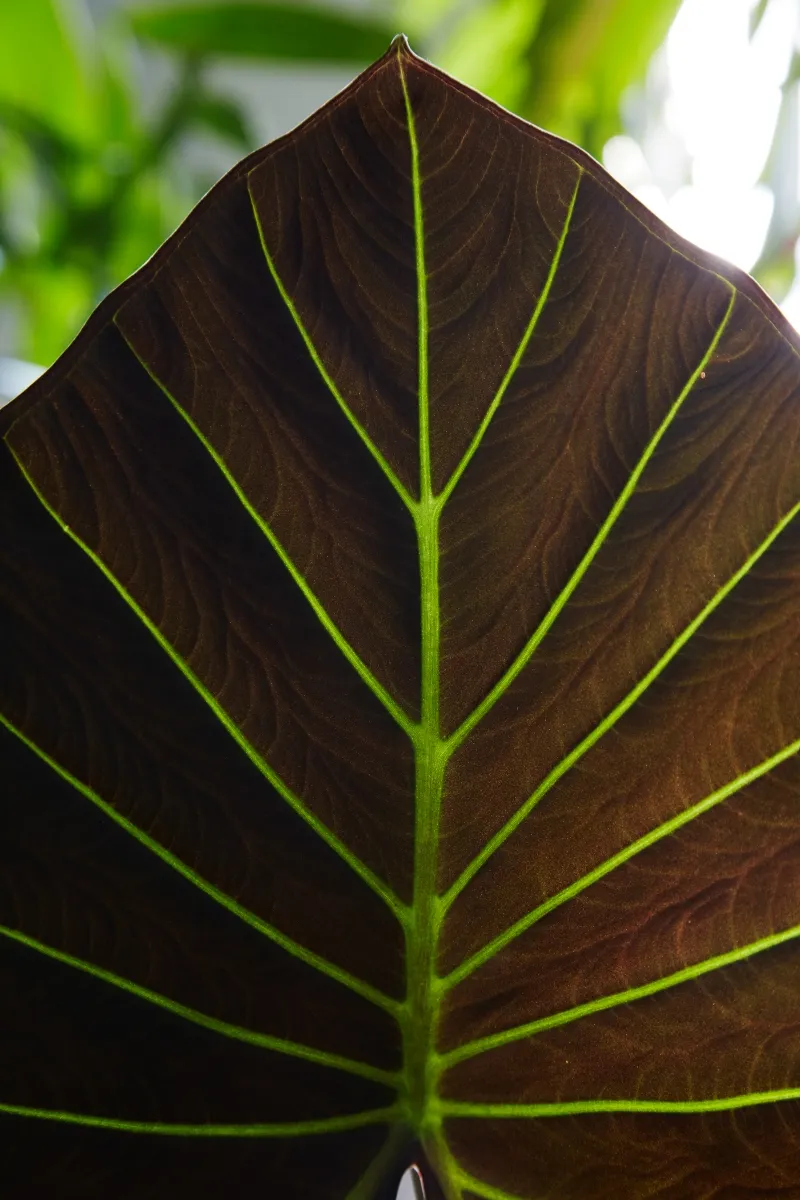
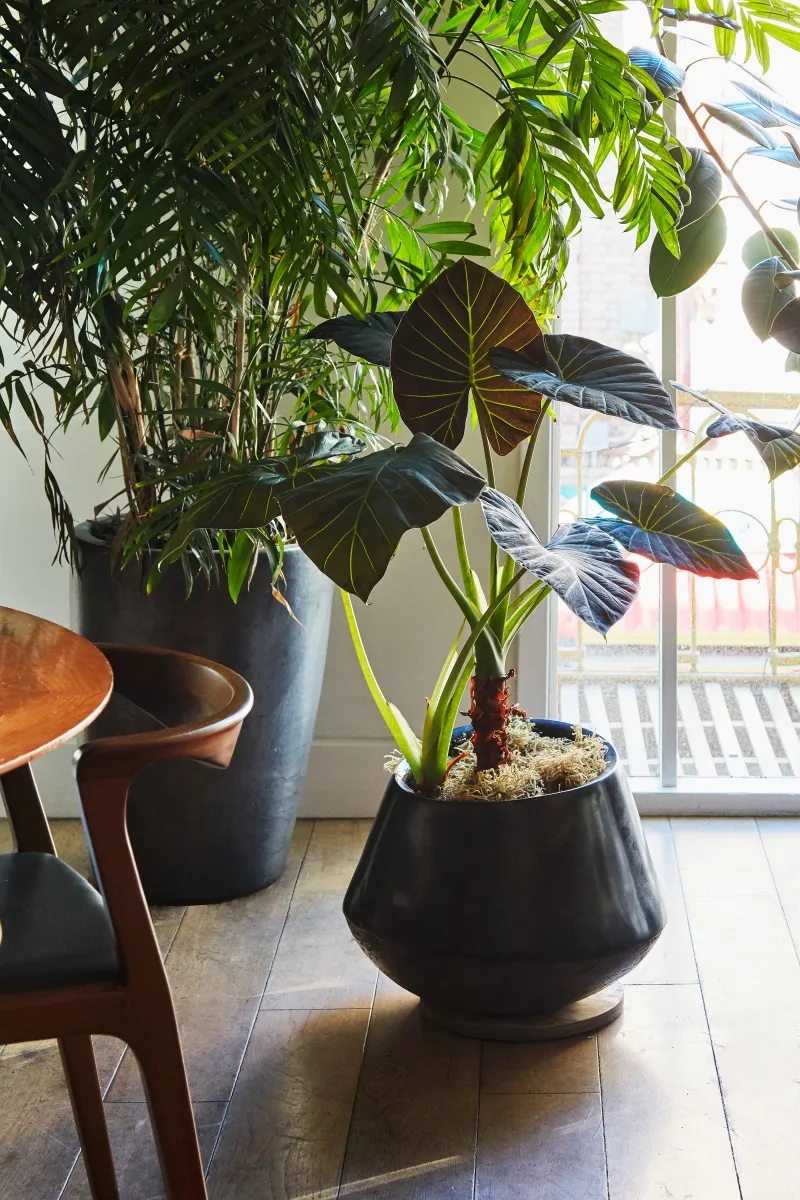
Moody dark leaves have satin sheen. If grown outdoors in frosty colder areas plant will defoliate in winter. Moist well-drained soil.
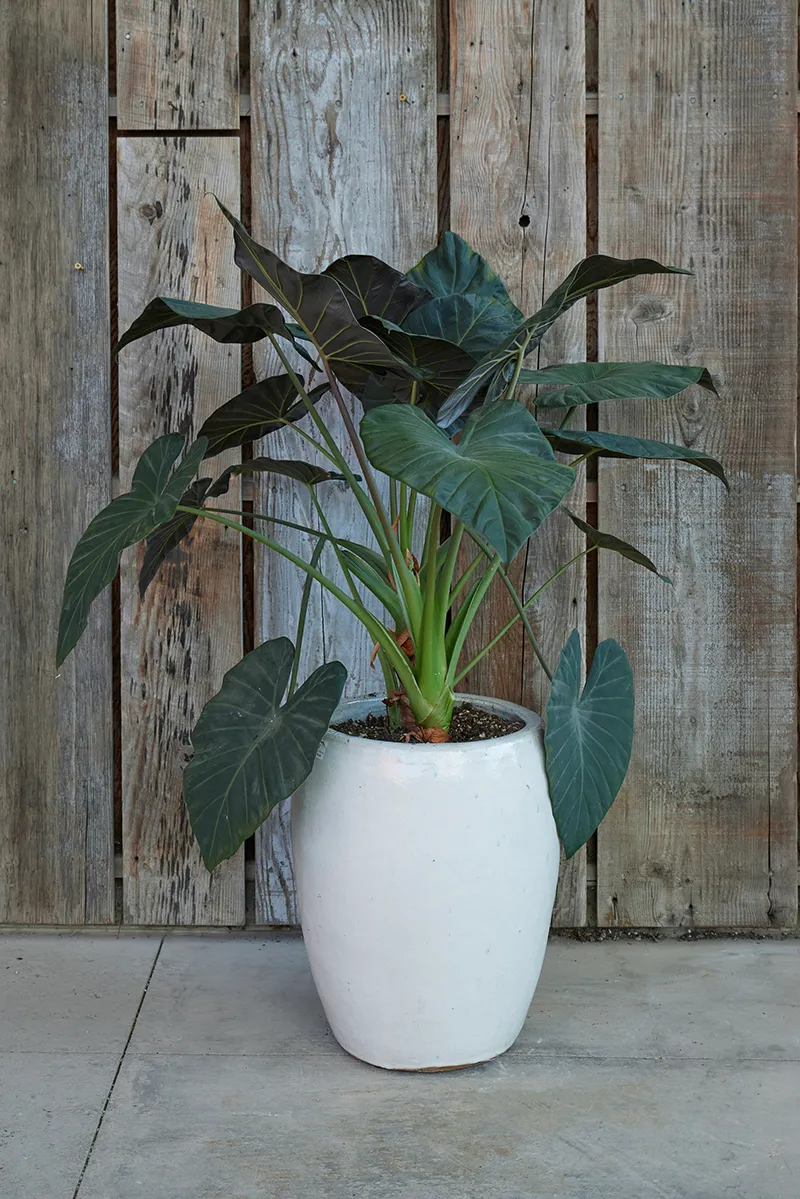
| Height | 3–6ft |
|---|---|
| Width | 2–5ft |
| Water needs | When soil surface is dry. |
Water when the surface of the soil is dry. Keep it evenly watered while it grows in spring and summer, and a little drier in winter. A sparse crown or drooping leaves mean it needs more water. Elephant ears push extra water out through the tips of their leaves, mostly at night (guttation). It isn't a sign of trouble, but the drips can mark wood floors, so set it on a saucer or mat. | |
| Exposure | Bright Indirect |
| Plant traits | Aquatic, Foliage Feature, Suckering, Tropical |
| Fertilizing | All Purpose |
| Origin | Hybrid |
Growing Notes
Keep it out of busy walkways and away from drafty doors and heater vents: the leaves are easily damaged. Remove older leaves if they get damaged. Turn the pot now and then so it grows evenly.
Which store do you shop at?
The above information reflects the observations of Grubb and Nadler and our extended plant community. We always consider input from fellow horticulturists and welcome feedback from those with additional information on the culture of this plant.
© 2020–2026 Grubb and Nadler. All rights reserved.