
Aloe ciliaris ‘Firewall’
climbing aloe
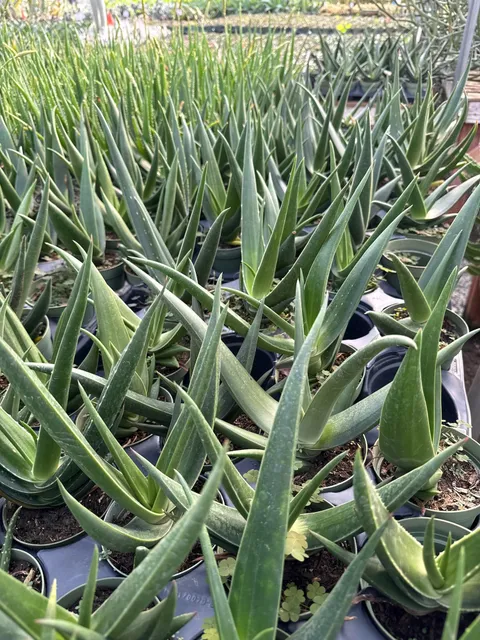
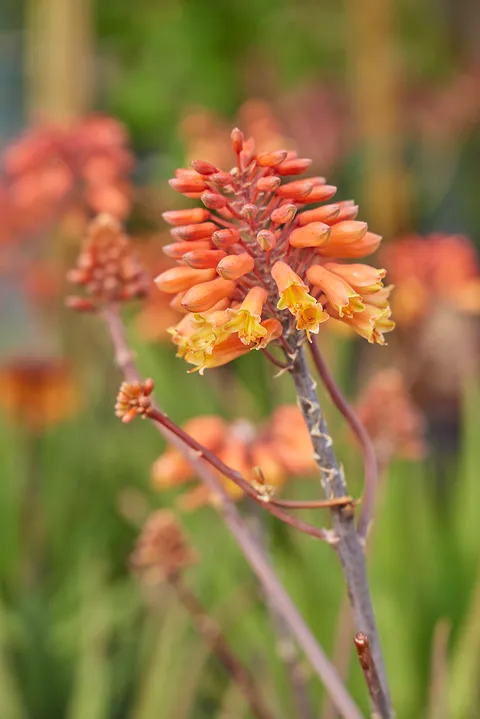
Shorter, denser selection of the climbing aloe makes good groundcover with dark orange flowers in winter. Prolifically offsets creating a dense mass of heads.
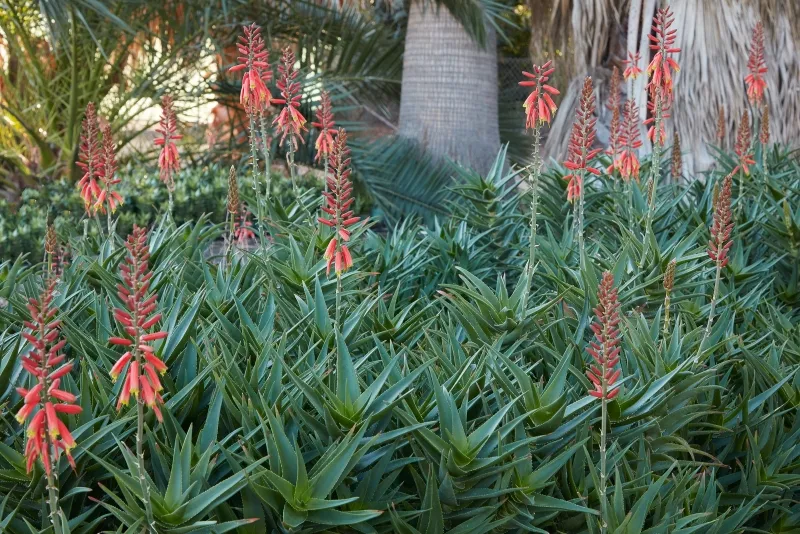
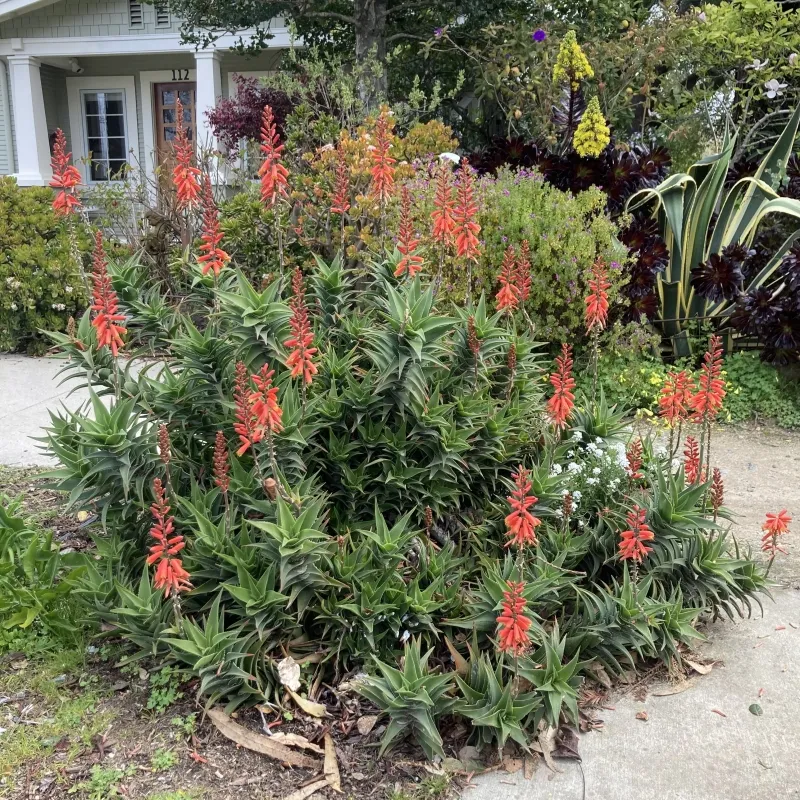
In stock in San Francisco
from $14.95
 Mature size | 1–2ft tall 5–15ft wide |
|---|---|
 Exposure | Full Sun – Full Shade |
 Hardy to | 22°F |
 Sunset zones | 13–17, 19–24 |
 Water needs | Low Aloes thrive on neglect, making them one of the easiest garden plants for California. They are drought-tolerant, and most will not need additional water once established in your garden. Most aloes will be plump with many bright vibrant blue or green leaves during their growth season. It's natural for these same plants to show stress during their dry season, often turning shades of red, orange or brown, giving added seasonal interest to the succulent garden. During this time the leaves will curl in on themselves, and often shrivel up and shed from the base. If you prefer a lush look, watering once dry will keep them plump. Avoid overhead watering in the crown; when water collects there, it may lead to crown rot. If grown in shade this aloe won't need supplemental water in coastal California. |
 Tolerates | Coast, Drought, Gophers, Heat, Pots, Rooftops, Neglect, Salt, Wind |
 Plant traits | Flowering, Humming Birds, Mounding, Spreading, Succulent, Suckering, Vine - Rambling |
 Drainage | In Ground: Cactus Mix, In Pots: Cactus Mix, Tolerates Heavy Soil, Tolerates Sandy Soil |
 Fertilizing | All Purpose 1/2 Strength, Low Needs |
 Origin | SE South Africa |
Similar plants
Growing Notes
One of the best fire retardant plants. Create a mass quickly by cutting heads to the ground in the fall and planting the suckers directly in the garden. Wait a week to water and water every two weeks afterward. A year later cut the new and old heads back to the ground and repeat. The heads cut to the ground will send out a mass of new aloes.
Once the flower stalks are completely bloomed out and dry, they will come out with a light tug, or can be pruned off low in the crown.
Very drought tolerant, especially in shade, but this plant is also an aggressive grower if given ample water with good drainage. Fertilizer will also help, but is not necessary to get vigorous growth.
Will need supplemental summer water in hot, dry, sunny, inland areas.
Will grow up through a chainlink fence making a green wall.
Special Interest
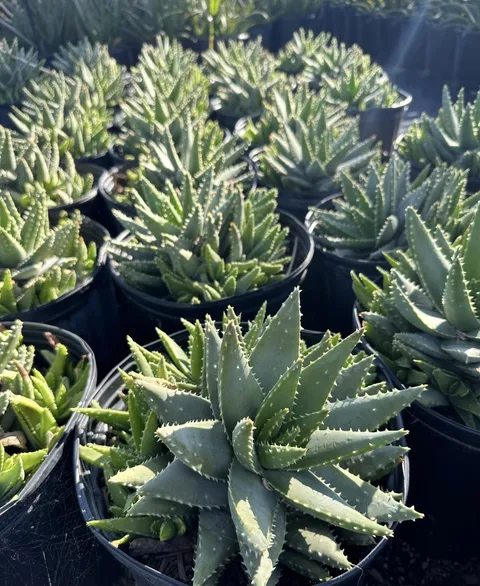
The name ciliaris refers to the white, hair-like teeth appearing around the edges of the leaves.
This aloe did the bulk of the work saving one of our own's house from The Big Sur Basin Fire. Read about Tyson's experience linked below.
Links
What we've learned from growing this plant ourselves and in our customers' gardens. We always love to hear more. Tell us
© 2020–2026 Grubb and Nadler. All rights reserved.