
Aloe marlothii
mountain aloe
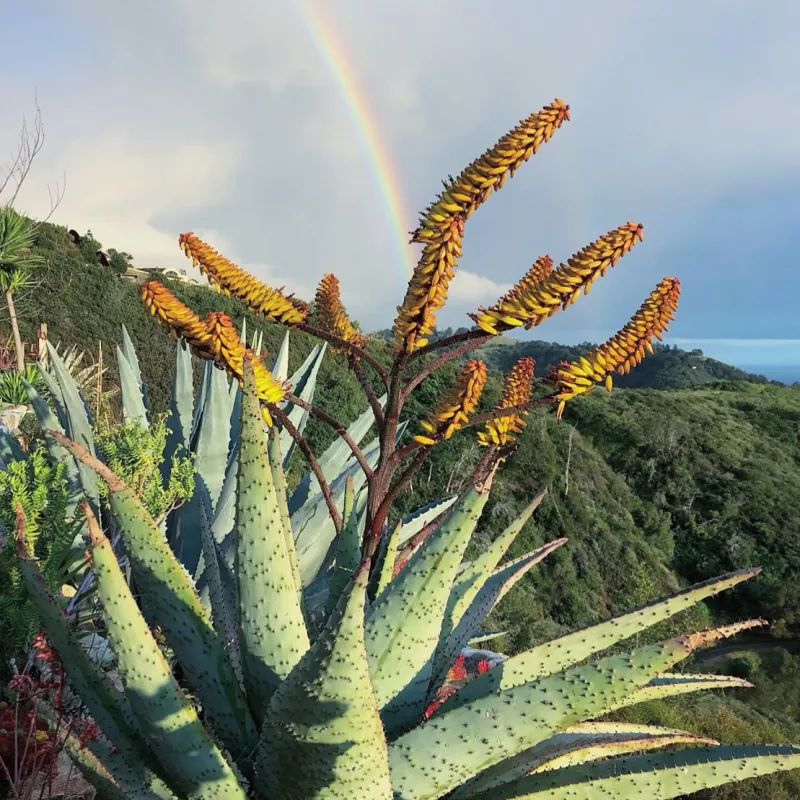
Single-stem tree aloe with branched flowerstalk splayed like a candelabra. Grey-green thorny leaves & orange flowers in winter. Hardy.
 Height | 4–10ft |
|---|---|
 Width | 3–6ft |
 Tolerates | Drought, Deer, Gophers, Heat, Pots, Rooftops, Neglect, Wind |
 Water needs | Low |
Aloes thrive on neglect, making them one of the easiest garden plants for California. They are drought-tolerant, and this one will not need additional water once established in the coastal garden. Most aloes will be plump with many bright vibrant blue or green leaves during their growth season. It's natural for these same plants to show stress during their dry season, often turning shades of red, orange or brown, giving added seasonal interest to the succulent garden. During this time the leaves will curl in on themselves, and often shrivel up and shed from the base. If you prefer a lush look, watering once dry will keep them plump. Avoid overhead watering in the crown; when water collects there, it may lead to crown rot. | |
 Hardy to | 20°F |
 Exposure | Part Sun – Full Sun |
 Plant traits | Armed, Flowering, Humming Birds, Rosette, Sculptural, Solitary, Succulent, Trunking |
 Indoor / outdoor | Outdoor |
 Drainage | In Ground: Cactus Mix, In Pots: Cactus Mix, Tolerates Sandy Soil |
 Fertilizing | All Purpose 1/2 Strength, Low Needs |
 Origin | SC Africa |
 California native | No |
 Sunset zones | 8, 9, 12–23 |
Growing Notes
Aloe marlothii, will retain the dried lower leaves to create an armed 'beard' or 'skirt' that helps defend the plant from predation. If you prefer, this beard may be removed by briskly snapping off the old leaves, starting with the lowest ones. This is an aesthetic consideration that won't affect the plant either way. Leaving the dead lower leaves from the beginning can create a picturesque natural look. In high fire areas removing the beard reduces your fire load.
Once the flower stalks are completely bloomed out and dry, they will come out with a light tug, or can be pruned off low in the crown.
This aloe is from mountainous areas of Eastern South Africa. As such it is quite hardy through dry winters. This aloe is not hardy to the low twenties (as described here) if you live in an area with high winter rainfall, where its hardiness should be considered around 30F.
Special Interest
The meandering, branched, candelabra flower spike of this aloe is one of the most magnificent.
The leaves are some of the thorniest of all aloes, even having thorns on their flat faces, giving them wonderful character.
Stories featuring this plant
More Info
The fantastic photo of a blooming Aloe marlothii, shown here, was taken by Big Sur photographer Kodiak Greenwood. Talk about gold at the end of the rainbow!
Links
In stock today in Los Angeles
| 25 gallon | 2 available | $449 |
The above information reflects the observations of Grubb and Nadler and our extended plant community. We always consider input from fellow horticulturists and welcome feedback from those with additional information on the culture of this plant.
© 2020–2026 Grubb and Nadler. All rights reserved.