
Aloe ‘Moonglow’
Moonglow sunbird aloe
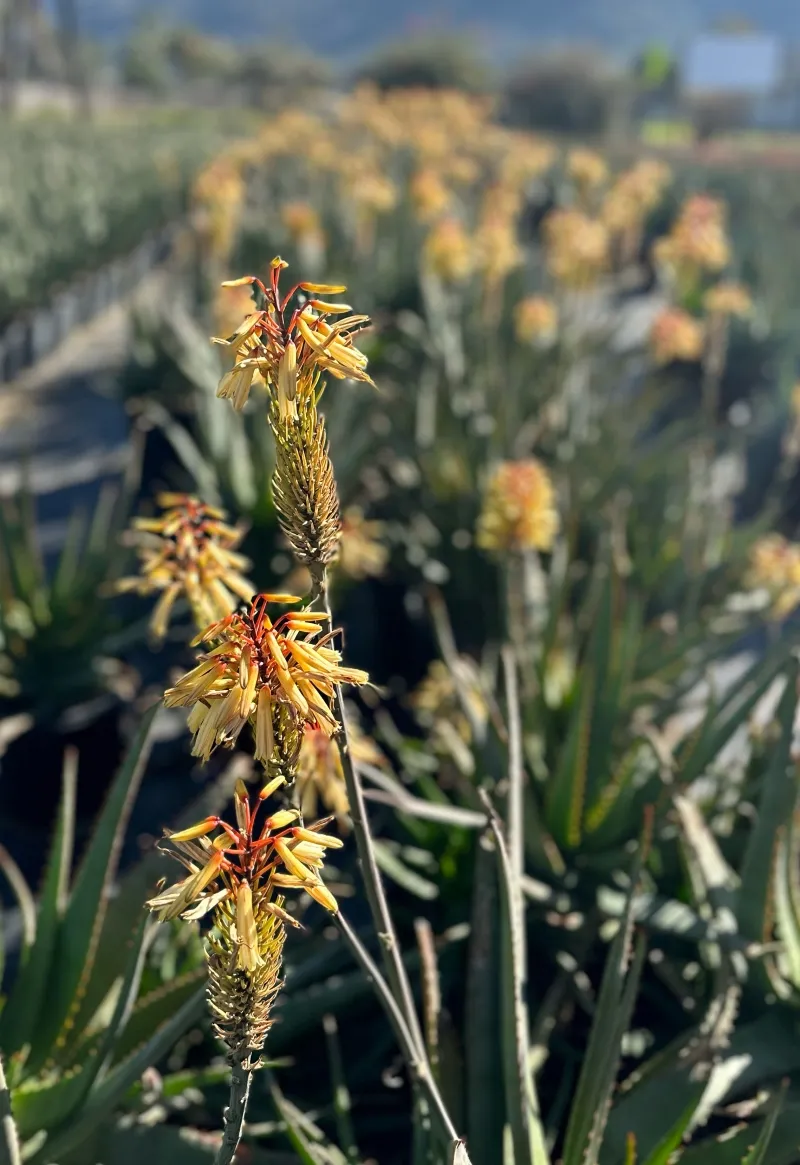
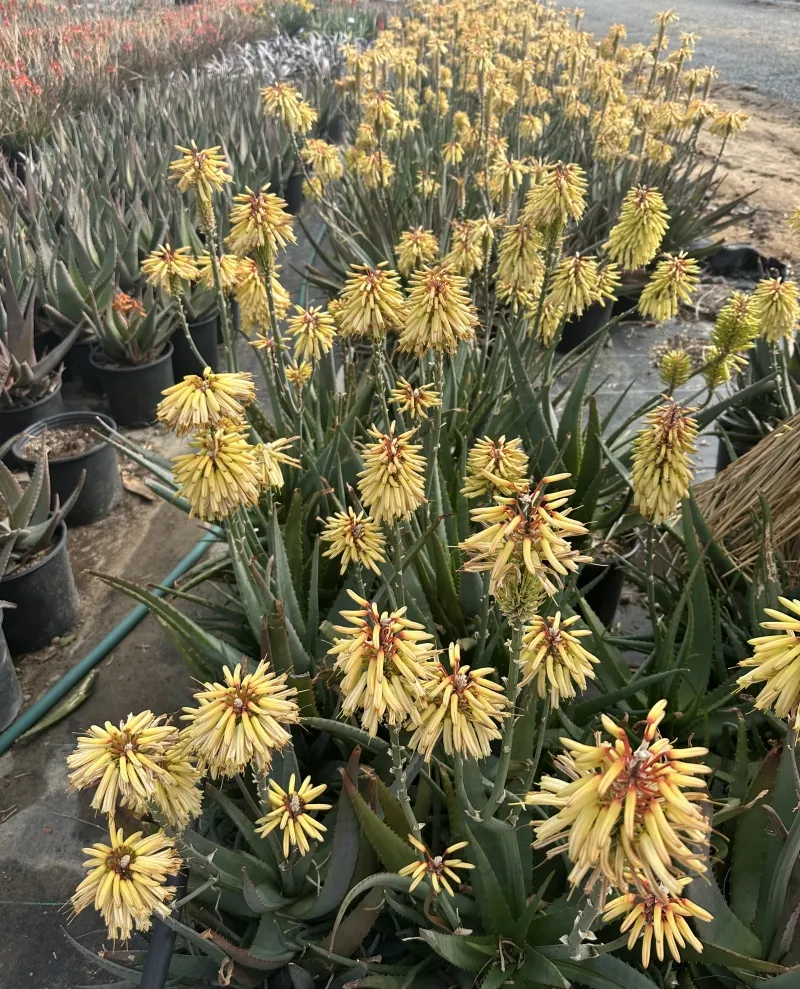
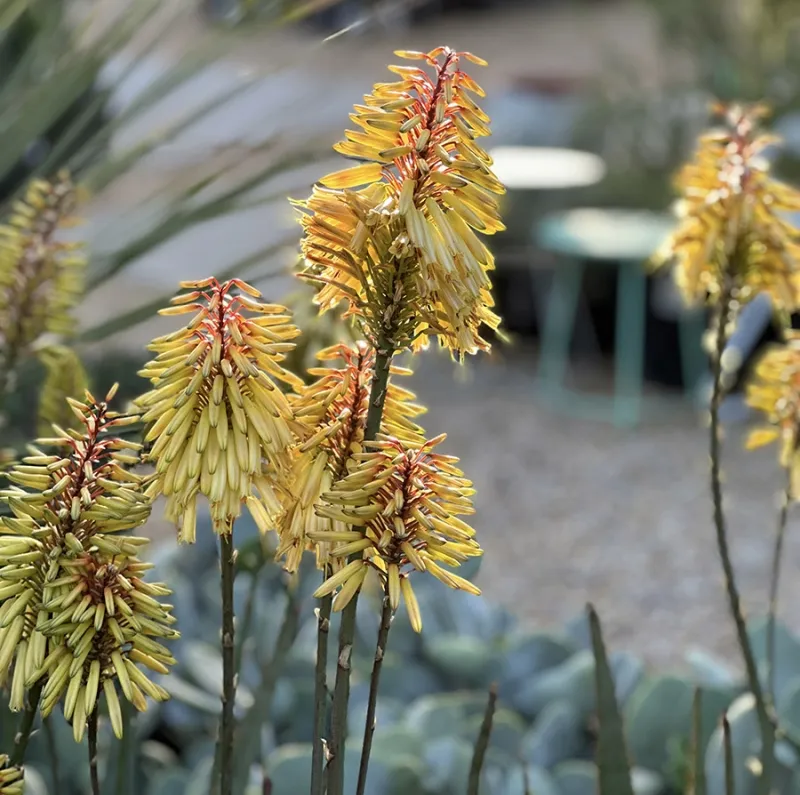
Many clumped rosettes of thin, serrated, blue-grey leaves. In fall to winter tall branched spikes hold abundant flowers that gradient from burnt orange buds to pale yellow blooms.
 Mature size | 4–5ft tall 4–8ft wide |
|---|---|
 Exposure | Part Shade – Full Sun |
 Hardy to | 25°F |
 Sunset zones | 15–17, 19–24, H1, H2 |
 Water needs | Low – Moderate Aloes thrive on neglect, making them one of the easiest garden plants for California. They are drought-tolerant, and most will not need additional water once established in the coastal garden. Most aloes will be plump with many bright vibrant blue or green leaves during their growth season. It's natural for these same plants to show stress during their dry season, often turning shades of red, orange or brown, giving added seasonal interest to the succulent garden. During this time the leaves will curl in on themselves, and often shrivel up and shed from the base. If you prefer a lush look, watering once dry will keep them plump. |
 Tolerates | Drought, Pots, Wind |
 Plant traits | Clumping, Flowering, Humming Birds, Rosette, Succulent, Suckering |
 Drainage | In Ground: Cactus Mix, In Pots: Cactus Mix, Tolerates Sandy Soil |
 Fertilizing | All Purpose |
 Origin | Hybrid, South Africa |
Growing Notes
This aloes leaves are long lasting and will rarely need maintenance. If you find the very oldest leaves are shriveled and completely dry and brittle they can be tugged or trimmed off from the base.
Once the flower stalks are completely bloomed out and dry, they will come out with a light tug, or can be pruned off low in the crown. Pruning the flowers off when the begin to fade won't harm the plant at all, if you don't want to wait for them to completely dry up.
While this plant is hardy to the mid twenties, consider that peak winter flower buds will be damaged by hard frosts.
Special Interest
Hummingbirds love aloes, many of which are pollinated by birds in their native habitat. Having winter blooming aloes gives them nectar during a time when few plants are blooming. The flowers also brighten the darkest days of the year, which we love!
This aloe is easily propagated from stem cuttings. Just let them dry for a week and then plant in well-drained soil.
Hybridized by Leo Thamm of Sunbird Aloes in Johannesburg, South Africa.
Links
What we've learned from growing this plant ourselves and in our customers' gardens. We always love to hear more. Tell us
© 2020–2026 Grubb and Nadler. All rights reserved.