Aloe peglerae
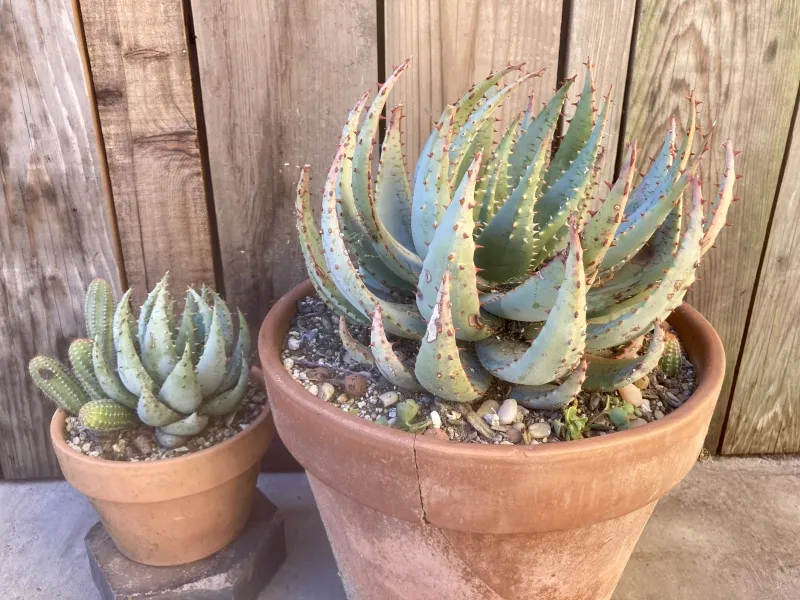
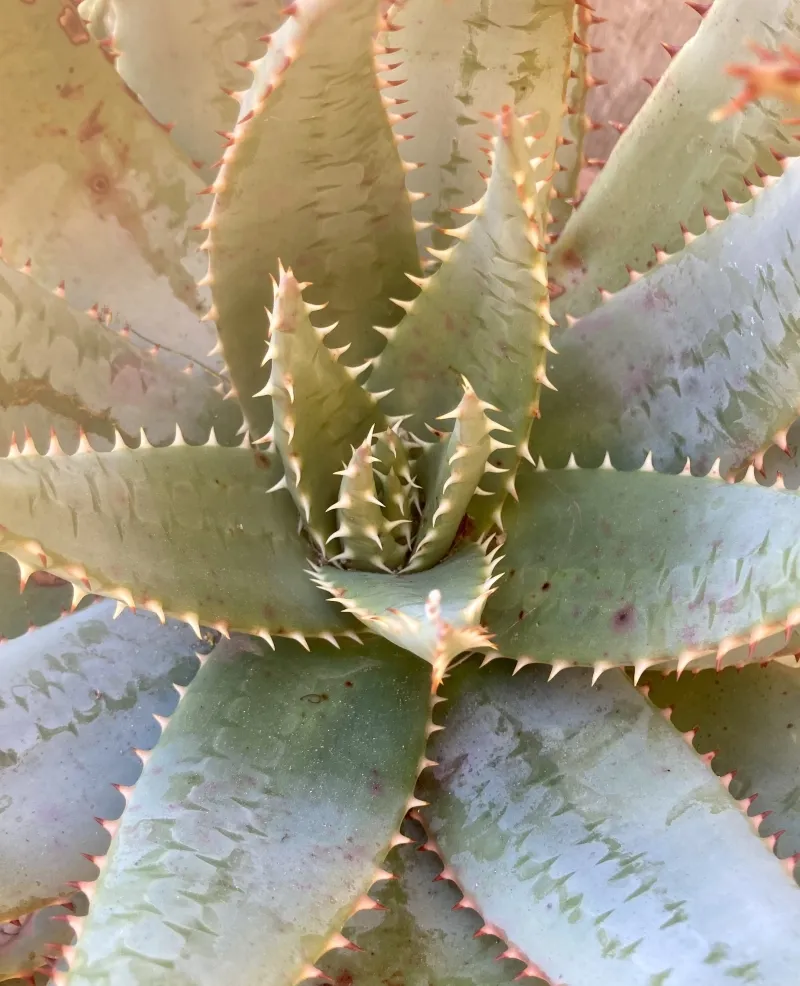
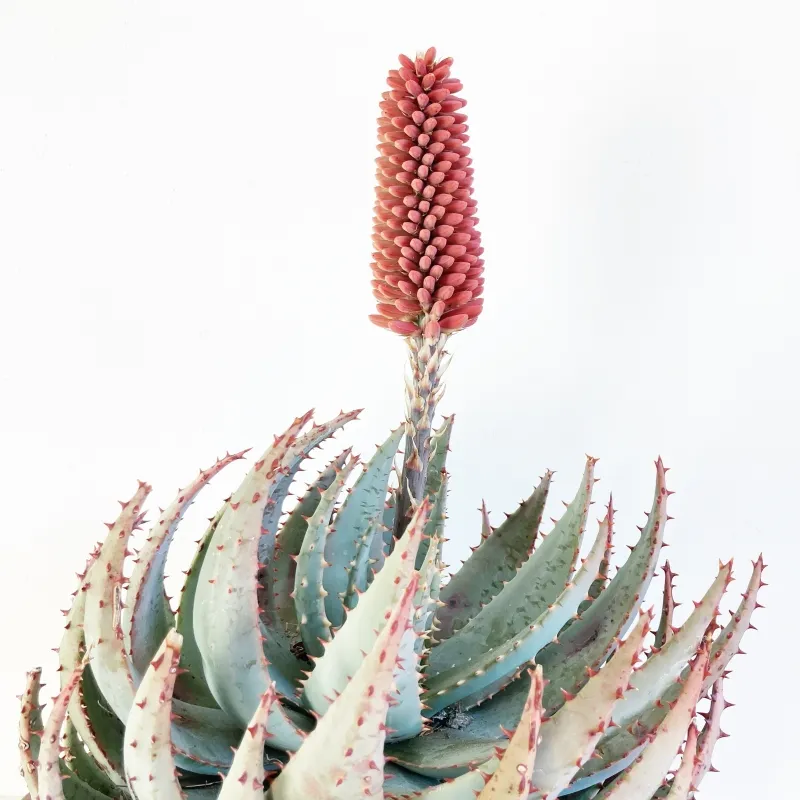
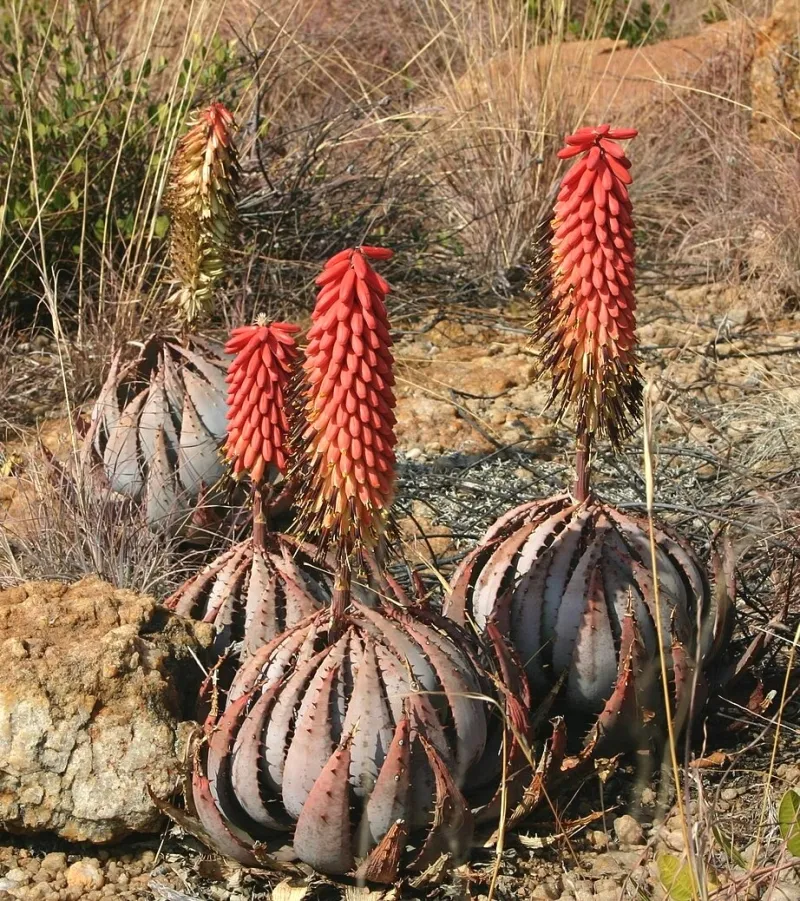
Small aloe with recurved blue-green leaves like an artichoke. Red winter bloom is held tight by leaves. Good drainage, little winter water preferred.
 Height | 10–18in |
|---|---|
 Width | 10–18in |
 Tolerates | Drought, Heat, Pots, Rooftops, Wind |
 Water needs | Low |
Aloes thrive on neglect, making them one of the easiest garden plants for California. They are drought-tolerant, but since this one comes from a summer rainfall area it will want a deep watering every couple weeks during summer dry months. This aloe will be plump with many bright vibrant blue leaves during its growth season. It's natural for these same plants to show stress during their dry season (though in cultivation here in California winter rains typically keep these plants looking lush), often turning shades of red, orange or brown, giving added seasonal interest to the succulent garden. During this time the leaves will curl in on themselves, and often shrivel up and shed from the base. Avoid overhead watering in the crown; when water collects there, it may lead to crown rot or brown spotting on the leaves. | |
 Hardy to | 22°F |
 Exposure | Part Shade – Full Sun |
 Plant traits | Armed, Flowering, Humming Birds, Rock Garden, Rosette, Sculptural, Solitary, Succulent |
 Indoor / outdoor | Outdoor |
 Drainage | In Ground: Cactus Mix, In Pots: Cactus Mix, Tolerates Sandy Soil |
 Origin | NW South Africa |
 California native | No |
 Sunset zones | 13–24 |
Growing Notes
Can develop a short trunk with beard over time.
Once the flower stalks are completely bloomed out and dry, they will come out with a light tug, or can be pruned off low in the crown.
Special Interest
Aloe peglerae is often intentionally stressed, as the incurved brightly colored leaves are considered a feature of the plant, especially when the flower blooms being gripped tightly by the leaves.
Hummingbirds love aloes, many of which are pollinated by birds in their native habitat.
Stories featuring this plant
Links
Which store do you shop at?
The above information reflects the observations of Grubb and Nadler and our extended plant community. We always consider input from fellow horticulturists and welcome feedback from those with additional information on the culture of this plant.
© 2020–2026 Grubb and Nadler. All rights reserved.