
Aloe plicatilis
fan aloe
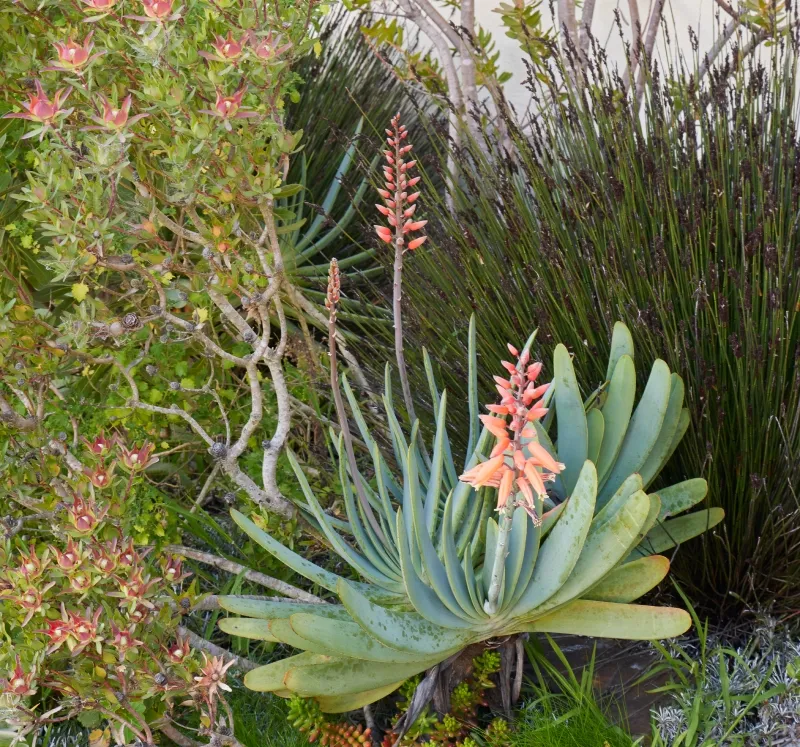
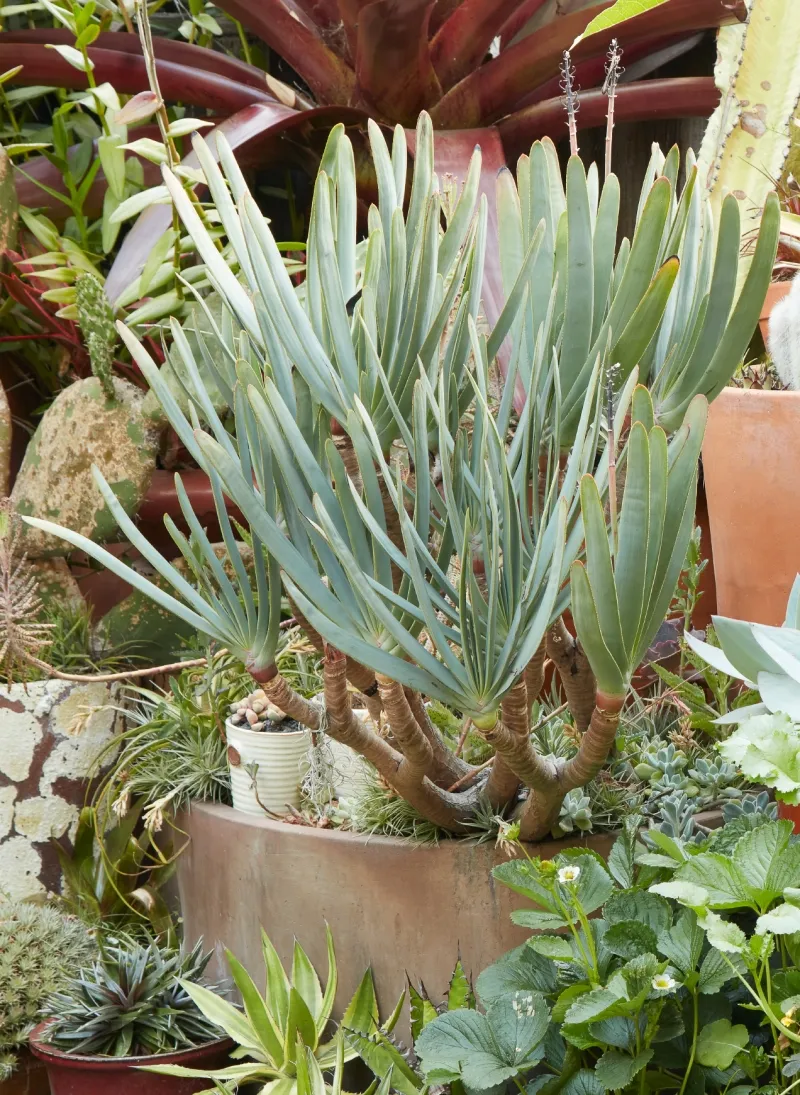
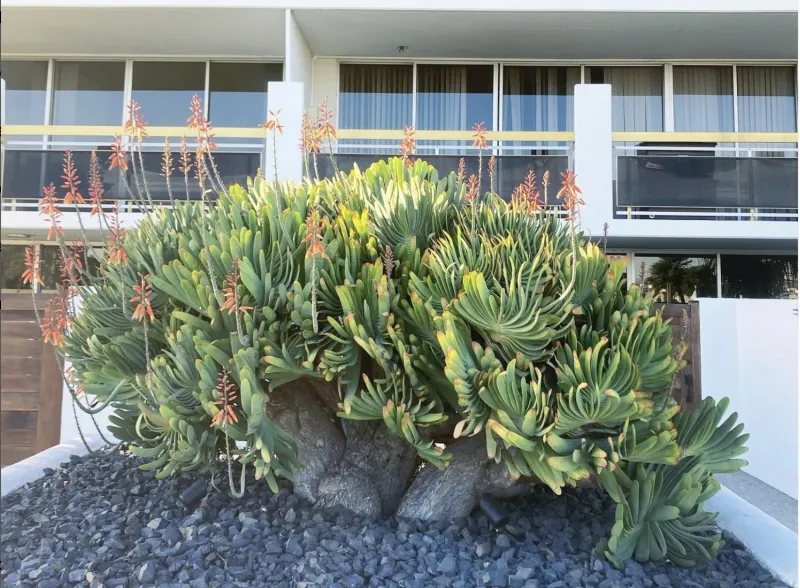
Fan aloe. Branching shrub with unusual flat succulent leaves and showy winter blooms. A living sculpture and focal point in any garden.
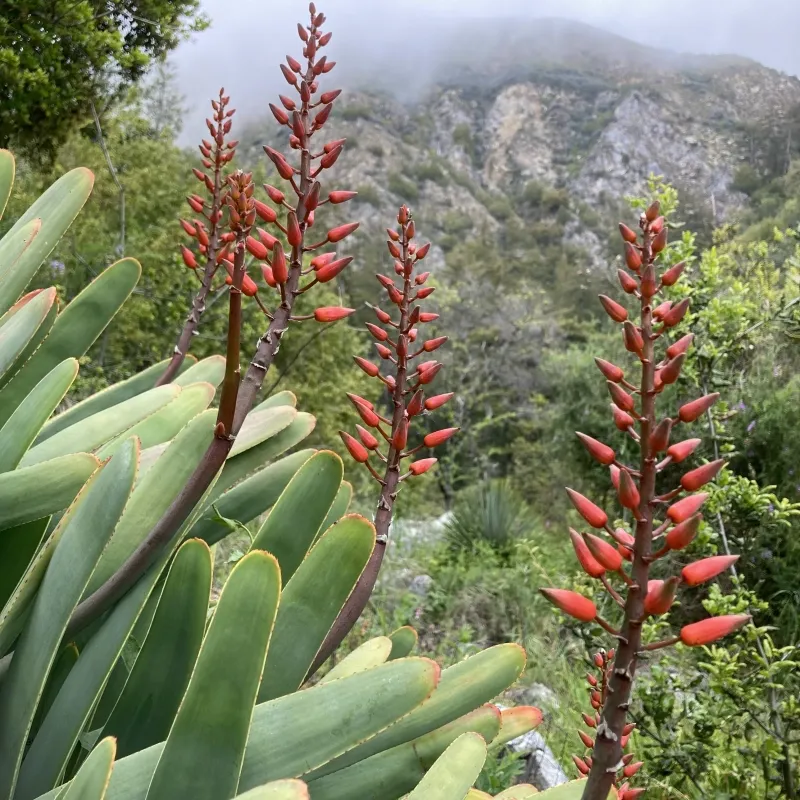
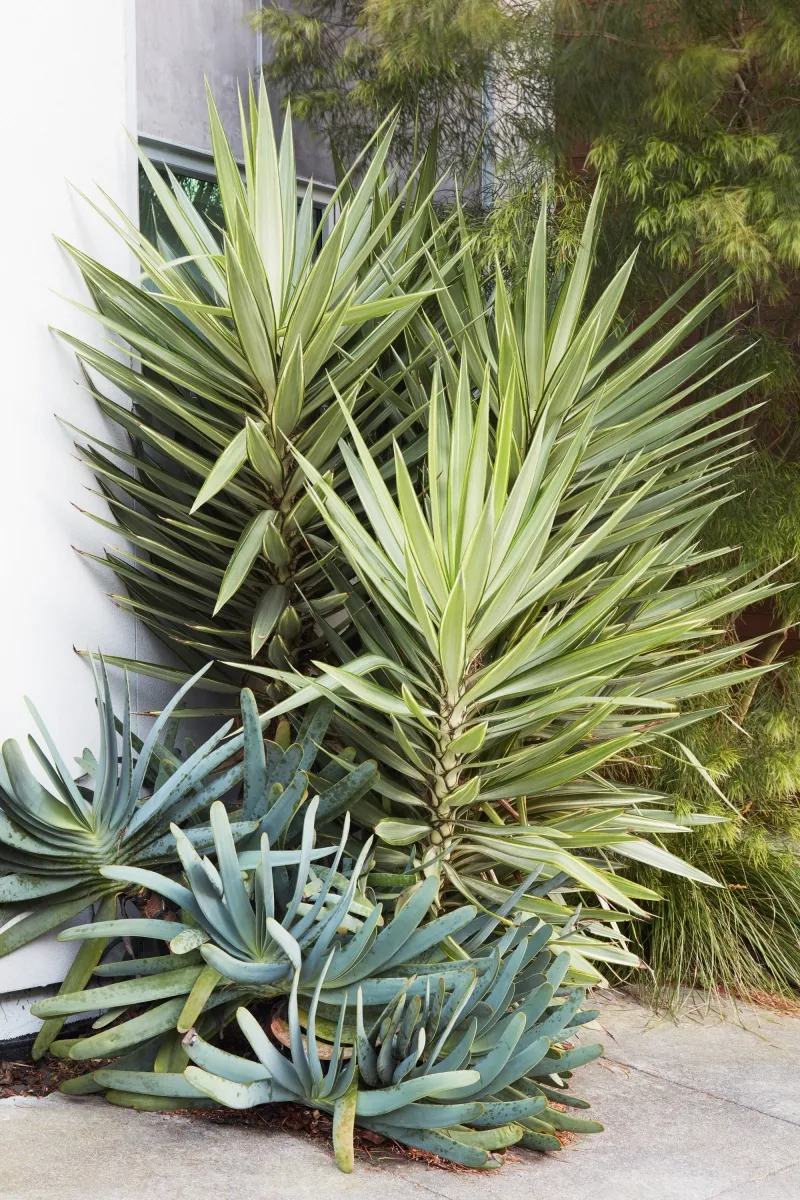
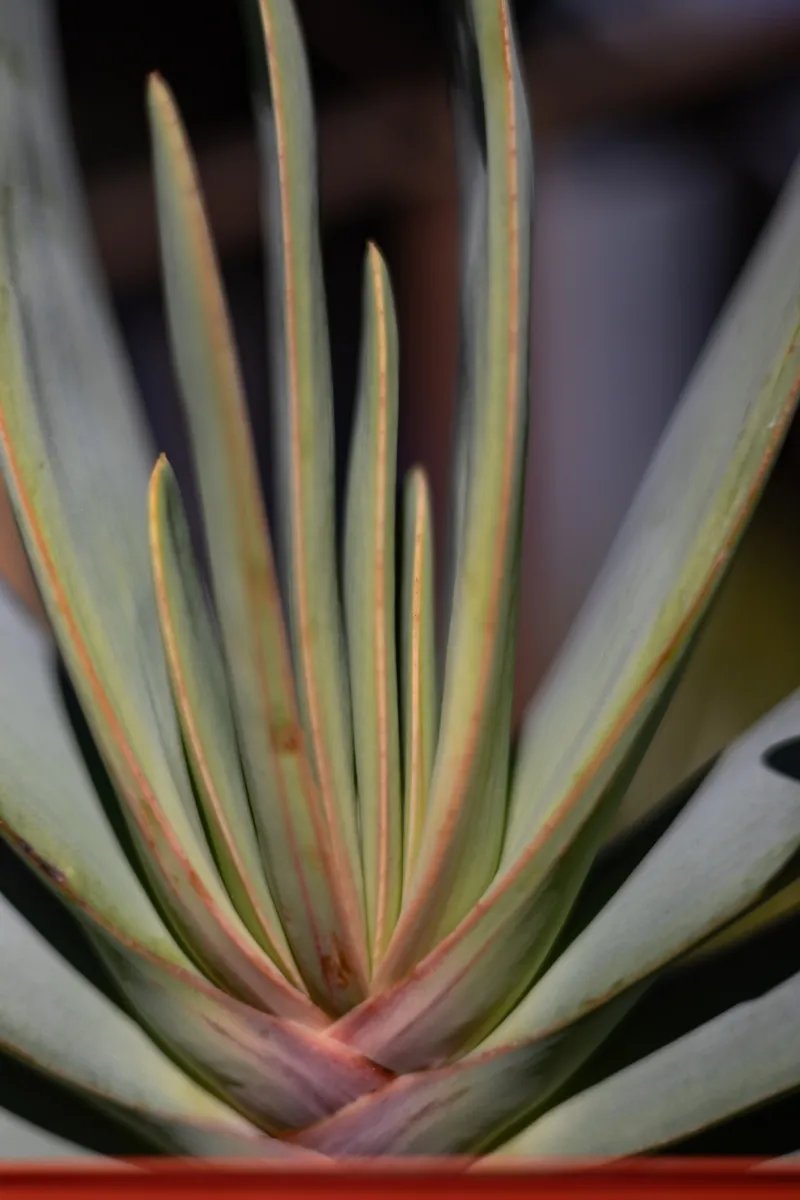
 Sinónimos Sinónimos | Kumara plicatilis |
|---|---|
 Altura Altura | 2–5 pies |
 Ancho Ancho | 3–6 pies |
 Tolera Tolera | Costa, Veranos frescos, Sequía, Tuzas, Macetas, Azoteas, Viento |
 Riego Riego | Bajo |
Aloes thrive on neglect, making them one of the easiest garden plants for California. They are drought-tolerant, and this one will not need additional water once established in the coastal garden. The fan aloe sheds lower leaves with excessive drought leaving a sparse crown. A fan aloe that is not shedding its leaves is likely overwatered, and risking root rot. Black crispy tips of the leaves can be a sign of over OR under watering so be sure to check the soil if the leaves are getting crispy, though this plant is forgiving of overwatering if drainage is sharp. | |
 Resiste hasta Resiste hasta | 25 °F |
 Exposición Exposición | Sol parcial – Pleno sol |
 Características Características | Con flores, Colibríes, Escultural, Arbusto, Solitaria, Suculenta, Forma tronco |
 Interior / exterior Interior / exterior | Exterior |
 Drenaje Drenaje | En el suelo: mezcla para cactus, En maceta: mezcla para cactus, Tolera suelo arenoso |
 Fertilización Fertilización | Uso general a media concentración, Necesita poco |
 Origen Origen | Suroeste de Sudáfrica |
 Nativa de California Nativa de California | No |
 Zonas Sunset Zonas Sunset | 16, 17, 21–24 |
Notas de cultivo
Once the flower stalks are completely bloomed out and dry, they will come out with a light tug, or can be pruned off low in the crown.
Lower leaves shed on their own, leaving a clean smooth trunk, that will become thick and textured over time. If lower black leaves are clinging to the trunk they are easily rubbed off.
Pruning Aloe plicatilis will expose the punky inner structure and wounds are slow to heal.
Difficult, but not impossible to root. Let a cutting sit for three weeks to a month in a bright but indirect sun area. Plant in pure pumice or other drainage and water every two weeks until the cutting is well rooted. Then plant in cactus mix. Older thick cuttings tend to fail more often than the fresh smooth branches.
Excellent choice for big pots where they thrive long term.
Interés especial
Naturally grows into an impressive bonsai like plant over time.
Enlaces
Esta información refleja las observaciones de Grubb and Nadler y de nuestra comunidad de amantes de las plantas. Siempre tomamos en cuenta las aportaciones de otros horticultores y agradecemos los comentarios de quienes tengan más información sobre el cultivo de esta planta.
© 2020–2026 Grubb and Nadler. Todos los derechos reservados.