
Aporophyllum x
hybrid rat-tail cactus
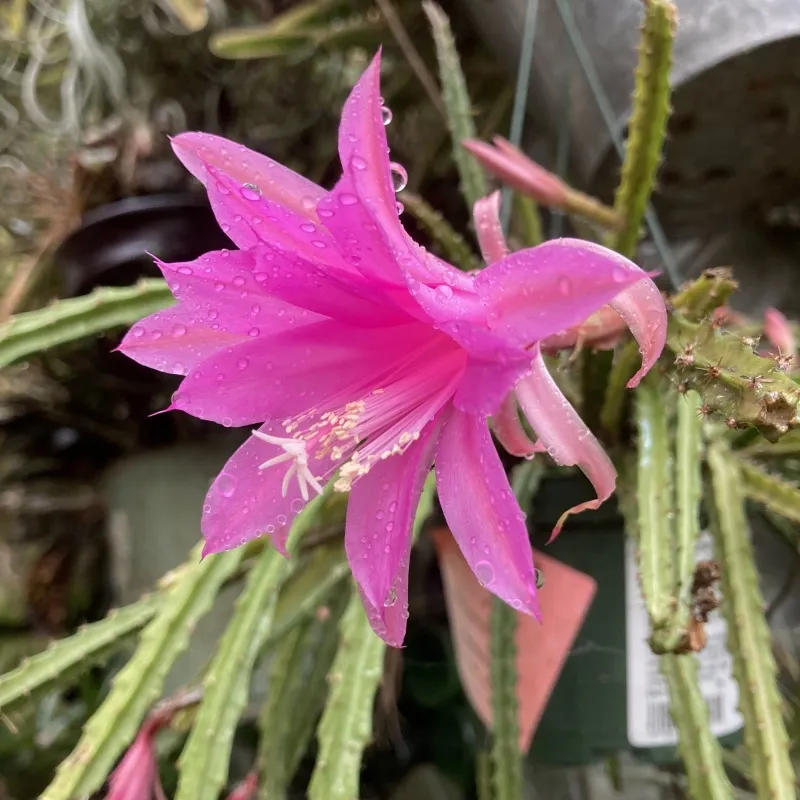
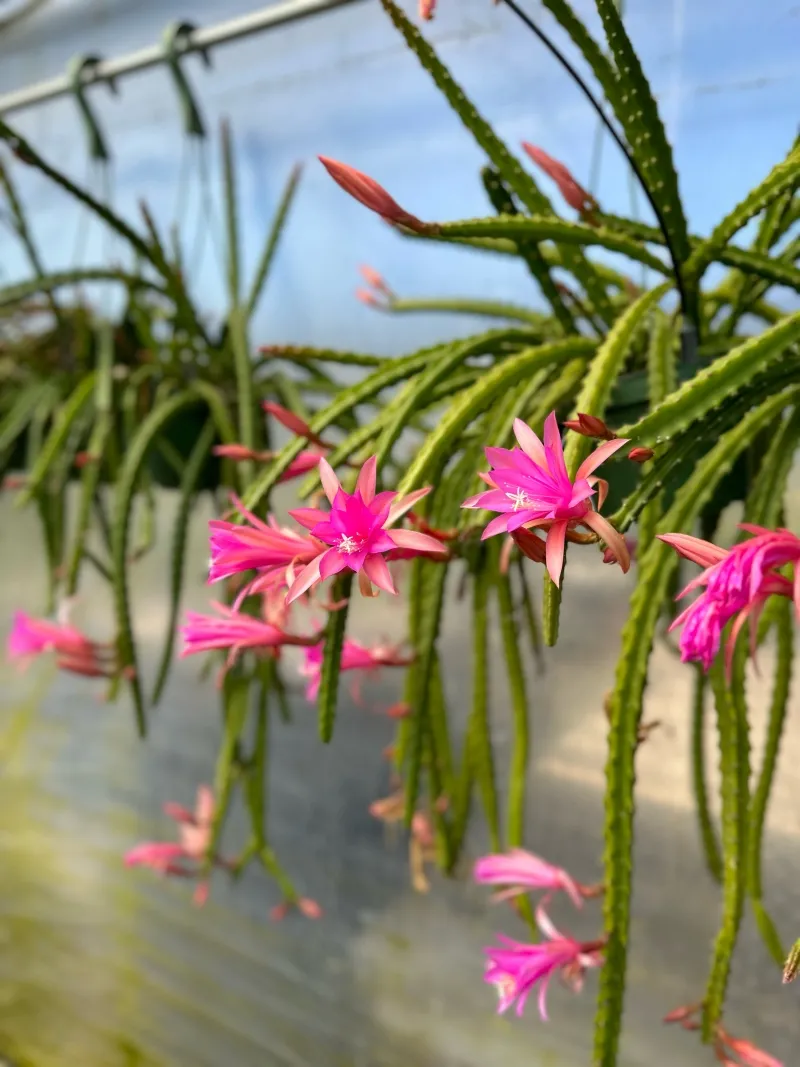
Spiky looking succulent has masses of wandering stems. Fantastic star shaped pink flowers with dark centers are unique and add interest. Excellent in pots.
 Height | 4–8in |
|---|---|
 Width | 6–12in |
 Tolerates | Pots |
 Water needs | Low – Moderate |
Prefers to go mostly dry between waterings during summer and totally dry during winter. Aporophyllums are forgiving of overwatering given a fast draining medium (of cactus mix or orchid bark) and warmth, especially during their summer growing season. If the medium isn't fast draining enough, cold winter rains can lead to yellowing, brown spots on the branches or roots rotting. Keep an eye out for shriveling stalks, as this is a sign that your plant would like some water. | |
 Hardy to | 35°F |
 Exposure | Full Sun – Part Sun |
 Plant traits | Flowering, Succulent, Vine - Self Clinging |
 Indoor / outdoor | Outdoor |
 Drainage | In Ground: Cactus Mix, In Pots: Cactus Mix, Orchid Bark, Tolerates Sandy Soil |
 Origin | Hybrid of New World tropical species |
 California native | No |
 Sunset zones | 16, 17, 20–24, H1, H2 |
Growing Notes
This epiphytic plant does well in tight spots, and hanging planters where the beautiful cascading branches and flowers can be enjoyed. As such they can remain rootbound for many years without issue. Try growing this plant as an upward growing "vine" against a tree or wooden fence; this is a typical habit seen in its tropical home. Many growers claim that a dry winter rest and cool winter temperatures help encourage blooms, but we have seen plants grown exposed to winter rains bloom well in Central California. Fertilize from spring through fall with a low nitrogen fertilizer to encourage blooms. If you'd like more flowers, move your plant into more light. Typically we do not recommend planting this plant in the ground, as an epiphytic plant it prefers an exceptionally airy growth medium, although we have seem them succeed in sandy soils. Tolerates more inland shade and more coastal sun.
In stock today in San Francisco
| 6 inch | 4 available | $29.95 |
The above information reflects the observations of Grubb and Nadler and our extended plant community. We always consider input from fellow horticulturists and welcome feedback from those with additional information on the culture of this plant.
© 2020–2026 Grubb and Nadler. All rights reserved.