
Arthropodium cirratum
renga lily
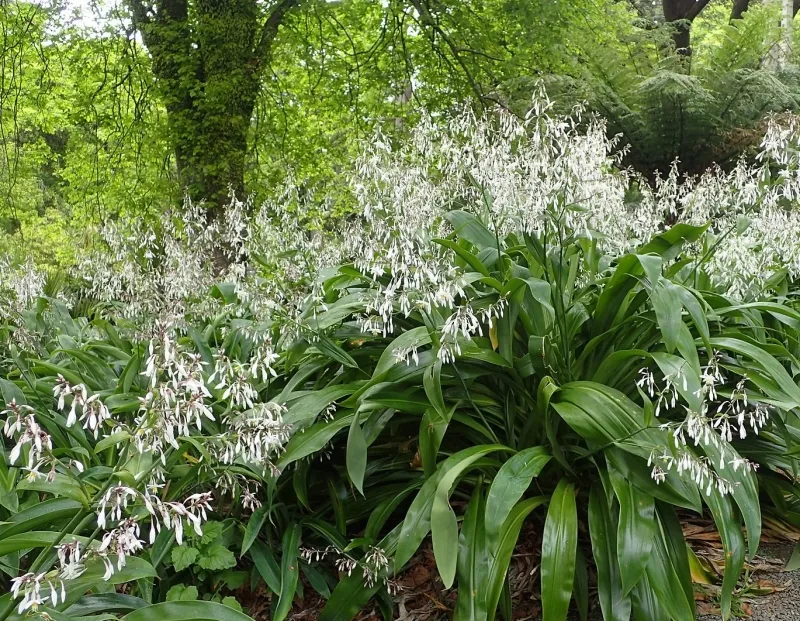
Clumps of soft, arching strappy leaves add a lush backdrop to the garden. Summer brings the bonus of two foot tall flower spikes with many sparkling star white blossoms. Coastal champion.
 Synonyms | Arthropodium cirrhatum |
|---|---|
 Height | 1–3ft |
 Width | 1–2ft |
 Tolerates | Coast, Cool Summers, Fog, Salt, Wind |
 Water needs | Low – Moderate |
This plant is drought tolerant when grown in the shade near the coast, needing a deep watering every 1 to 2 weeks during dry months. If grown inland, away from fog drip, this plant needs more regular waterings, once or twice a week. | |
 Hardy to | 15°F |
 Exposure | Part Sun – Full Sun |
 Plant traits | Clumping, Flowering, Foliage Feature, Tropical |
 Indoor / outdoor | Outdoor |
 Drainage | In Ground: Planting Mix, In Pots: Potting Soil, Tolerates Heavy Soil, Tolerates Sandy Soil |
 Fertilizing | All Purpose |
 Origin | New Zealand |
 California native | No |
 Sunset zones | 5, 6, 14–17, 20–24, H1, H2 |
Growing Notes
Appreciates at least some sun along the coast in areas with marine influence, but flips as you move inland, wanting more shade to protect it from scorching. If grown in coastal shade this plant becomes significantly more drought tolerant.
Doesn't do well when you push into inland areas with prevailing dry desert air and very low humidity.
While this plant is quite hardy, the foliage will die back with a hard frost, recovering from rhizomes quickly when spring warmth returns. It can also be pruned back hard in late winter to keep it tidy.
Unfortunately snails and slugs love this plant. Mulch with corse bark and try to keep it on the drier side to prevent this unsightly damage.
In colder zones adding a thick layer of mulch will help this plant overwinter.
Special Interest
This plant may have been farmed by the Maori of New Zealand as it is often found near old homesteads and the rhizomes are edible.
Links
The above information reflects the observations of Grubb and Nadler and our extended plant community. We always consider input from fellow horticulturists and welcome feedback from those with additional information on the culture of this plant.
© 2020–2026 Grubb and Nadler. All rights reserved.