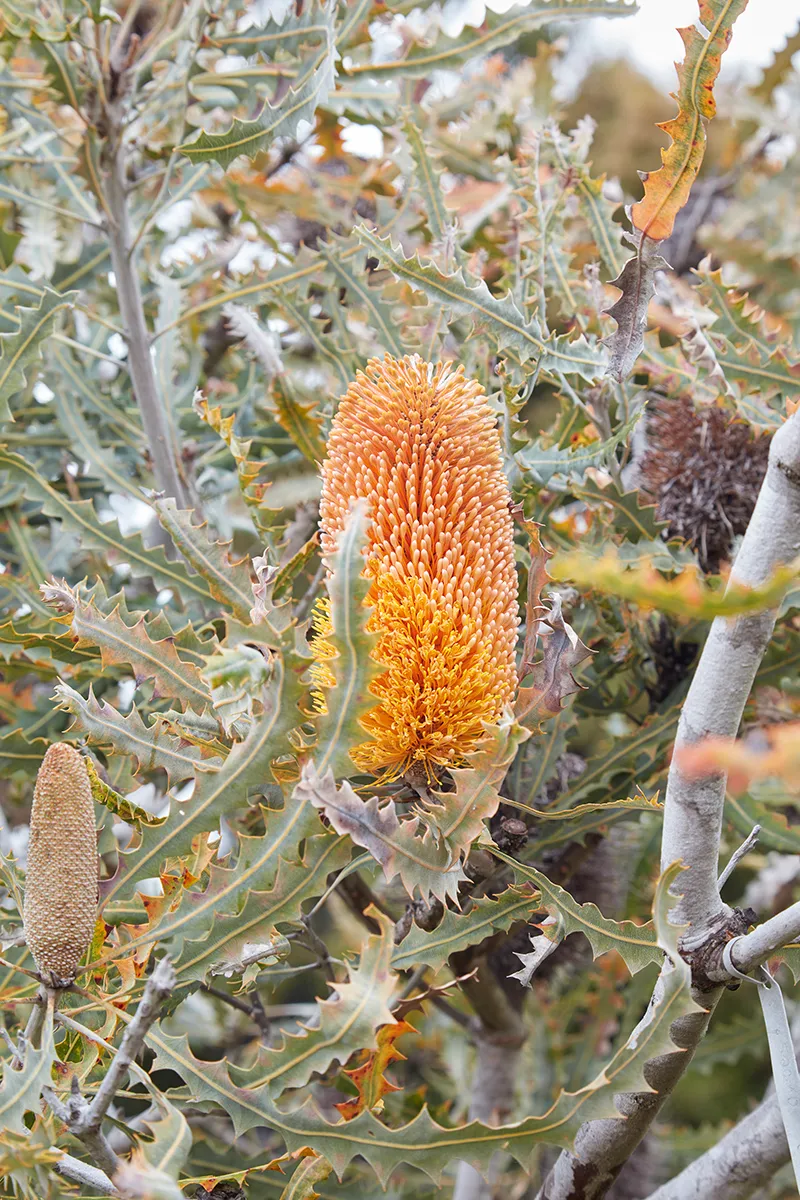
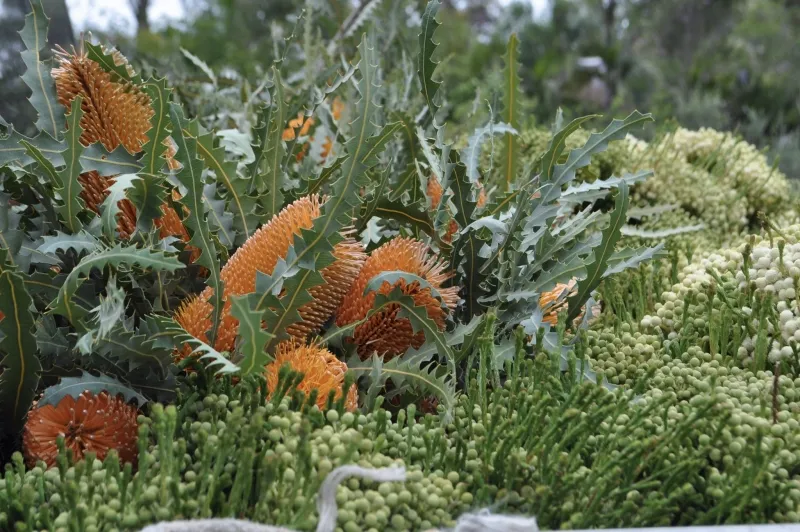
Banksia ashbyi
Orange banksia sports showy golden flower clusters at branch tips. Serrated leaves add character when not in bloom. Mediums sized shrub to small tree. Gitty soil, low fertilizer.
 Height | 8–12ft |
|---|---|
 Width | 3–6ft |
 Tolerates | Coast, Cold, Drought, Salt, Wind |
 Water needs | Low – Moderate |
Banksia are from mediterranean climates of Australia and adapt well to California, particularly along the coast. They appreciate good drainage, but are somewhat adaptable to heavier soil as long as watering is infrequent (once established) and they are in a sunny spot. Once established they will grow and look their best with deep watering every other week to once a month during summer. If they have sharp drainage they will tolerate even more water. | |
 Hardy to | 20°F |
 Exposure | Part Shade – Full Sun |
 Plant traits | Flowering, Screen, Shrub, Tree |
 Indoor / outdoor | Outdoor |
 Drainage | In Ground: Cactus Mix, In Pots: Cactus Mix, Requires Perfect Drainage, Tolerates Sandy Soil |
 Fertilizing | Bloodmeal, Fish Emulsion, Low Needs, No Phosphorus |
 Origin | W Australia |
 California native | No |
 Sunset zones | 16, 17, 22–24 |
Growing Notes
This banksia has a thick bushy form, but can be kept smaller by pruning. Don't prune more than two years of growth or you risk the plant not budding back. You can also prune them up to force a more treelike form.
Banksia prefer mildly acidic soil, and if your PH is on the high side you can add cottonseed meal or other mild acidifying fertilizer to lower it. They appreciate nitrogen in the form of fish emulsion or blood meal, but never give them any significant phosphorus and avoid potassium.
As this plant naturally grows in sand dunes it is very important to choose well drained soil.
Special Interest
Long lasting cut flowers are followed by decorative cones.
Stories featuring this plant
The above information reflects the observations of Grubb and Nadler and our extended plant community. We always consider input from fellow horticulturists and welcome feedback from those with additional information on the culture of this plant.
© 2020–2026 Grubb and Nadler. All rights reserved.