
Banksia menziesii ‘Dwarf’
flame banksia
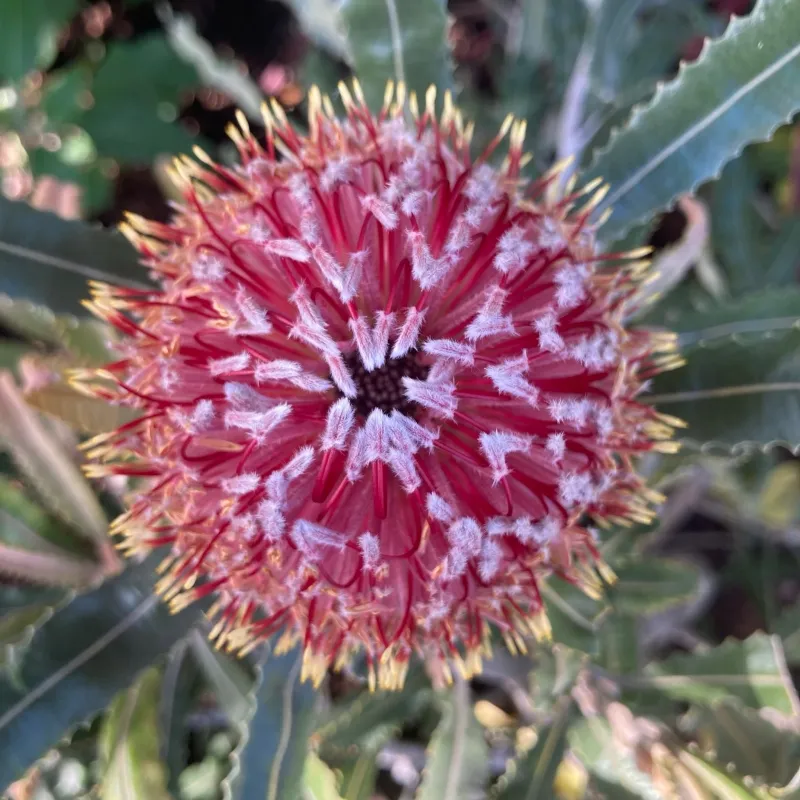
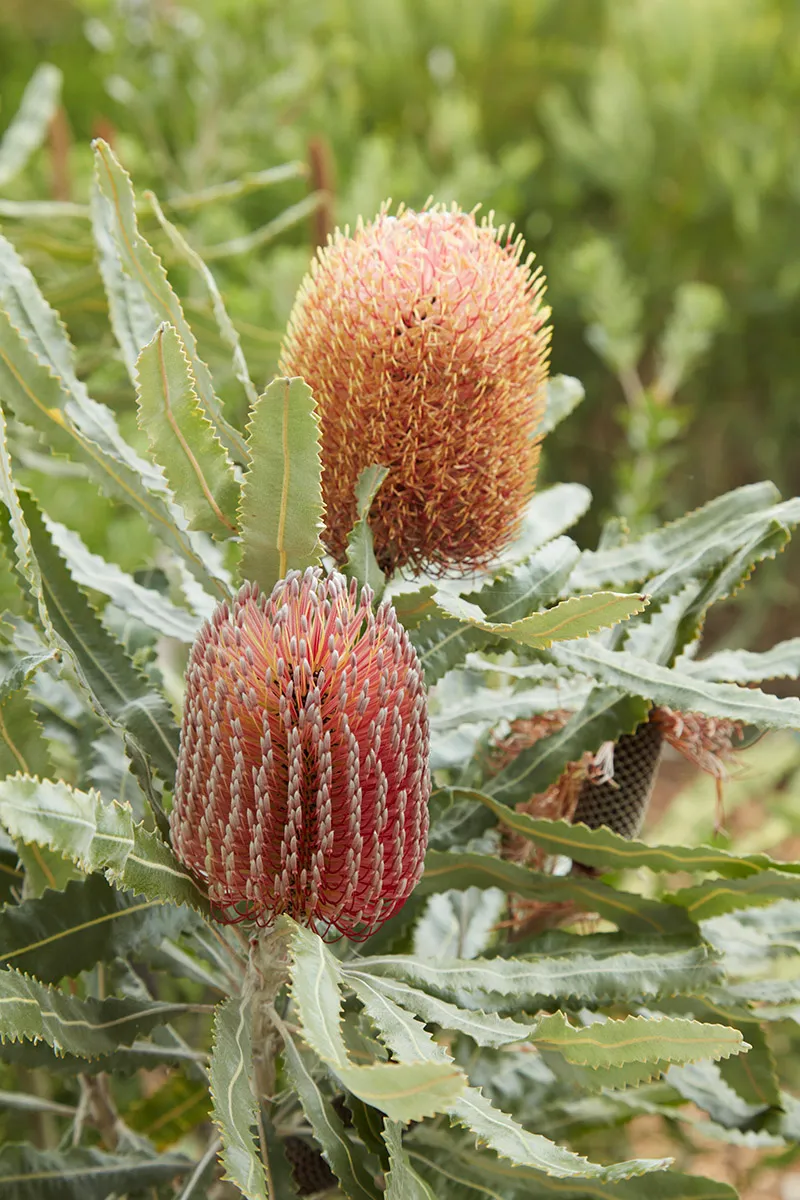
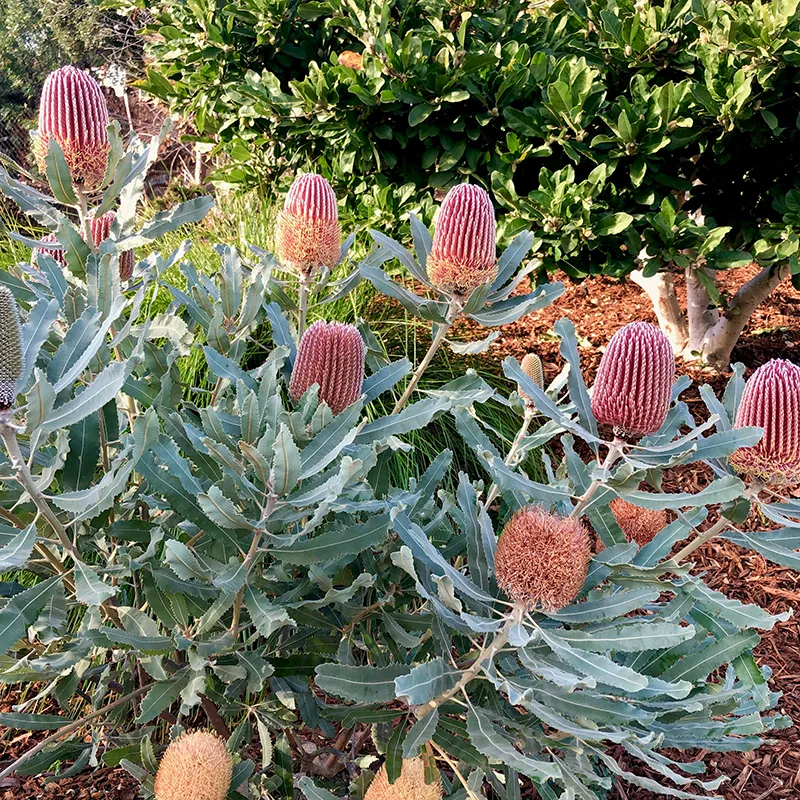
Shrub with grey foliage sports pink and orange flower clusters at branch tips. Fall blooming. Prefers sandy soils, low summer water once established. Smaller stature than standard form.
 Altura Altura | 4–6 pies |
|---|---|
 Ancho Ancho | 6–8 pies |
 Tolera Tolera | Costa, Veranos frescos, Sequía, Macetas, Viento |
 Riego Riego | Bajo – Moderado |
Banksia are from mediterranean climates of Australia and adapt well to California, particularly along the coast. They appreciate good drainage, but are somewhat adaptable to heavier soil as long as watering is infrequent (once established) and they are in a sunny spot. Once established they will grow and look their best with deep watering every other week to once a month during summer. If they have sharp drainage they will tolerate even more water. Nectar-loving birds love Banksia! | |
 Resiste hasta Resiste hasta | 25 °F |
 Exposición Exposición | Sombra parcial – Pleno sol |
 Características Características | Con flores, Arbusto |
 Interior / exterior Interior / exterior | Exterior |
 Drenaje Drenaje | En el suelo: mezcla para cactus, En maceta: mezcla para cactus, Tolera suelo arenoso |
 Fertilización Fertilización | Harina de sangre, Emulsión de pescado, Necesita poco, Sin fósforo |
 Origen Origen | Oeste de Australia |
 Nativa de California Nativa de California | No |
 Zonas Sunset Zonas Sunset | 14–24 |
Notas de cultivo
This banksia has a thick bushy form, but can be kept smaller by pruning. It has evolved a thick taproot known as a lignotuber, this evolutionary advantage allows it to regrow from wildfire. As such it's a great choice for high fire areas and also for a very hard pruning, best done in the fall.
Interés especial
Long lasting cut flowers are followed by decorative cones.
The common name flame banksia is attributed to both the colorful flowers and the combustibility of the plant in Australian bush fires.
Esta información refleja las observaciones de Grubb and Nadler y de nuestra comunidad de amantes de las plantas. Siempre tomamos en cuenta las aportaciones de otros horticultores y agradecemos los comentarios de quienes tengan más información sobre el cultivo de esta planta.
© 2020–2026 Grubb and Nadler. Todos los derechos reservados.