
Moore's rock palm
Ground-dwelling foliage palm with elegant arching wands of flowers and fruit. Shiny green leaf is frosted white on top, chalky white underneath at maturity. Hardy, rare. Nice in pots.
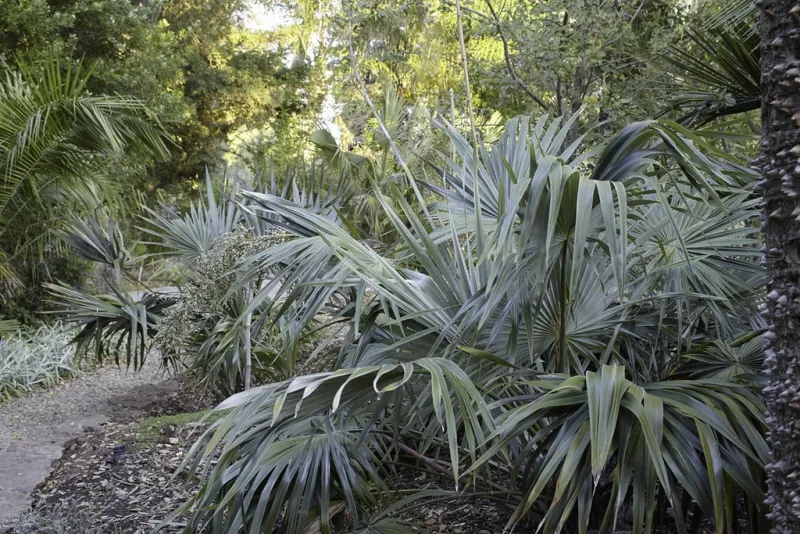
 Height | 2–3ft |
|---|---|
 Width | 3–5ft |
 Tolerates | Cold, Drought, Heat, Pots |
 Water needs | Low – Moderate |
Not all palms love water! This one is actually drought-tolerant and can live quite happily on little or no water once it's established, though it'll grow more slowly and may not look as lush. To keep your palm looking its best, be sure to water it consistently and deeply while it's getting established, then after a few years give it a good deep soaking every couple of weeks. It will also be happy to have more water, provided the soil drainage is excellent. The wetter (and colder) the winter, the better drainage it needs. | |
 Hardy to | 10°F |
 Exposure | Full Shade – Full Sun |
 Plant traits | Flowering, Foliage Feature, Ornamental Fruit, Palm, Rock Garden, Sculptural, Shrub, Solitary, Tropical |
 Indoor / outdoor | Outdoor |
 Drainage | In Ground: Cactus Mix, In Pots: Cactus Mix, Tolerates Sandy Soil |
 Fertilizing | Palm Fertilizer |
 Origin | NE Mexico |
 California native | No |
 Sunset zones | 6–24, H1, H2 |
Growing Notes
Originating high in the Sierra Madre Oriental of northeast Mexico (up to 6500 feet above sea level), where it grows on well-drained limestone in oak forest, this foliage palm thrives in shade or sun. Sun-grown plants will produce bigger, showier flowerstalks, while shade-grown plants will have broader, more elegant leaves. Where soil is acidic, it may also respond to treatment with dolomite to raise soil pH. Quite slow-growing when young.
Special Interest
This is a "trunkless" palm: The stem remains at ground level, progressing laterally by millimeters per year.
John Fairey and his Peckerwood Garden in Hempstead, Texas, first championed this choice rare palm.
More Info
Useful in lieu of thirsty gunnera or as an alternative to phormiums.
Links
The above information reflects the observations of Grubb and Nadler and our extended plant community. We always consider input from fellow horticulturists and welcome feedback from those with additional information on the culture of this plant.
© 2020–2026 Grubb and Nadler. All rights reserved.