
Calibanus hookeri
sacamecate
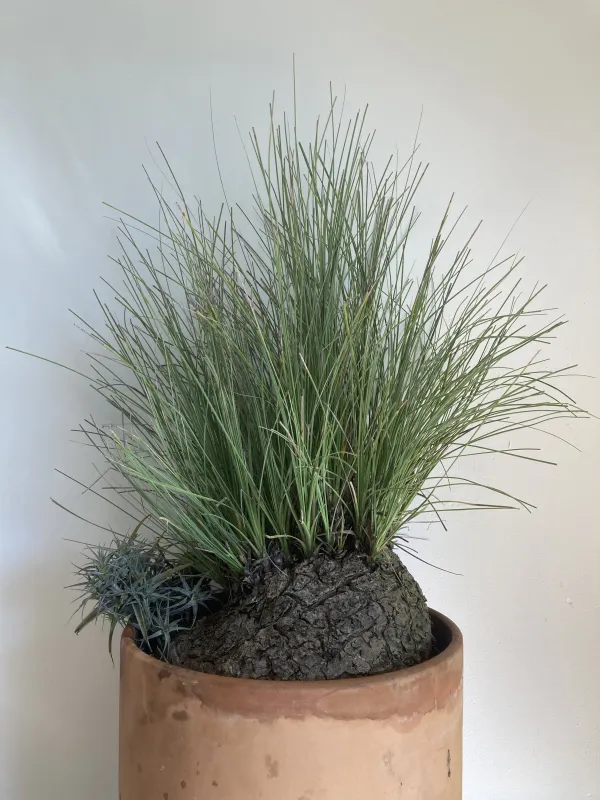
Tough blue-grey grassy element in the garden. Prized for its corky caudex the can be raised for effect when potted. Trim tips of 'hair' annually to keep tidy.
 Sinónimos Sinónimos | Beaucarnea hookeri |
|---|---|
 Altura Altura | 12–24 pulg. |
 Ancho Ancho | 10–18 pulg. |
 Tolera Tolera | Costa, Frío, Veranos frescos, Sequía, Venados, Calor, Macetas, Azoteas, Viento |
 Riego Riego | Bajo |
If used as a grassy element in the garden, keeping the caudex (swollen plant base) beneath the soil, this plant is very drought tolerant (compared to other grasses). However, if grown as a display plant, by elevating the caudex, this plant will want more consistent watering than other caudiciforms. In this case it should be watered before fully dried out. For this reason this plant will need very frequent waterings (once or twice a week) if grown in a shallow dish (as often seen by caudiciform collectors). While this plant likes good drainage, it doesn't need as sharp of drainage as other fussy caudiciforms - standard cactus mix is idea. | |
 Resiste hasta Resiste hasta | 15 °F |
 Exposición Exposición | Sol parcial – Pleno sol |
 Características Características | Caudiciforme, Tipo pasto, Jardín de rocas |
 Interior / exterior Interior / exterior | Exterior |
 Drenaje Drenaje | En el suelo: mezcla para cactus, En maceta: mezcla para cactus, Tolera suelo arenoso |
 Fertilización Fertilización | Uso general |
 Origen Origen | Centro de México |
 Nativa de California Nativa de California | No |
 Zonas Sunset Zonas Sunset | 13–24 |
Notas de cultivo
Caudiciforms have a reputation as touchy plants, but not this one! Very easy and forgiving. As such it's one of the best caudiciforms for Northern California.
The caudex of this plant only increases noticeably in size if it is left submerged below the soil level, where its volume increases steadily. As such, it''s best to wait until it has reached the desired end size before elevating for display. Once elevated the caudex will slowly develop the characteristic (and prized) corky bark.
Beyond tip pruning leaves to keep it looking fresh, older dead leaves can be pulled out once a year. They will come out easily once they are totally dead, but be careful as the leaves of sacamecate will give a paper cut if they slip through your fingers.
Responds well to fertilizer and should be fertilized like any typical garden plant.
Interés especial
Colors of this plant vary, with green leafed plants being seen less often.
Sacamecate can hybridize with Beaucarnea recurvata, as discovered by Lotus Land in Santa Barbara, Ca. The resulting form is intermediate, with the stoutness of a Sacamecate, but the branched form of a Beaucarnea.
The leaves of this plant have are used in the Mexican highlands to scour pots, as they are tough, abrasive and also contain a soapy compound.
Esta información refleja las observaciones de Grubb and Nadler y de nuestra comunidad de amantes de las plantas. Siempre tomamos en cuenta las aportaciones de otros horticultores y agradecemos los comentarios de quienes tengan más información sobre el cultivo de esta planta.
© 2020–2026 Grubb and Nadler. Todos los derechos reservados.