
Cleistocactus winteri
golden rat-tail cactus
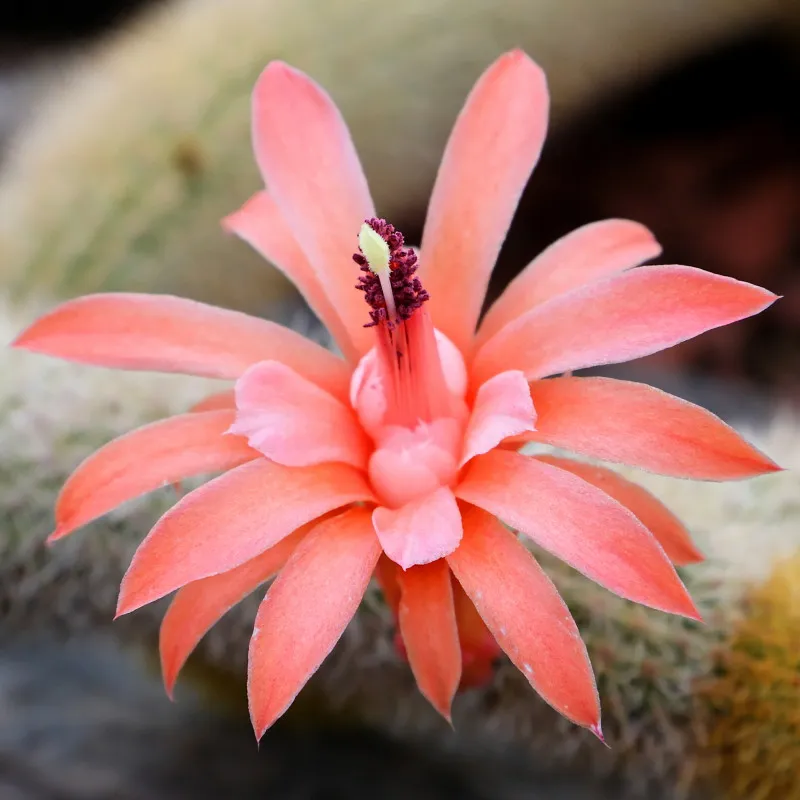
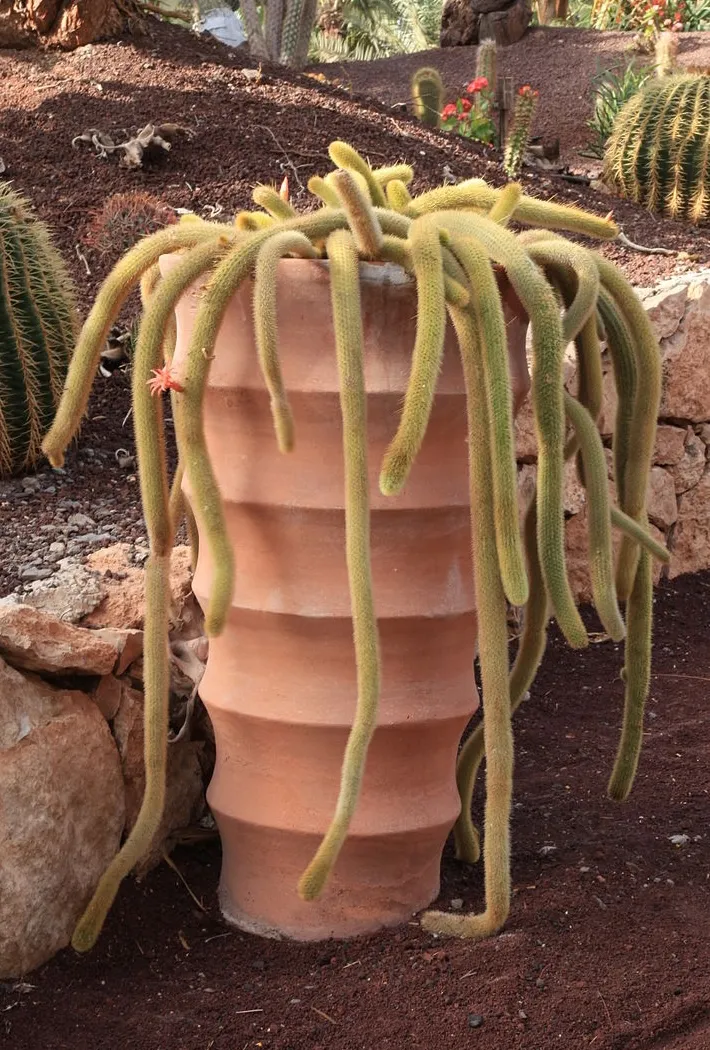
Fast growing golden cactus makes a mass of arching and then cascading stems. Showy salmon flowers during warm months. Display in a pot or coming down a wall. Some shade in hottest climates.
 Altura Altura | 4–6 pulg. |
|---|---|
 Ancho Ancho | 2–3 pies |
 Tolera Tolera | Sequía, Venados, Calor, Macetas, Azoteas, Viento |
 Riego Riego | Bajo – Moderado |
Most cactus, like this one, like to go totally bone dry between waterings, making them very low-maintenance. If you see your cactus begin to shrivel or lose firmness, your cactus is likely totally dry and should be watered. To get good healthy growth your plant does not want to sit around totally dried out during its growing season. Once it is dry, water it. This cactus comes from an area with summer rainfall and is actively growing during that time, when it is forgiving of overwatering errors. During winter dormancy it should be kept extra dry and won't tolerate overwatering. Remember that if kept in a small pot your plant will want more frequent watering in summer but will also fare better through winter rains. | |
 Resiste hasta Resiste hasta | 22 °F |
 Exposición Exposición | Sol parcial – Pleno sol |
 Características Características | Con espinas, Cactus, Con flores, Cubresuelos, Colgante, Colibríes, Jardín de rocas, Escultural, Suculenta |
 Interior / exterior Interior / exterior | Exterior |
 Drenaje Drenaje | En el suelo: mezcla para cactus, En maceta: mezcla para cactus, Tolera suelo arenoso |
 Fertilización Fertilización | Uso general, Necesita poco |
 Origen Origen | Bolivia |
 Nativa de California Nativa de California | No |
 Zonas Sunset Zonas Sunset | 9, 14–24, H1, H2 |
Notas de cultivo
In nature this plant grows on rocks where it hangs and tumbles downward, but in gardens it is more commonly displayed in either a hanging pot or in a very tall pot, which allows it to cascade handsomely. If your cactus ever gets too long you can prune it back and your plant will grow new heads wherever it was pruned. Pruning is best done at the beginning of summer when winter rains end.
The heights here are given as this plant typically grows in nature, along the ground.
Interés especial
Salmon colored flowers attract hummingbirds.
Enlaces
Esta información refleja las observaciones de Grubb and Nadler y de nuestra comunidad de amantes de las plantas. Siempre tomamos en cuenta las aportaciones de otros horticultores y agradecemos los comentarios de quienes tengan más información sobre el cultivo de esta planta.
© 2020–2026 Grubb and Nadler. Todos los derechos reservados.