
Cotyledon orbiculata ‘White Sprite’
White Sprite cotyledon
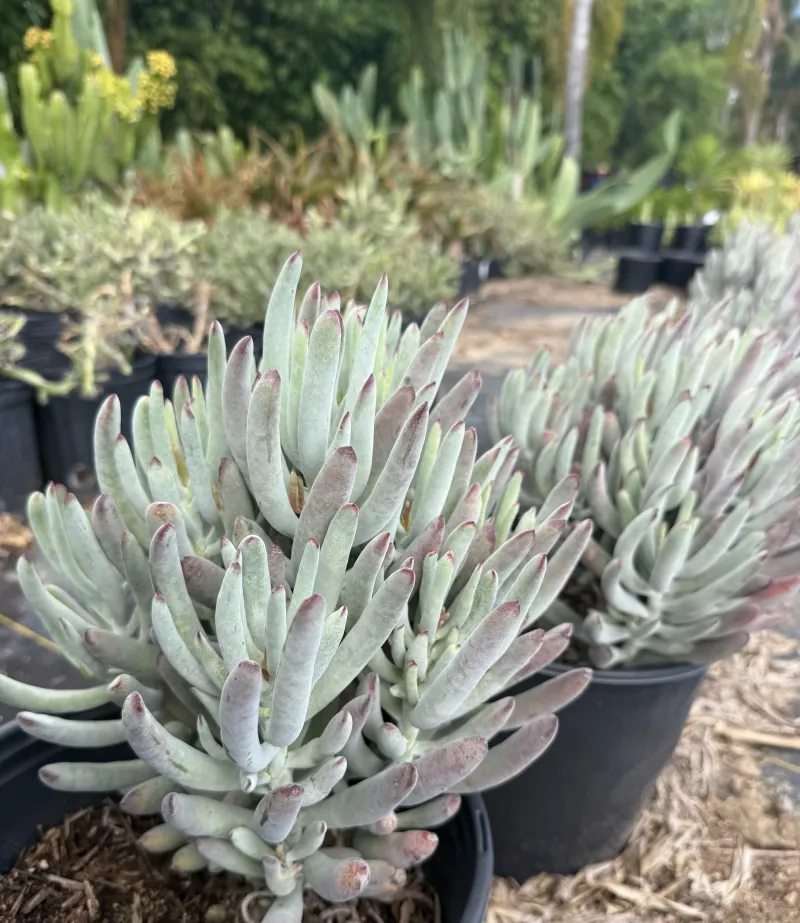
Small scale, shrubby succulent, best in full sun where leaves become chalky white with purple tips. Tidy salmon colored lanterns in fall. Coast / pot champion. Tough and easy.
 Height | 8–20in |
|---|---|
 Width | 8–20in |
 Tolerates | Coast, Cool Summers, Drought, Deer, Fog, Pots, Neglect, Salt, Wind |
 Water needs | Low – Moderate |
Being primarily from South Africa, cotyledons are particularly well adapted to California's climate and are extremely drought tolerant, especially on the coast where they often need no supplemental water once established. They are tolerant of overwatering in winter, and of underwatering during summer. If you see your cotyledon begin to shrivel, lose firmness, or shed many of the lower leaves without replacing them, your plant is likely totally dry and should be watered. Remember that if kept in a small pot your plant will want more frequent watering. | |
 Hardy to | 25°F |
 Exposure | Part Shade – Full Sun |
 Plant traits | Flowering, Rock Garden, Succulent, Suckering |
 Indoor / outdoor | Outdoor |
 Drainage | In Ground: Cactus Mix, In Pots: Cactus Mix, Tolerates Sandy Soil |
 Fertilizing | All Purpose, Low Needs |
 Origin | South Africa |
 California native | No |
 Sunset zones | 8, 13–24, H1 |
Growing Notes
While this Cotyledon will grow in sun or shade, they are more squat and vibrant in the sun, and they tend to get a little floppy-looking when grown in full shade where it also looses its powdery white coating.
By pinching back the growth point (to just above where two leaves part), you can encourage your succulent to branch and have a lower bushier form. Do this by finding two leaves and pinching, snapping or cutting the stem just above them. Your plant will grow a new stem from each leaf and become twice as dense. These new stems can be pinched once a few sets of leaves lush out making an even bushier plant.
Cotyledons have candy corn flowers with recurved petals, usually dangling from an upright stem. Prune off these flowers once the stalks have dried.
In stock today in Los Angeles
| 4 inch | 12 available | $8.95 |
The above information reflects the observations of Grubb and Nadler and our extended plant community. We always consider input from fellow horticulturists and welcome feedback from those with additional information on the culture of this plant.
© 2020–2026 Grubb and Nadler. All rights reserved.