
Crassula arborescens ‘Blue Bird’
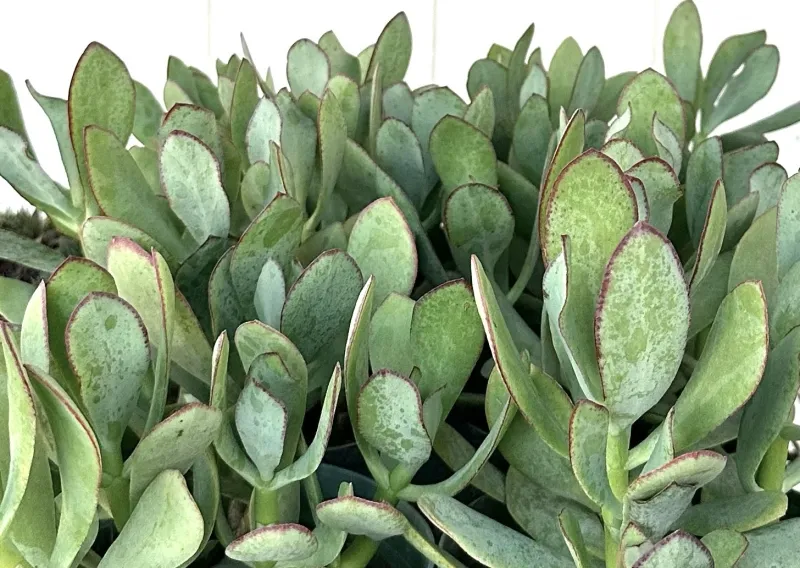
Bluish-green jade tree with umbels of star white flowers touched with pink in winter. Great in pots or in the landscape.Crassulas in general are quite drought tolerant, and these larger ones
 Height | 2–5ft |
|---|---|
 Width | 2–3ft |
 Tolerates | Coast, Cool Summers, Drought, Deer, Fog, Gophers, Pots, Rooftops, Neglect, Salt, Wind |
 Water needs | Low |
Crassulas in general are quite drought tolerant, and these larger ones with tree-like form are extremely drought tolerant. They store water in their thick succulent stems, so in coastal California, they won't need supplemental irrigation once established. To keep them looking lush during summer, water them every two weeks to a month, or whenever the leaves start to shrivel up and fall off. | |
 Hardy to | 28°F |
 Exposure | Full Shade – Full Sun |
 Plant traits | Rock Garden, Shrub, Succulent, Trunking |
 Indoor / outdoor | Outdoor |
 Drainage | In Ground: Cactus Mix, In Pots: Cactus Mix, Tolerates Sandy Soil |
 Fertilizing | All Purpose |
 Origin | W South Africa |
 Sunset zones | 13, 16, 17, 19–24 |
Growing Notes
Tree-like crassulas make excellent bonsai-style succulents in even very small pots. Prune them back hard at least once a year to keep a squat form.
Summer color is part of the natural beauty of these plants and is not a sign of trouble.
They can grow in full dry shade, but will not want any supplemental water.
Special Interest
These crassulas are easy to propagate from cuttings, but they must be completely dry and calloused over before planting. Often they will scab and then the scab can be removed, exposing a sealed smooth skin where the cut was. They can also be propagated by simply laying cuttings on the ground. The leaves are also easy to propagate and will root easily.
Which store do you shop at?
The above information reflects the observations of Grubb and Nadler and our extended plant community. We always consider input from fellow horticulturists and welcome feedback from those with additional information on the culture of this plant.
© 2020–2026 Grubb and Nadler. All rights reserved.