
Cussonia spicata
cabbage tree
Growing it outdoors
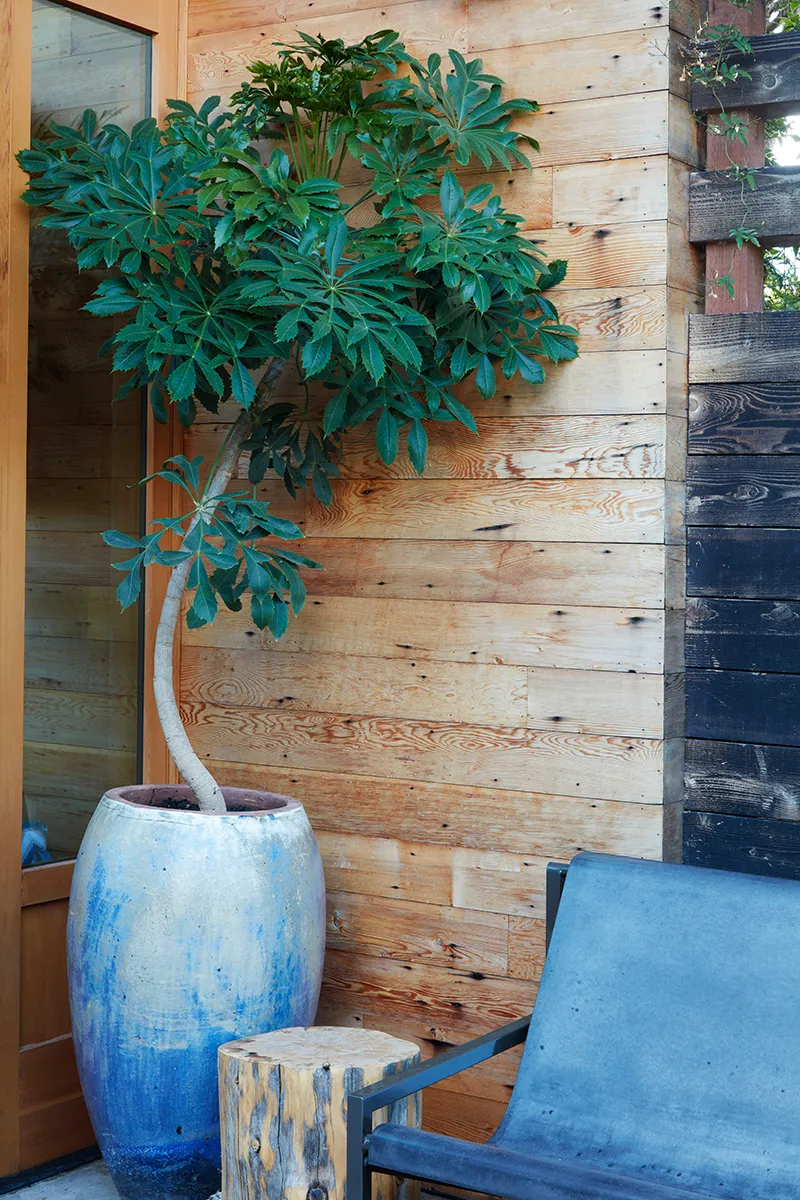
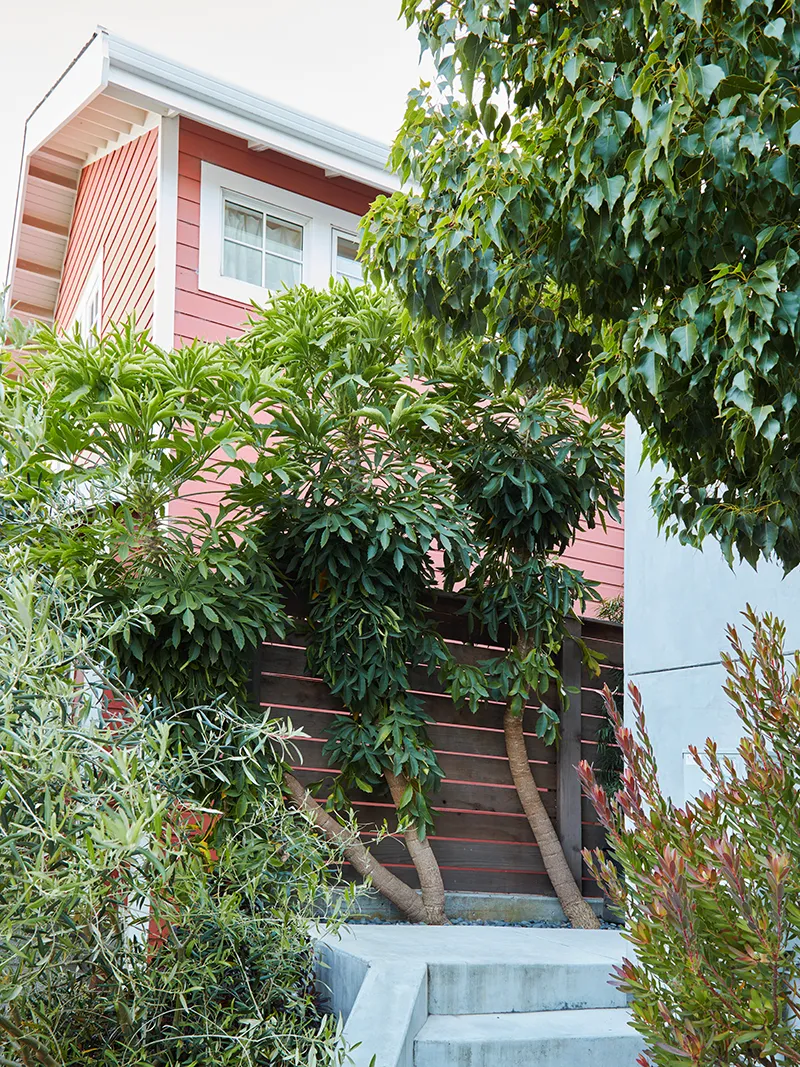
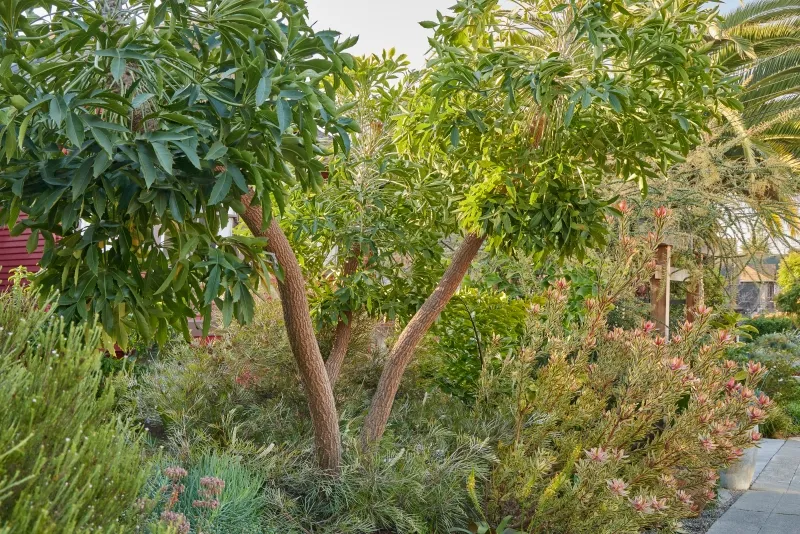
Fast-growing small tree, with lacy, exotic green foliage on palmlike trunk. Accent plant good in containers too. Water for faster growth.
 Height | 12–20ft |
|---|---|
 Width | 10–15ft |
 Tolerates | Drought, Pots, Wind |
 Water needs | Low |
Cussonias grow a tangle of thick succulent roots that make them quite drought tolerant once established. Deep summer watering every two weeks to a month once established is recommended. If they have good drainage, they also take well to frequent irrigation, growing very quickly. If you are growing cussonias in heavy soil, be sure to let them go almost totally dry between waterings. If the tree is getting too much water, you may see rot running vertically on the trunk. Occasionally plants will recover, but should be cut below the lowest area of rot. | |
 Hardy to | 25°F |
 Exposure | Part Sun – Full Sun |
 Plant traits | Foliage Feature, Tree, Tropical |
 Drainage | In Ground: Cactus Mix, In Pots: Cactus Mix, Tolerates Sandy Soil |
 Fertilizing | All Purpose |
 Origin | SE Africa |
 California native | No |
 Sunset zones | 13, 15–17, 19–24 |
Growing Notes
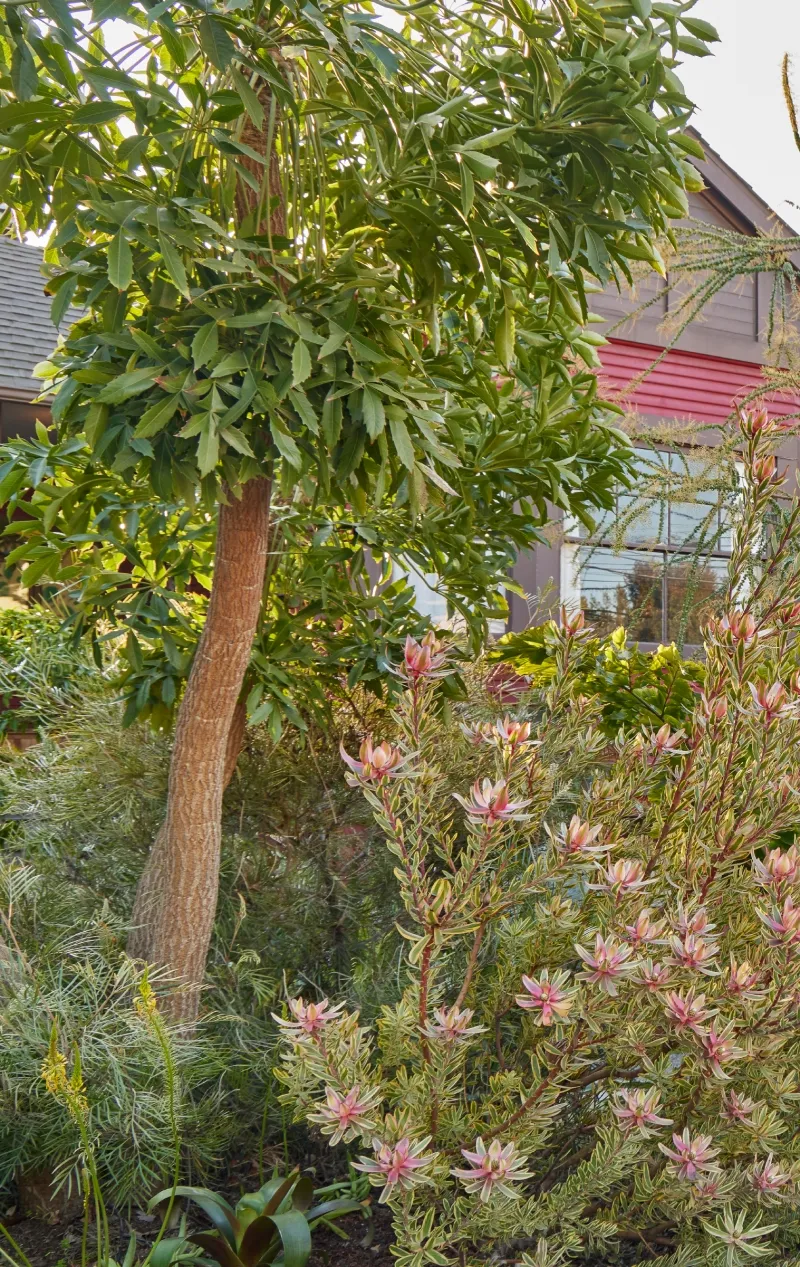
Upright and palm-like when young, Cussonia will become a branched tree with corky bark in great age.
This tree can be cut back hard and will sprout many new heads from the cut. Cussonia can even be cut to the ground and it will regrow.
Roots and trunk are aggressive so keep away from drains, etc.
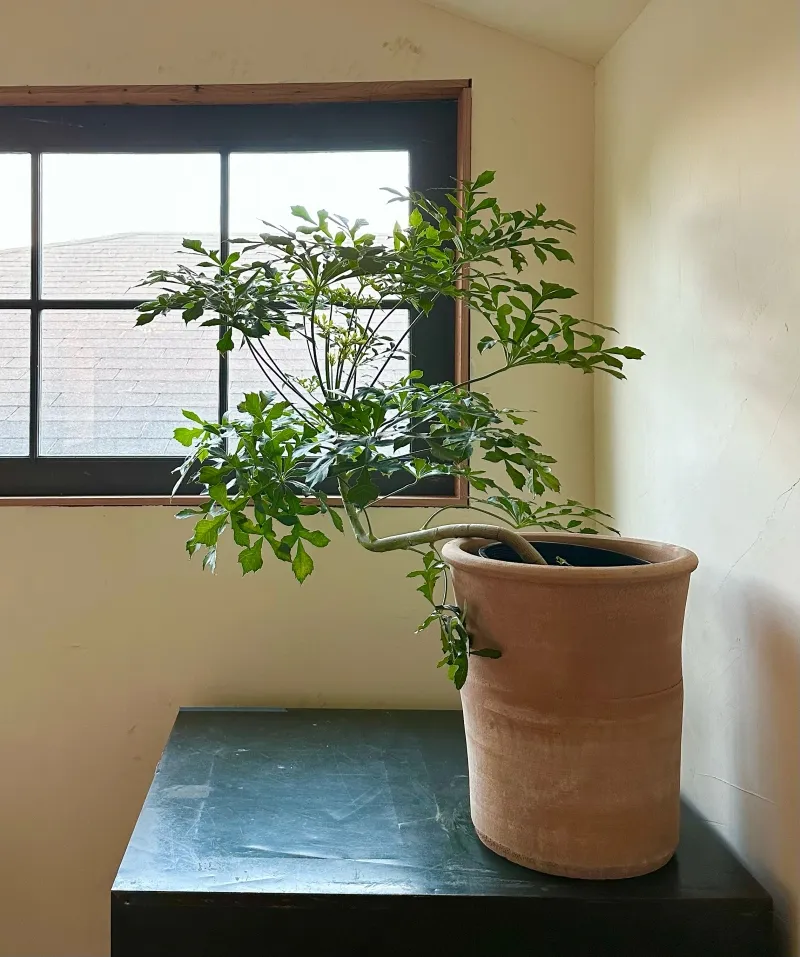
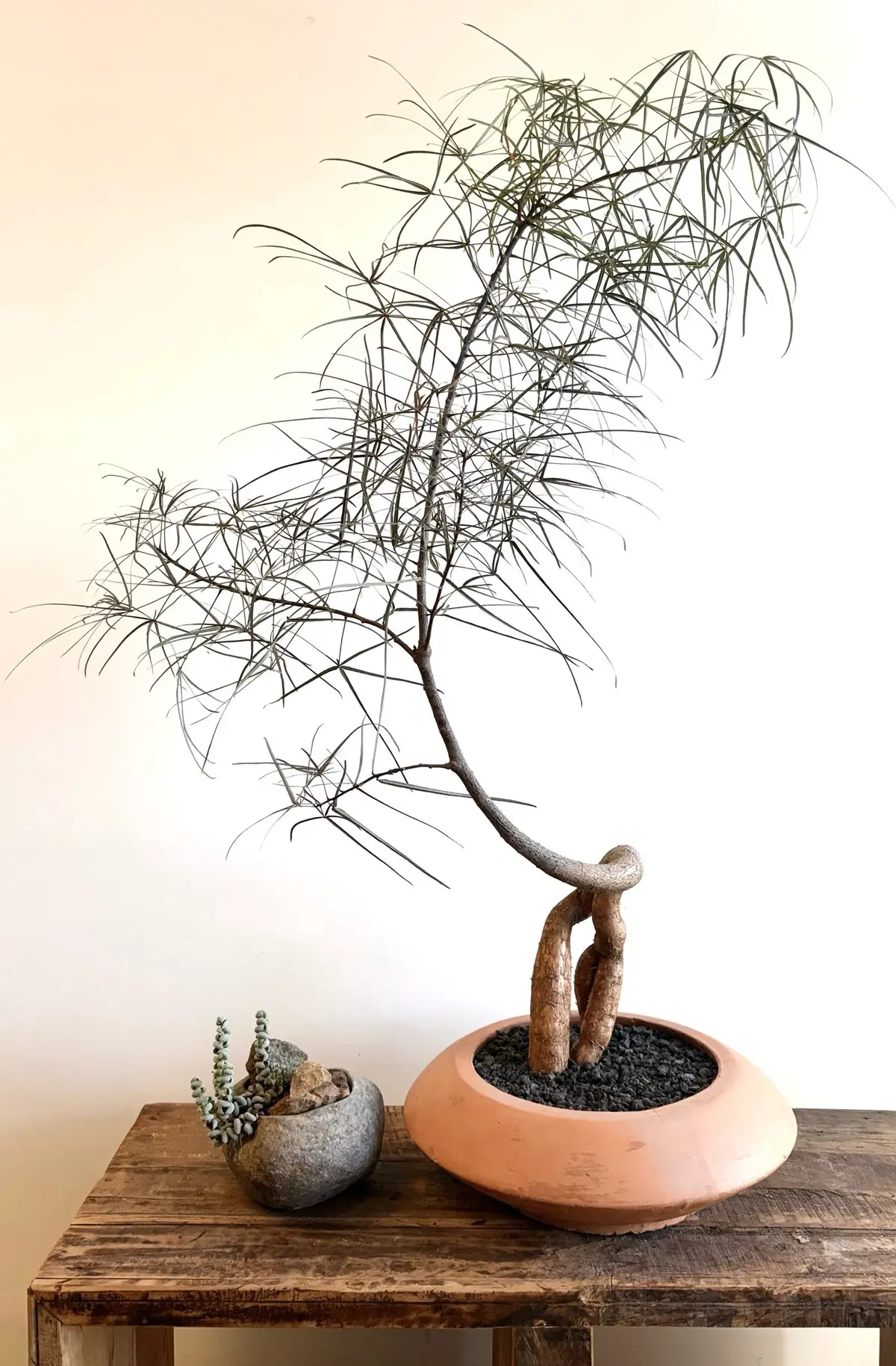
Plant them on an angle and they will grow upward from there, creating a fun curve in the trunk.
Cussonias will sometimes defoliate and then send out a multitude of new branches that should be thinned to the desired form (this is often associated with blooming). Occasionally flowering stunts the plant, and preemptively removing the flowers can help with regrowth.
Being very succulent, Cussonias are only mildly hardy. Entire trees can perish when exposed to temps in the low 20s. In areas where these cold temps are frequent, plants can resprout from the roots and be treated as a woody foliage perennial.
Growing it indoors
| Height | 12–20ft |
|---|---|
| Width | 10–15ft |
| Water needs | When soil is mostly dry. |
| Exposure | Partial Direct – Direct Sun |
| Plant traits | Foliage Feature, Tree, Tropical |
| Drainage | In Pots: Cactus Mix |
| Fertilizing | All Purpose |
| Origin | SE Africa |
Which store do you shop at?
Special Interest
Corky bark and yellow-green flowers, loved by birds, add interest. The corky bark was once used for wagon brakes in Cussonia's native southern Africa.
Cussonias can be planted elevated on a mound; as the dirt washes away, thick roots will be exposed in bonsai style. Or you can replant in a pot every few years, lifting the roots each time to expose the sculptural roots.
Stories featuring this plant
The above information reflects the observations of Grubb and Nadler and our extended plant community. We always consider input from fellow horticulturists and welcome feedback from those with additional information on the culture of this plant.
© 2020–2026 Grubb and Nadler. All rights reserved.