
Dietes ‘Jack Catlin’
Jack Catlin fortnight lily
Evergreen iris relative easy to grow in wide range of soils, sun or shade. Blooms in flushes around the year peaking in winter with pretty white and lavender iris-shaped flowers.
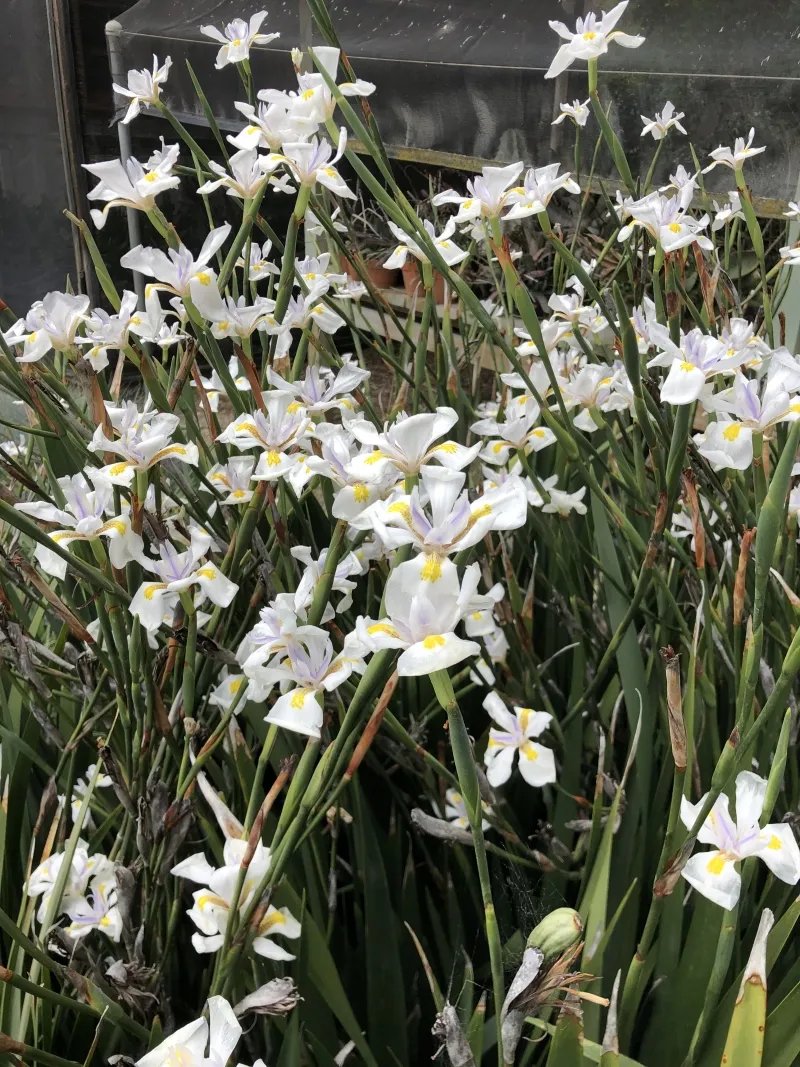
 Synonyms | Dietes butcheriana hybrid |
|---|---|
 Height | 2–3ft |
 Width | 3–4ft |
 Tolerates | Coast, Cold, Cool Summers, Drought, Fog, Heat, Pots, Neglect, Wind |
 Water needs | Low – Moderate |
Water this plant regularly, when the top inch or so of soil feels dry. If you establish this pattern over several years, then you can cut back to watering every week or two (or less) in dry weather. Use drippers, emitters, or a slow stream of water so that it doesn't run off; allow the water to trickle all the way down through the deepest layers of soil. In a pot slowly water the entire surface until water comes out of the bottom of your pot. Plants grown in cool coastal climates and in shade will require less water. | |
 Hardy to | 22°F |
 Exposure | Full Shade – Full Sun |
 Plant traits | Flowering, Grassy |
 Indoor / outdoor | Outdoor |
 Drainage | In Ground: Cactus Mix, In Ground: Planting Mix, In Pots: Cactus Mix, In Pots: Potting Soil, Tolerates Sandy Soil |
 Fertilizing | Low Needs |
 Origin | Hybrid, South Africa |
 California native | No |
 Sunset zones | 8, 9, 14–24, H1 |
Growing Notes
Superior to the ubiquitous gas-station plant, this dietes is a reliable, clean-looking "iris" with a full, somewhat grassy look, and showy flowers. Perfect mixed with finer grasslike plants or among succulents, as well as in pots.
Use as a grass-like element that happens to flower, rather than as a flower feature.
Pull dead leaves from the base. Do not crop.
Remarkable tolerance of shade or sun. Plants in sun will bloom more.
Special Interest
These plants shared with us by John Greenlee, who supplied the variety to our friends at the now-shuttered San Marcos Growers in Santa Barbara.
Links
The above information reflects the observations of Grubb and Nadler and our extended plant community. We always consider input from fellow horticulturists and welcome feedback from those with additional information on the culture of this plant.
© 2020–2026 Grubb and Nadler. All rights reserved.