
Dracaena draco
dragon tree
Smooth branching stems resemble cigars in snakeskin. Plant in well-drained soil. Infrequent water. Unrivaled specimen plant after many decades.
Seen in Everything Looks Like a Yucca! →
 Height | 20–30ft |
|---|---|
 Width | 15–20ft |
 Tolerates | Coast, Drought, Heat, Pots, Rooftops, Salt, Wind |
 Water needs | Low |
Water this plant infrequently, when the top two inches or so of soil feel dry. Usually this will mean every week or two in dry weather. If you establish this pattern over several years, then you can cut back to watering every four to six weeks in dry weather. Use drippers, emitters, or a slow stream of water so that it doesn't run off; allow the water to trickle all the way down through the deepest layers of soil. This plant will look more lush if given water every two to four weeks during dry weather once established. In a pot slowly water the entire surface until water comes out of the bottom of your pot. | |
 Hardy to | 25°F |
 Exposure | Part Shade – Full Sun |
 Plant traits | Sculptural, Tree, Trunking |
 Indoor / outdoor | Outdoor |
 Drainage | In Ground: Cactus Mix, In Pots: Cactus Mix, Tolerates Sandy Soil |
 Fertilizing | All Purpose |
 Origin | Canary Islands |
 California native | No |
 Sunset zones | 16, 17, 19–24 |
Growing Notes
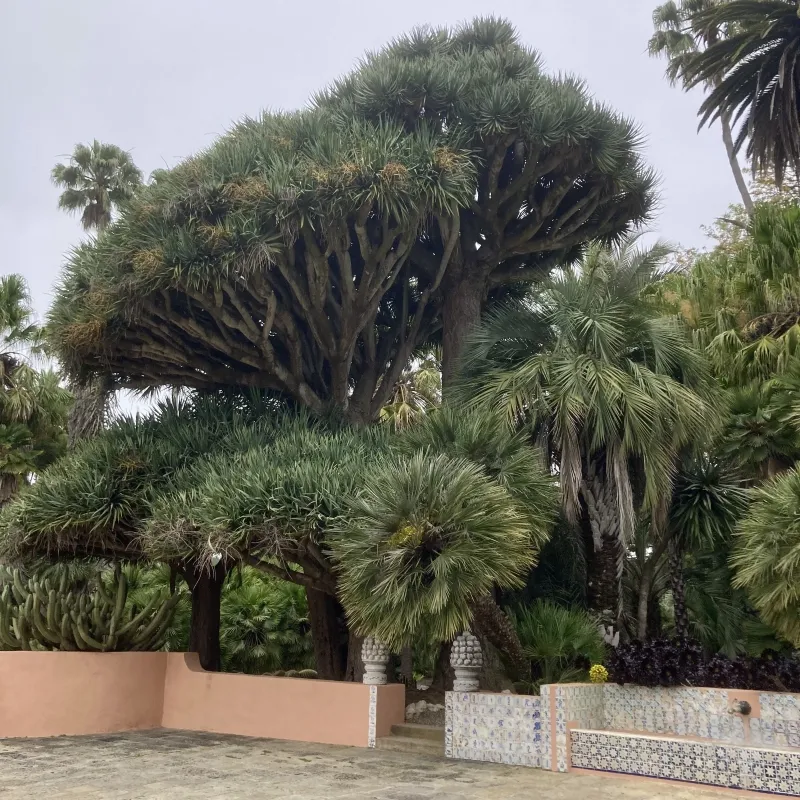
With time the dragon tree branches with mesmerizing repetition. This is caused by flowering, each time it flowers it will branch. Interestingly, some trees flower when young, causing lower branching, while others wait many many years before blooming, creating a taller singular trunk.
Don't rip off the lower old leaves, no matter how ratty they look. This will scar the trunk. Instead prune them off near the base and then let them fall off naturally when they are ready.
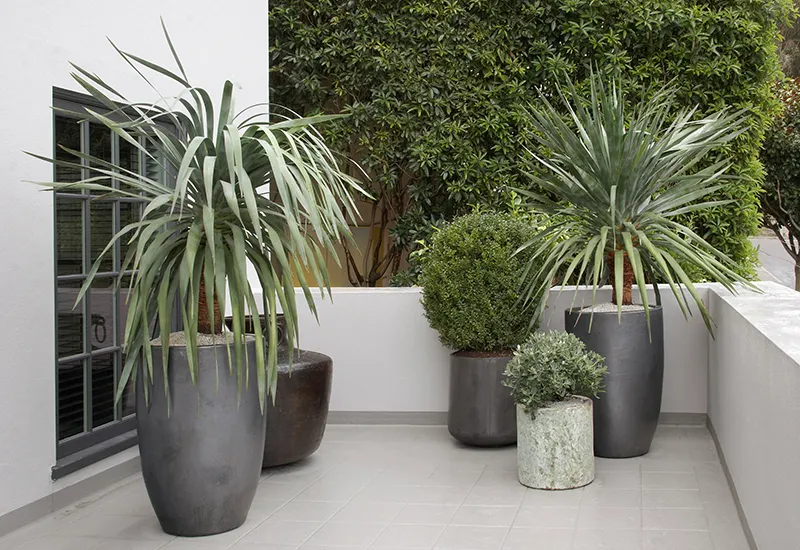
This plant does very well in pots, which keeps the tree smaller long term.
Special Interest
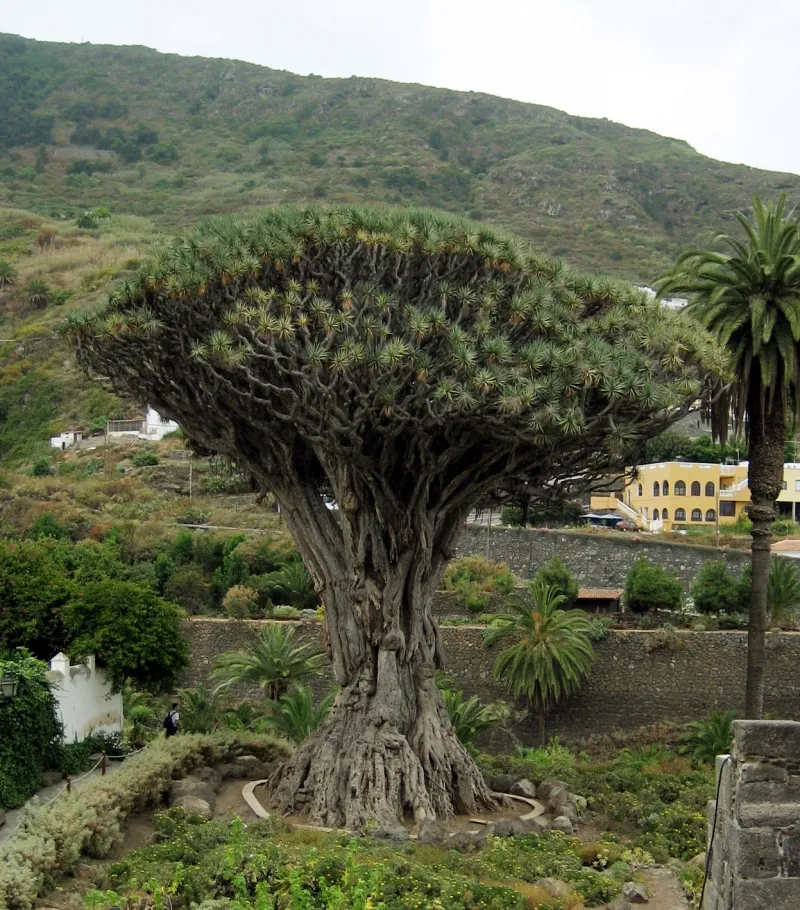
The huge dragon tree pictured here is the largest known specimen, growing in habitat on the Canary Islands. This tree is estimated to be eight hundred to a thousand years old. The cluster behind a terracotta wall are at Lotusland in Santa Barbara California, and closer to a hundred years old.
Stories featuring this plant
Which store do you shop at?
The above information reflects the observations of Grubb and Nadler and our extended plant community. We always consider input from fellow horticulturists and welcome feedback from those with additional information on the culture of this plant.
© 2020–2026 Grubb and Nadler. All rights reserved.